Our first guinea pig cage taught us more in a few weeks than any shopping list could. We skipped the pet-store cage and started with an expandable acrylic enclosure, but we still made ten costly mistakes with bedding, liners, hides, hay, cage placement, feeding, and long-term space for our two boys, Pumpkin and Spice. Here’s what went wrong, what we changed, and what we’re still working on, so your first setup costs you less money and fewer scares.
If you want the step-by-step how-to first, start with our Guinea Pig Cage Setup: 7 Essential Steps That Work. This article is the real-life companion to that guide.
TLDR: Our First Guinea Pig Cage: 10 Costly Mistakes We Fixed
- We avoided the pet-store cage trap and started with a 4 x 2 ft (8 sq ft) expandable acrylic cage for $47.99.
- Two male guinea pigs need more than that long term, so we’re expanding within about six months.
- We dropped our second-level plan once we learned guinea pigs live on the floor, not up ramps.
- Paper bedding worked for about five days at a time in our setup, then got expensive and messy.
- Guinea pigs pee and poop a lot more than we expected, so cleaning happens every day.
- Dog pee pads got chewed almost immediately. That was our biggest scare.
- Washable liners plus cotton blankets are working best for us right now.
- One hide wasn’t enough for two boys. More hides come with our expansion.
- Hay bags cut our hay waste so much that a bag of hay lasts almost twice as long.
- It took three tables to get the cage off the floor with room to spare.
- Pellets aren’t enough. Our boys get fresh vegetables every day.
Our experience vs. general guidance: Everything labeled “our experience” is what happened in our home with our two boys. Care guidance comes from veterinary and animal welfare sources, listed at the end.
What Our First Guinea Pig Cage Looked Like
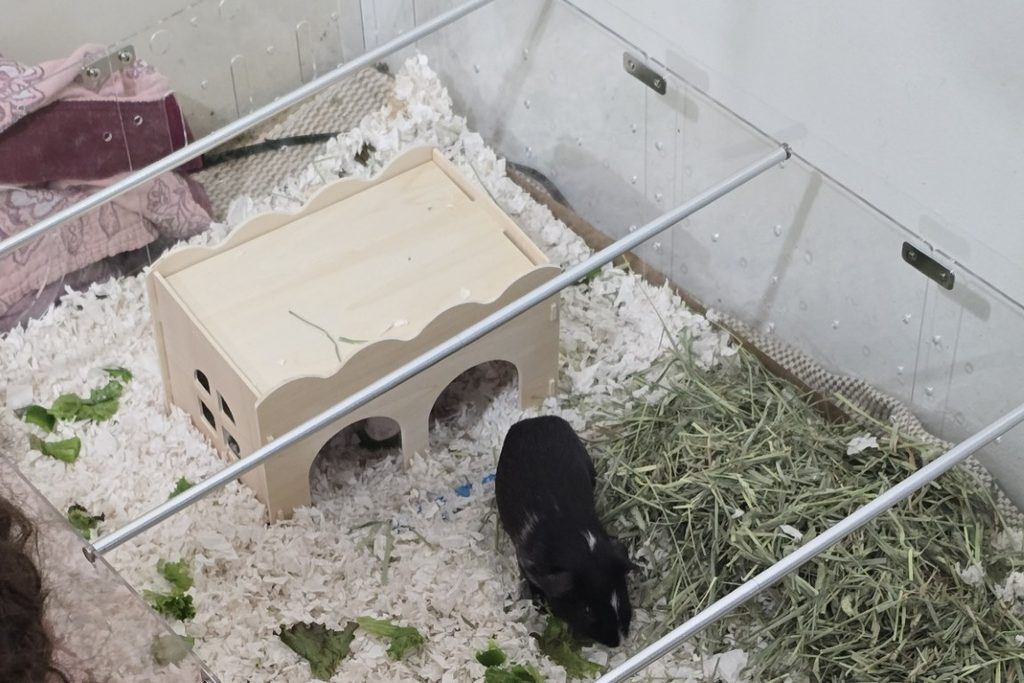
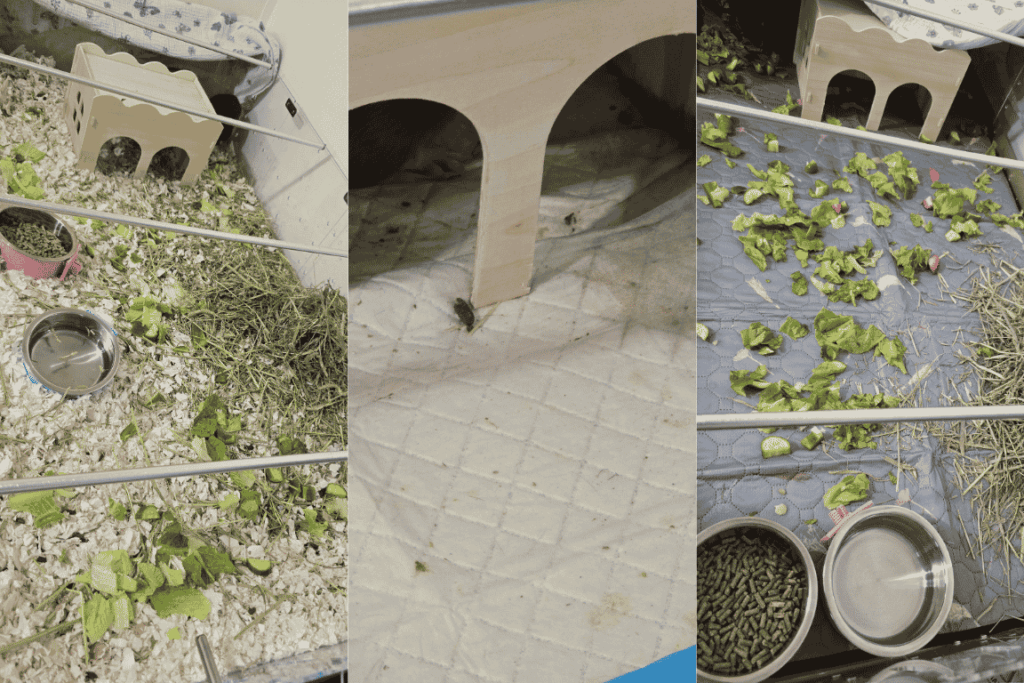
Our first guinea pig cage was an expandable clear acrylic enclosure, 4 x 2 ft (8 sq ft), with paper bedding, one wooden hide, a big hay pile, and stainless steel food and water bowls.
What should a first guinea pig cage include?
A first guinea pig cage needs a solid floor, enough open floor space for exercise, safe absorbent bedding, unlimited hay, fresh water, and hiding spots. Welfare guidance also recommends more hides than guinea pigs, so two guinea pigs need at least three.
We did our research before the boys came home, and that research saved us money right away. The cages we found in pet stores were upwards of $100 and still too small for guinea pigs. The expandable acrylic cage we chose, with its translucent gauze lid, cost $47.99 and gave us 4 x 2 ft, or 8 square feet, of floor space.
Our starting layout was simple. We spread paper bedding across the floor, added a wooden double-arch hide, piled hay in one corner, and set out a pellet bowl and a water bowl. We also draped a blanket over part of the enclosure so the boys had a darker, covered corner.
It looked cozy, and the boys settled in fast. Then real life started teaching us what the setup photos don’t show.
Highlights
- Started with an expandable acrylic C&C-style cage instead of a pet-store cage
- 8 sq ft of floor space for $47.99
- Paper bedding, one hide, a hay corner, food and water bowls
Guinea Pig Haven Tip
Measure the floor, not the box. A cage labeled “for guinea pigs” can still be far below welfare minimums. Multiply length by width in feet and compare it to the guidance in Mistake #1.
Mistake #1: Thinking Our Starter Cage Was Big Enough for Two Boys Long Term
Our 8 sq ft cage meets the bare minimum for two guinea pigs, but welfare guidance prefers at least 10.5 sq ft, and two males usually do better with even more room. We’re expanding within about six months.
How much space do two guinea pigs need?
Humane World for Animals lists 7.5 sq ft as the minimum for two guinea pigs, with at least 10.5 sq ft (about 30 x 50 inches) preferred. More space gives each guinea pig room to move away from the other, which matters as they grow.
We got the first part right. Skipping the pet store meant we started above the minimum instead of below it. What we didn’t fully understand yet was the difference between “minimum” and “preferred,” especially for two males.
Right now, Pumpkin and Spice are small and getting along fine. Our 4 x 2 ft unit works for them today. But as they grow, two boys sharing 8 square feet means less room to give each other space. Because our cage is expandable, we don’t have to replace it. We’ll add panels to increase the square footage within the next six months.
Status: Fixing. The cage works for now, and the expansion is planned.
Highlights
- Minimum for two guinea pigs: 7.5 sq ft
- Preferred for two: at least 10.5 sq ft
- Our starter cage: 8 sq ft, expandable
Guinea Pig Haven Tip
Buy a cage you can grow. An expandable enclosure lets you add floor space later instead of starting over.
For exact measurements and layouts, see our upcoming Guinea Pig Cage Size Guide.
Mistake #2: Planning a Second Level for “More Space”
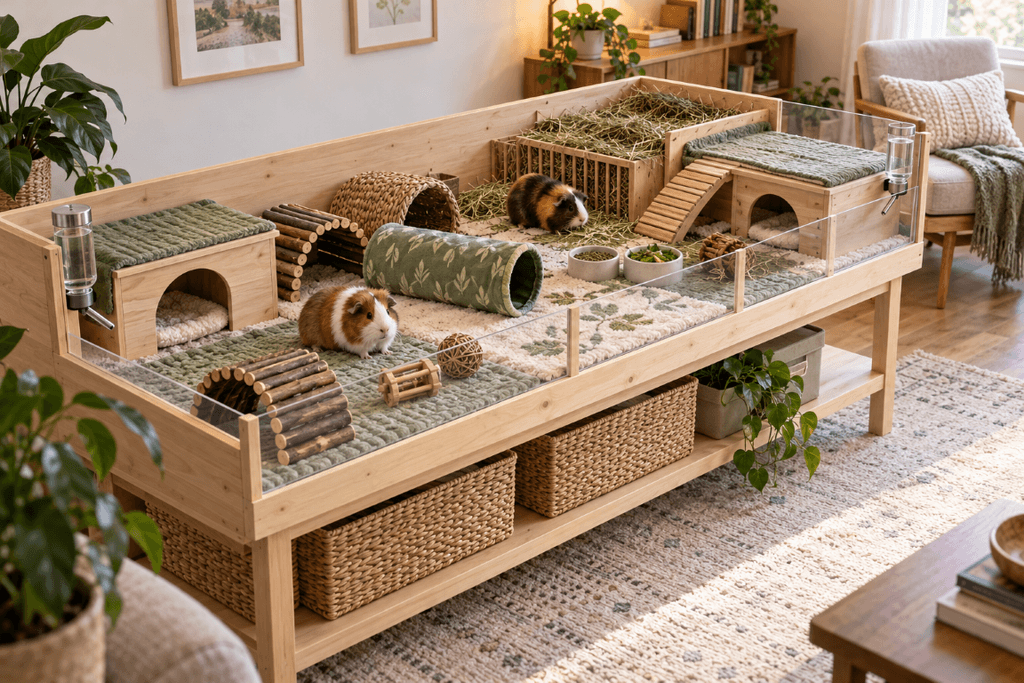
We almost bought a second-level unit to add space. Then we learned that upper levels don’t count as floor space, because guinea pigs are ground-dwelling animals that don’t naturally climb.
Does a second level count as cage space for guinea pigs?
No. Guinea pigs live, run, and exercise on the ground floor, so floor space is what matters. A second level can be a bonus, but it doesn’t replace the floor space they need.
This one almost cost us money. Our plan was to add a second story, and on paper it looked like an easy way to double the space. Stacking up seemed smarter than spreading out.
Then we kept reading. The RSPCA notes that guinea pigs don’t jump or climb, and welfare cage-size guidance is measured as one continuous floor. Climbing ramps all day isn’t how guinea pigs are built to move. We canceled the second-level plan and put that money toward growing the floor instead.
Status: Fixed. No second level. Our expansion will be all ground floor.
Highlights
- Floor space is what counts
- Upper levels are a bonus, not a substitute
- We redirected the second-level budget into floor expansion
Guinea Pig Haven Tip
If you already have a multi-level cage, measure the bottom floor alone. That number is your guinea pigs’ real living space.
Mistake #3: Relying on Paper Bedding Without a Cost Plan
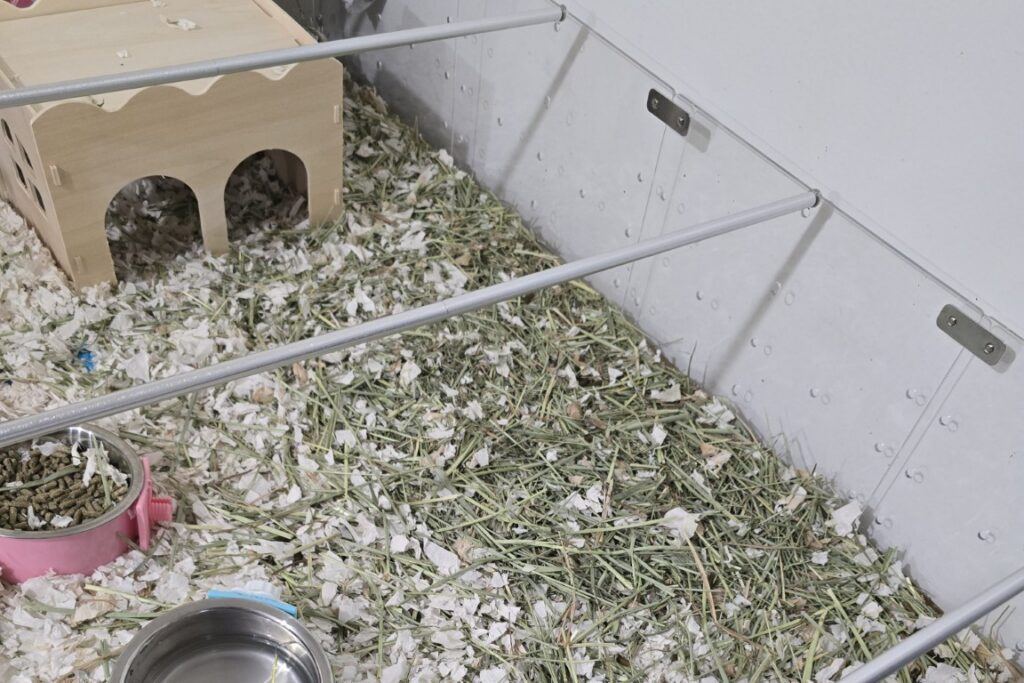
Paper bedding is a safe, vet-recommended option, but in our setup we had to change it about every five days, the cost added up fast, and it was hard to keep clean between changes.
Is paper bedding good for guinea pigs?
Yes. The Merck Veterinary Manual lists paper-based products as a preferred bedding, and paper is safer than wood shavings if a guinea pig eats some. The tradeoff is ongoing cost, because it gets thrown out with every full change.
We started with white paper bedding made for small animals. It controlled odor reasonably well, for about five days at a time with two boys. After that, it needed a full change.
Two things wore us down. First, the cost. Changing the whole cage every five days meant buying bedding constantly. Second, the mess. Hay, veggie bits, and droppings mixed right into the paper, so spot cleaning was hard, and the cage never looked fresh for long.
The mistake wasn’t paper bedding itself. It was choosing a bedding without thinking about what it would cost us every month in our home.
Status: Fixed. We moved to washable liners, covered in Mistake #6.
Highlights
- Paper bedding is a safe, recommended choice
- In our setup: full changes about every 5 days
- The real cost is the refill, not the first bag
Guinea Pig Haven Tip
Before you commit to a bedding, estimate a month of refills. A cheap first bag can become an expensive habit.
Mistake #4: Underestimating How Much Guinea Pigs Pee and Poop
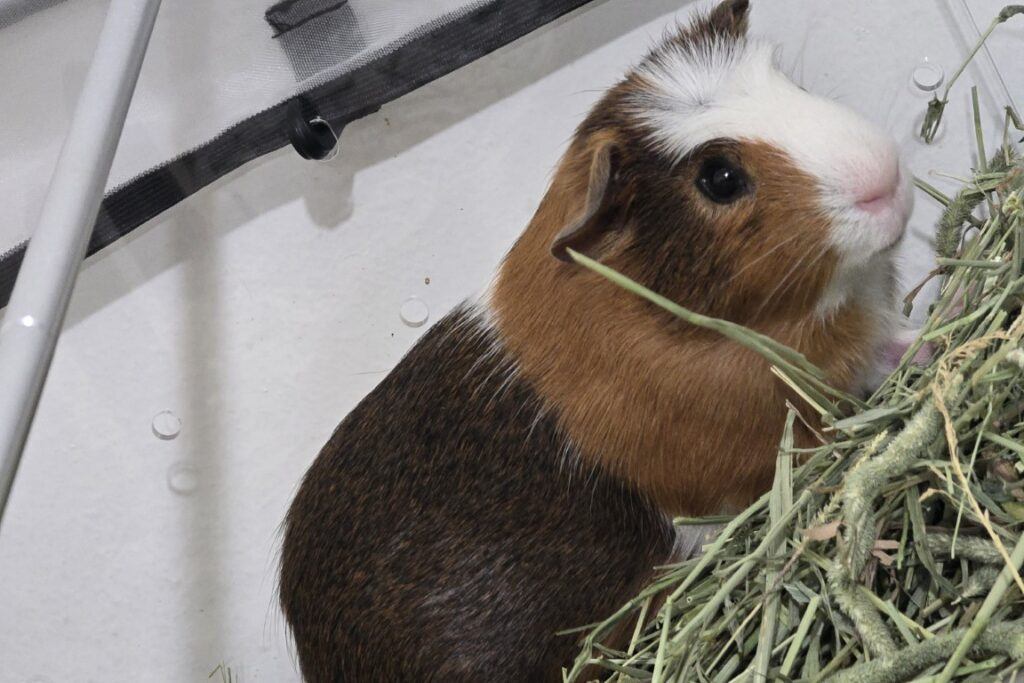
Everyone says guinea pigs pee and poop a lot. When they say it’s a lot, it’s a lot. Two boys fill a cage faster than we ever expected, so cleaning has to happen every day, not just on cage-change day.
How often should you clean a guinea pig cage?
Spot clean every day by removing droppings, wet spots, and soiled hay, then do a fuller clean on a regular schedule. Guinea pig cages need frequent cleaning to prevent ammonia buildup from urine.
We read the warnings before the boys came home. We still weren’t ready. Droppings show up everywhere: in the hay, by the food bowls, in the hide, and right where they sleep. The Merck Veterinary Manual notes that guinea pigs eat and poop in the same areas and soil their sleeping spots, so there’s no corner of the cage that stays clean on its own.
The pee adds up just as fast. It soaks bedding, settles under liners, and even collects in the cage’s panel hinges, which we cover later in this article. Leave it too long and you’ll smell it.
That’s what changed our whole approach. Instead of waiting for a big clean, we build cleaning into every day: sweeping up droppings and hay, swapping a blanket daily, and rotating liners through the wash. It’s also a big reason paper bedding got so expensive for us. Every full change went in the trash.
Status: Fixed. Daily cleaning is now part of our routine, not an extra chore.
Highlights
- Two guinea pigs produce far more pee and droppings than most new owners expect
- Droppings end up everywhere, including where they eat and sleep
- Daily spot cleaning keeps odor and ammonia down
Guinea Pig Haven Tip
Keep a small dustpan and brush right next to the cage. A two-minute sweep every day is much easier than one huge clean.
For a full routine, see our upcoming Guinea Pig Cage Cleaning Guide.
Mistake #5: Using Dog Pee Pads in the Cage
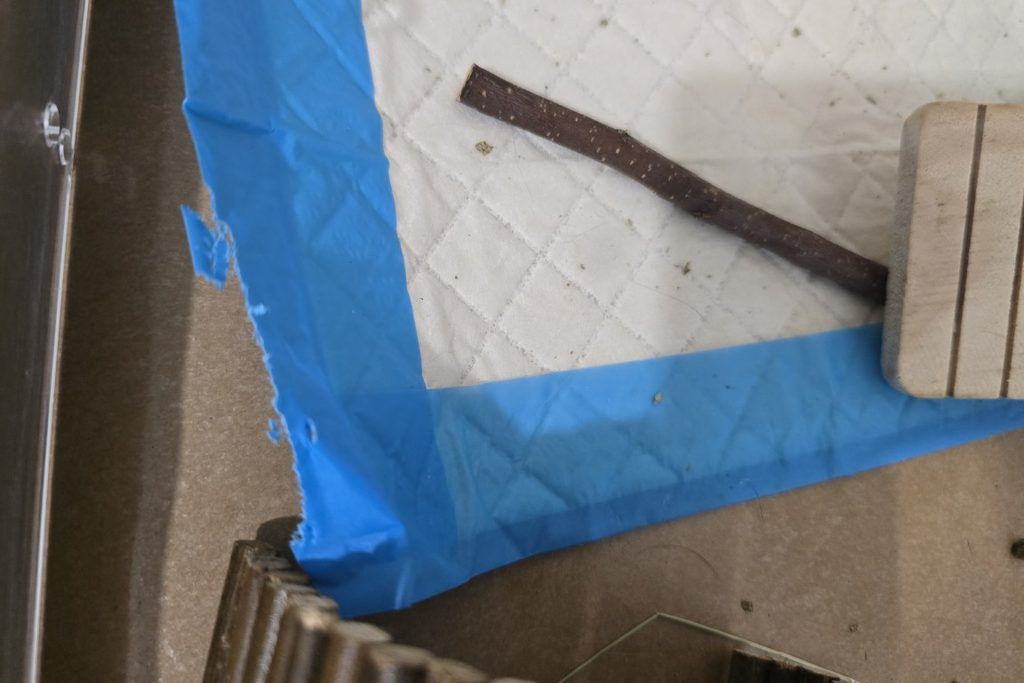
We tried the pee pads we buy for our dogs once. The boys chewed the plastic borders almost right away and a lot. It was our biggest scare, and we will never use them in the cage again.
Can you use puppy pads or pee pads for guinea pigs?
We don’t recommend exposed pee pads. Guinea pigs can chew the plastic edges and inner layers, which they can’t digest. If your guinea pig eats any plastic, call your veterinarian for guidance.
I didn’t expect them to chew the pads. I definitely didn’t expect them to start so soon or chew so much. When I saw the torn plastic border, my heart dropped. Thank God they were fine.
That moment changed how we look at everything in the cage. Now we ask one question about any new item: what happens if they chew it? Bedding, liners, hides, ramps, toys, and barriers all get that test.
Status: Fixed. No disposable dog pee pads, ever.
Highlights
- The boys chewed the plastic borders quickly
- Plastic isn’t food, and guinea pigs can’t digest it
- Every cage item now gets a chew-safety check
Safety note: If your guinea pig swallows plastic or another non-food material, call your veterinarian, preferably an exotic animal vet. Contact them right away if your guinea pig stops eating or stops producing droppings.
Mistake #6: Not Planning for the Laundry Side of Washable Liners
Washable liners were much easier to clean than paper bedding, but ours shrank in the wash. We now layer extra liners to cover the floor and add absorbent cotton and chenille blankets that we swap daily.
Are washable liners better than paper bedding for guinea pigs?
Neither is better for every home. Washable liners cut down on repeat purchases and make spot cleaning easier, but they add laundry. Paper bedding means less laundry but more ongoing cost.
Our first washable liners were a 2-pack of 24 x 48 inch fleece-topped pads. Cleaning got so much easier. Hay and droppings sit on top instead of mixing in, so a quick sweep goes a long way.
Then they shrank in the wash and no longer covered the floor. Instead of giving up, we bought more and now layer them so they fit under the cage panels. While the liners are out, the boys wait in a pet carrier so they stay safe and contained.
We also started testing blankets. We didn’t go with plain fleece, because fleece isn’t absorbent on its own unless you condition it with several hot dryer cycles, and that isn’t something we want to do every day. Cotton and chenille blankets have been surprisingly absorbent. Our routine now is to swap in a fresh blanket every day along with the liners and alternate the washing.
One honest watch-out: the more we wash the chenille, the more it starts to unravel and bead up. We haven’t seen the boys nibble those spots, but we’re watching closely. The Merck Veterinary Manual advises bedding that’s free of loose fibers and strings, so any blanket that’s coming apart needs to come out.
And the laundry worry? We considered the laundromat, but so far our home laundry doesn’t smell like guinea pigs, so we wash everything at home.
Status: Fixed, still fine-tuning. Liners and blankets are working. We may add small fleece pads for high-pee spots later, but we’re testing other liners first.
Highlights
- Washable liners made spot cleaning much easier
- Our liners shrank, so we layer extras
- Cotton and chenille blankets were surprisingly absorbent
- Check fabric every wash for loose threads
Guinea Pig Haven Tip
Buy one more liner than you think you need. With a spare ready, cage changes don’t depend on laundry day.
Mistake #7: Giving Two Guinea Pigs Only One Hide
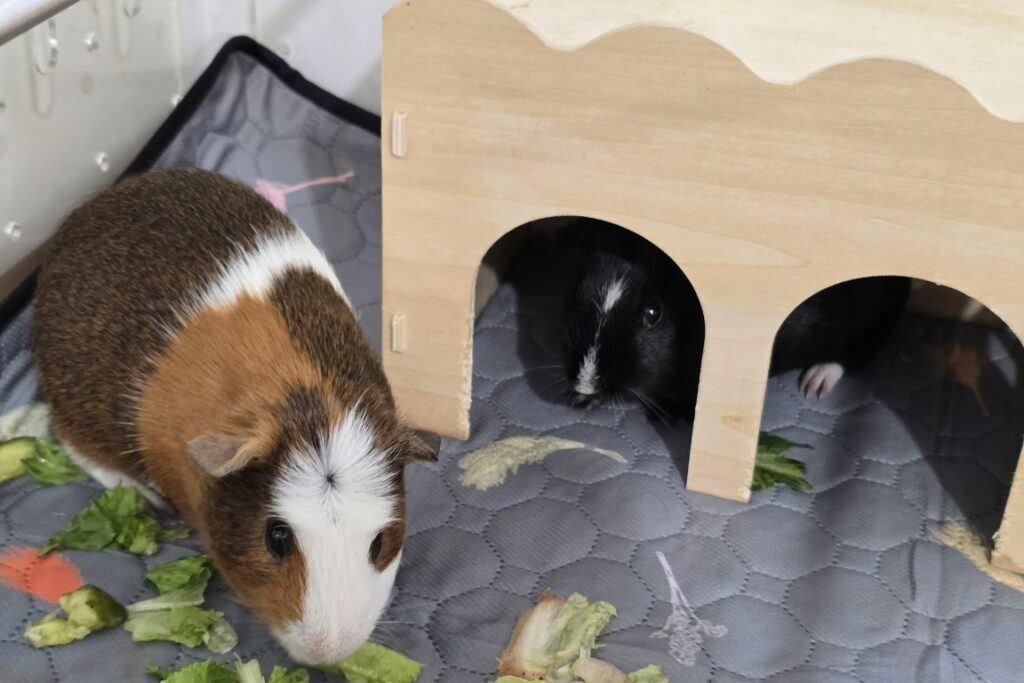
We started with one hide for two boys. We later learned each guinea pig needs its own hide, plus at least one extra, so no one has to compete for a safe spot.
How many hides do two guinea pigs need?
At least three. The Merck Veterinary Manual says an enclosure should have more hiding spots than guinea pigs, so one guinea pig can always retreat without the other blocking the way.
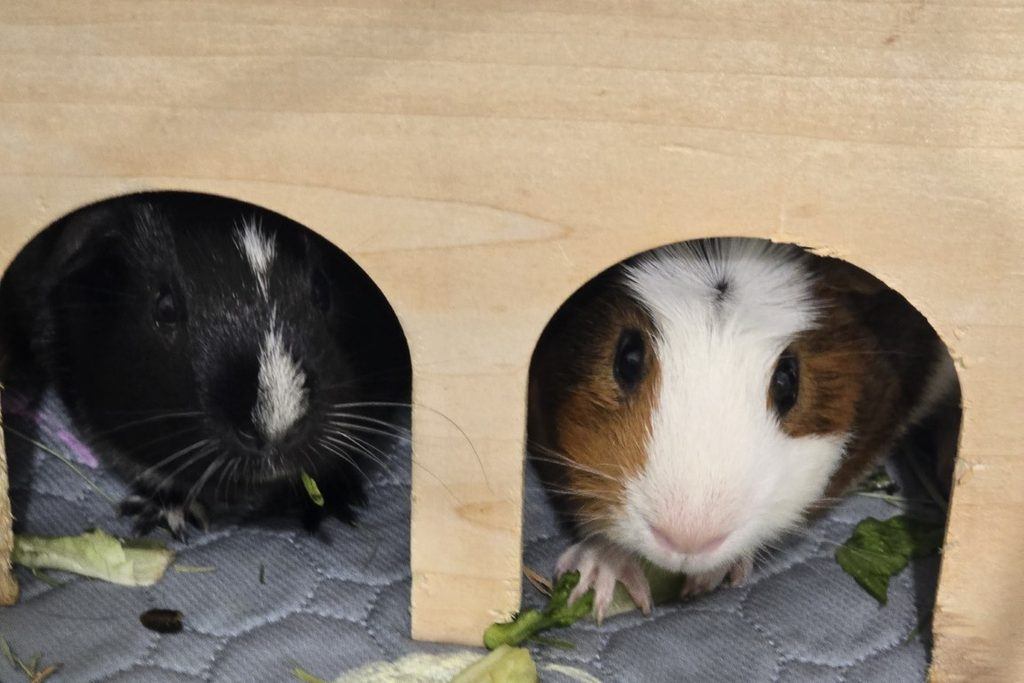
Our wooden double-arch hide looked roomy, and the boys do pile in together. But I learned after our first setup that sharing one hide isn’t the same as each having a place to escape to.
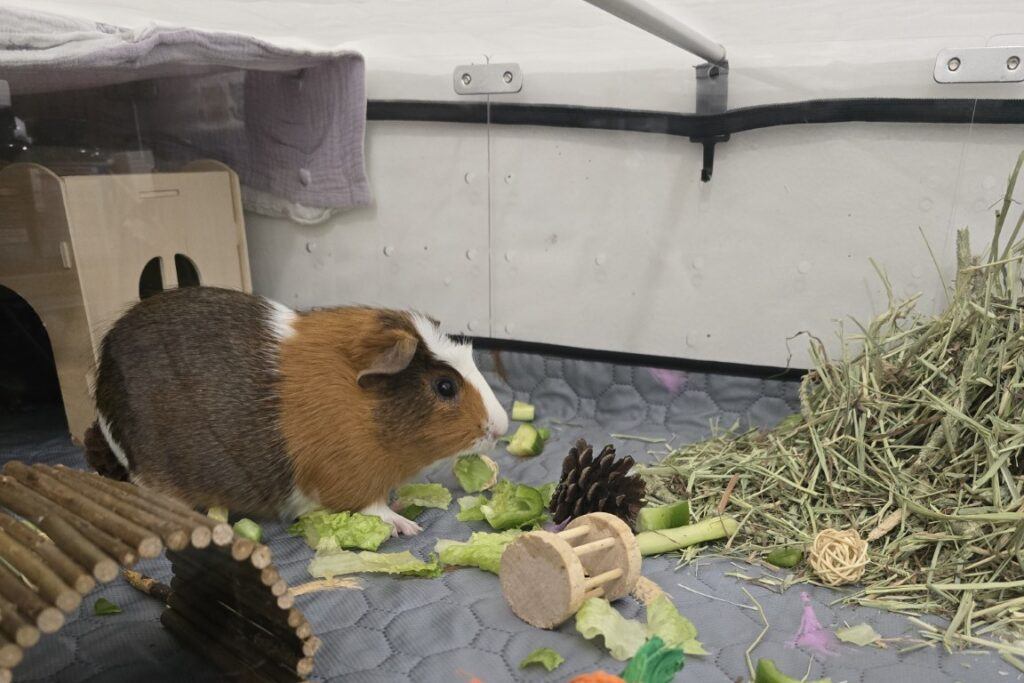
For now, the boys are small enough to share. We also keep about a third of the enclosure covered with a blanket over the sides, which gives them a fully covered hideaway without competing for the wooden hide.
The biggest surprise? They love hiding in the hay bags. Spice tucks himself right in and eats his way through.
Status: Fixing. More hides are coming with our expansion.
Highlights
- Two guinea pigs need at least three hiding spots
- A blanket-covered corner works as an extra hideaway
- Hay bags double as hides for our boys
Guinea Pig Haven Tip
Choose hides with two exits. A hide with one door lets one guinea pig block the other inside.
Mistake #8: Piling Hay on the Floor Instead of Using Hay Bags
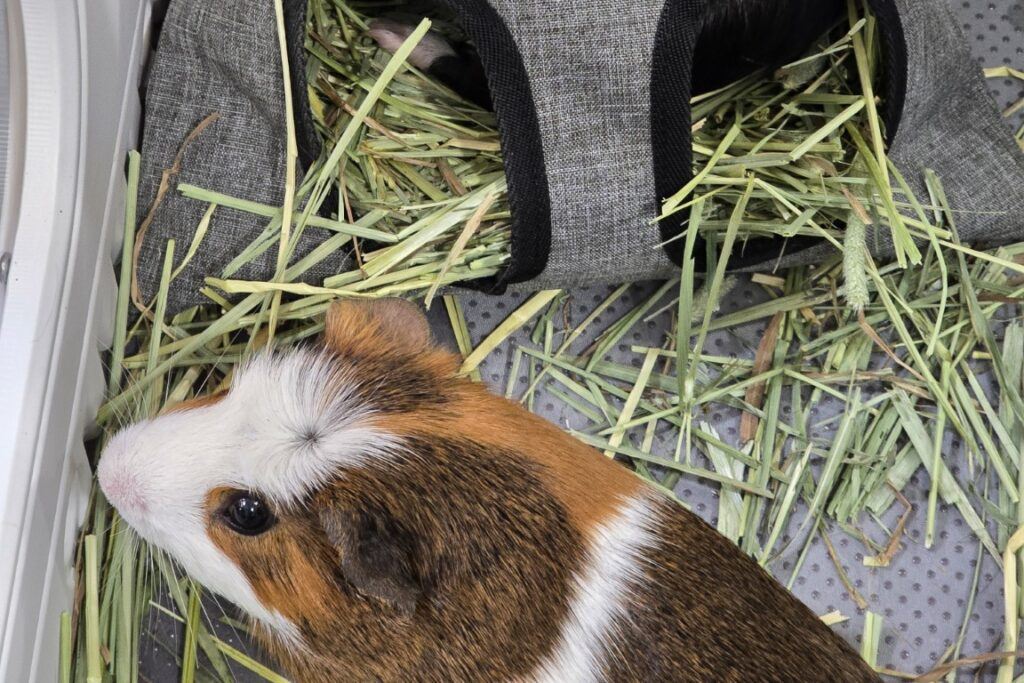
Loose hay piles got trampled, peed on, and wasted. Switching to fabric hay bags cut the mess so much that a bag of hay now lasts us almost twice as long.
Do guinea pigs need a hay rack or hay bag?
Not strictly, but it helps. Guinea pigs need unlimited hay, and a bag or rack keeps more of it clean and edible. Whatever you use, make sure your guinea pigs can always reach plenty of fresh hay.
Hay is the most important part of a guinea pig’s diet. VCA Animal Hospitals calls for unlimited grass hay, and PDSA says hay and grass should make up most of what guinea pigs eat. So we always kept a big pile in the corner.
The problem? Guinea pigs make a huge mess of hay. Ours would burrow in, scatter it, sit on it, and pee on it. A lot of that hay ended up soiled and thrown out with the cleaning instead of eaten.
Hay bags changed that. The boys pull hay through the openings, so more of it stays clean until they eat it. In our home, a bag of hay now lasts almost twice as long. As a bonus, the bags double as hides, which you saw with Spice in Mistake #7.
Status: Fixed. Hay bags are now a permanent part of our setup.
Highlights
- Guinea pigs need unlimited hay, every day
- Loose piles get soiled and wasted fast
- In our home, hay bags almost doubled how long our hay lasts
Guinea Pig Haven Tip
Fabric hay bags are a chew item too. Check the seams and openings when you refill, and replace a bag once it starts fraying.
Mistake #9: Not Planning for a Table Long Enough for the Cage
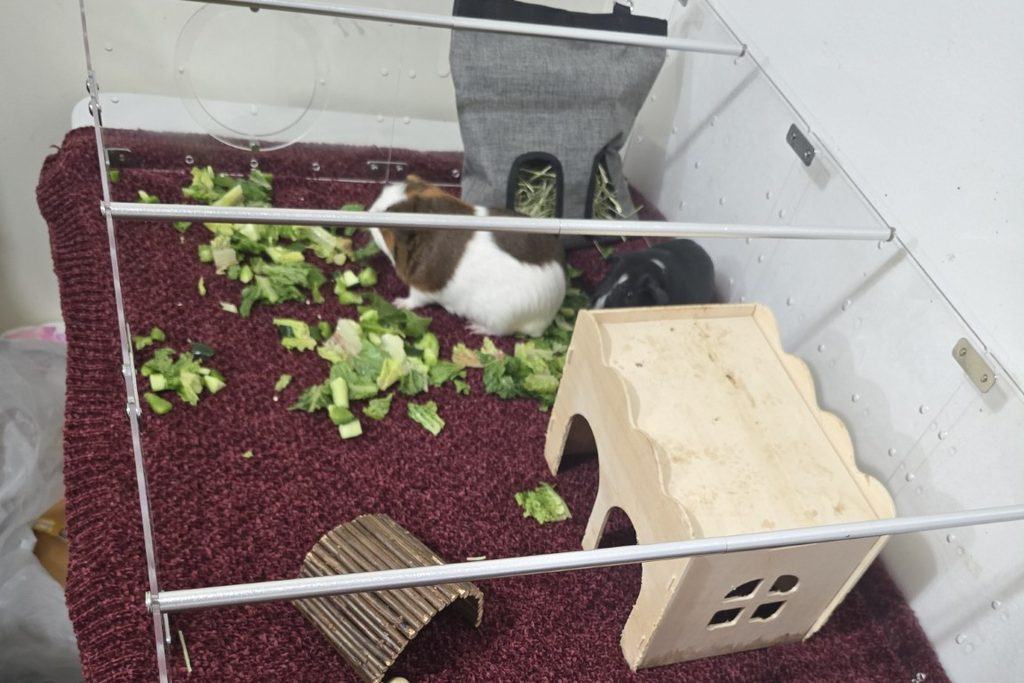
We didn’t want the boys on the floor, but our first table was too short, and the second was exactly the cage’s size. It took a third, longer table to get it right. We’re now on a folding picnic table.
Should a guinea pig cage be on the floor?
A raised spot is usually better. Floor level can mean more drafts, dust, vibrations from footsteps, and easy access for kids and other pets. If you raise the cage, the stand or table must be sturdy and larger than the cage.
A veterinary-informed placement guide we read lists several reasons to keep guinea pigs off the floor. To a guinea pig on the floor, people look like walking giants. Footsteps and vacuuming send stronger vibrations through the floor, drafts are more noticeable down low, and floors collect more dust. A floor-level cage is also easy for small children to reach.
We knew that going in, but the table we planned to use turned out too short for the cage. So at first, the cage had to sit on the floor. The next table we bought was exactly the size of the cage, with no room to spare. We ended up buying a third, longer table.
Right now we use a foldable picnic table. It works, but the next sizes up are more solid and more expensive. And because we’re expanding the cage, the table has to grow with it.
That’s why this mistake belongs in the cage decision itself. Before you buy, plan for both the cage and what it will sit on, now and after any expansion. Some owners skip the table problem by choosing a cage with its own built-in stand. Just make sure the floor the guinea pigs actually live on still meets size guidance.
Status: Fixed for now. Our folding table works today, and a sturdier, longer surface is part of our expansion plan.
Highlights
- Raised placement helps with drafts, dust, vibration, and access
- The table must be longer and wider than the cage, not the same size
- Budget for the table when you budget for the cage
Guinea Pig Haven Tip
Measure your cage, then plan for your expansion. Buy a table that fits the bigger setup so you only buy once.
Mistake #10: Thinking Pellets Were Enough
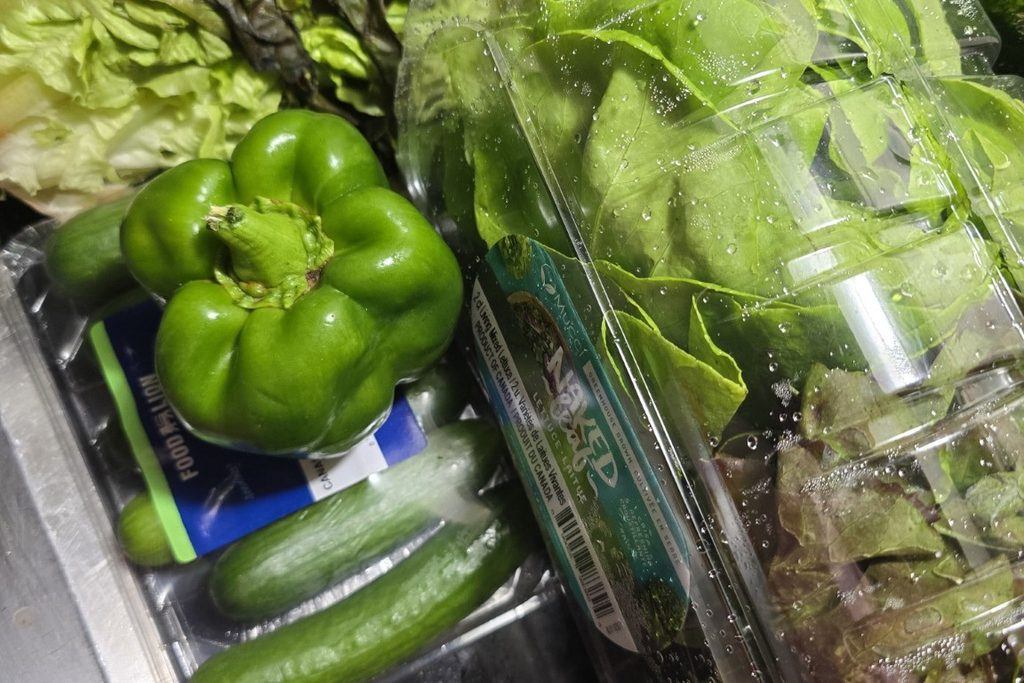
Pellets are only a small part of a guinea pig’s diet. Our boys need unlimited hay plus fresh food every day, mostly vegetables and leafy greens.
What should guinea pigs eat every day?
Guinea pigs need unlimited grass hay, fresh vegetables and leafy greens daily, and a small portion of guinea pig pellets. PDSA suggests about one cup of fresh vegetables per guinea pig per day, mixed across several types.
When we started, it was easy to think a bowl of pellets covered the basics. It doesn’t. Pellets are a supplement, not the main meal.
Guinea pigs can’t make their own vitamin C, so they need it from food every day. VCA explains that pellets and fresh vegetables usually supply enough vitamin C for healthy guinea pigs, and recommends a variety of washed leafy greens and colored vegetables. VCA also notes that vitamin C in pellets breaks down over time, so pellets should be used or replaced within 90 days of the manufacture date.
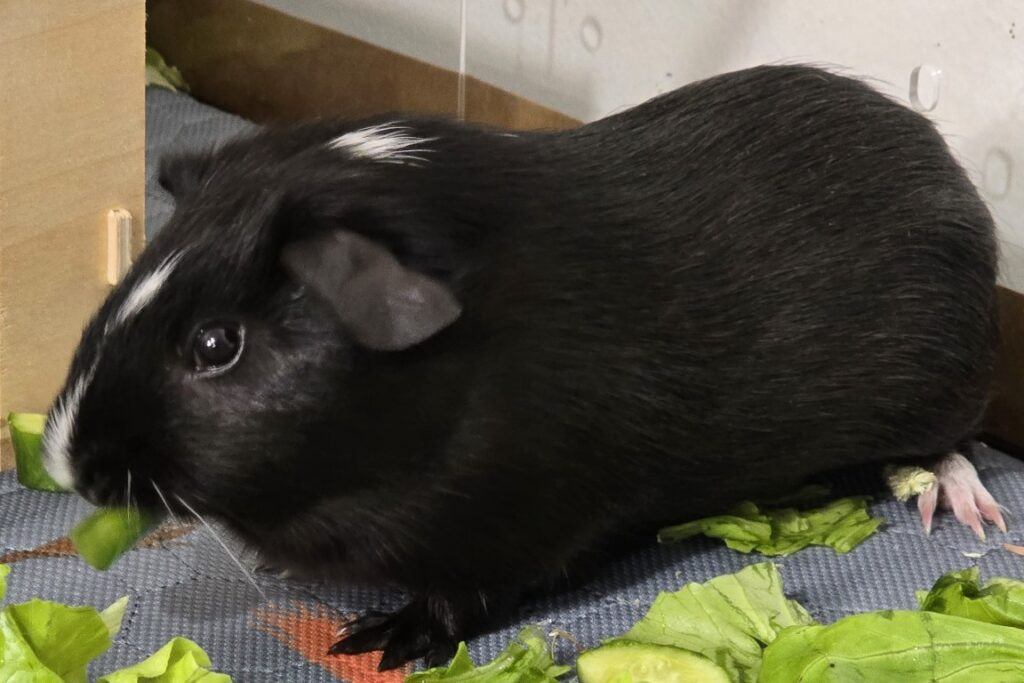
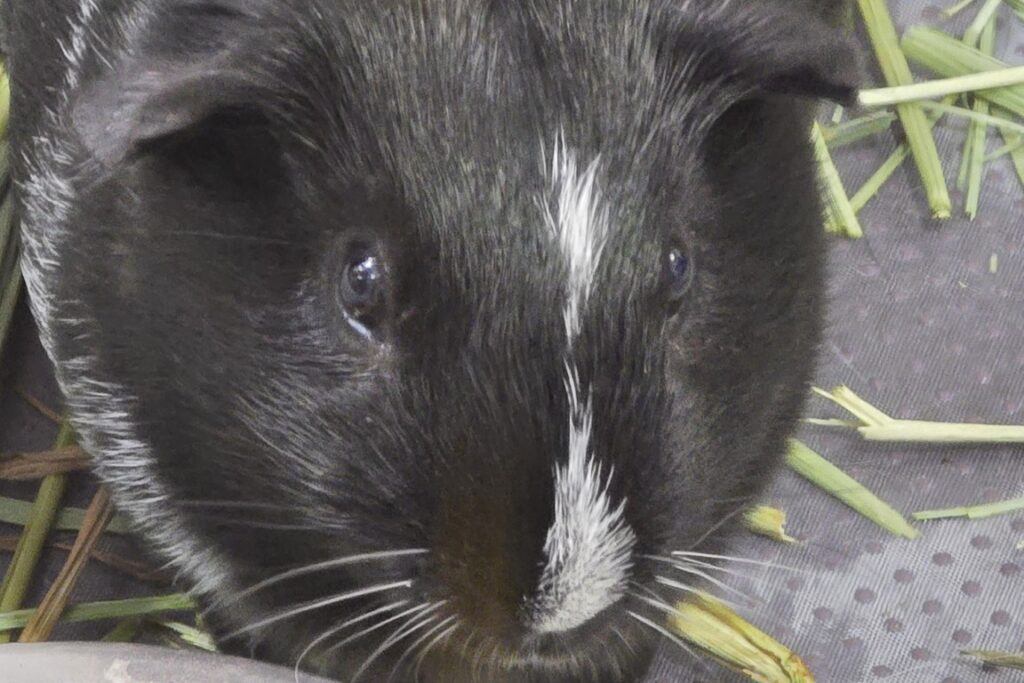
Now fresh veggies are part of every day. The boys have opinions, too. Pumpkin loves his lettuce and cucumbers, and Spice is addicted to green peppers.
Status: Fixed. Fresh vegetables every day, alongside unlimited hay and a small portion of pellets.
Highlights
- Hay first, then fresh vegetables daily, then a small portion of pellets
- About one cup of vegetables per guinea pig per day, mixed (PDSA)
- Guinea pigs need vitamin C from their food
Guinea Pig Haven Tip
Young guinea pigs under about six months have different needs. The Merck Veterinary Manual notes that growing guinea pigs need alfalfa hay and pellets. Ask your vet what’s right for your guinea pigs’ age.
Every Bedding and Liner We Tried, Compared
In our home, washable liners layered with cotton blankets beat paper bedding, disposable paper liners, and dog pee pads for cost, cleanup, and chew safety.
What is the best bedding for a first guinea pig cage?
The best bedding is safe, absorbent, and affordable for you to keep clean. Paper bedding and washable liners are both common choices. Avoid anything with plastic your guinea pigs can reach, and anything with loose threads.
| What we tried | How it went in our setup | Chew safety | Our verdict |
|---|---|---|---|
| Paper bedding | Odor held about 5 days; hard to spot clean | Safe; paper is digestible | Good bedding, too costly for us |
| Disposable paper liners | Clunky; costly as disposables | Chewed through; near escape | Stopped |
| Dog pee pads | Tried once | Plastic borders chewed fast | Never again |
| Washable fleece-topped liners (24 x 48 in) | Easy to sweep; shrank in the wash | No issues so far | Keeping, layered |
| Cotton blankets | Surprisingly absorbent; swapped daily | No issues so far | Keeping |
| Chenille blankets | Absorbent; unraveling after many washes | Watch for loose threads | Using with close checks |
This table reflects our experience with two boys, not a universal ranking. For a researched look at every bedding type, see our upcoming Guinea Pig Bedding Guide.
Highlights
- Our current routine: layered washable liners plus a fresh blanket daily
- Our biggest lesson: chew safety comes before convenience
If you want a more in depth dive into all things Habitat & Housing, checkout our hub page for more information.
Guinea Pig Haven Tip
Rotate two complete sets of liners and blankets. One goes in the cage while the other is in the wash.
What We Got Right With Our First Cage
Clear acrylic panels kept our toddler’s fingers out, the gauze lid kept other things out, and placing the cage up high kept the dogs from bothering the boys.
How do you keep guinea pigs safe around kids and other pets?
Choose a cage that small fingers and curious pets can’t get into, and supervise every interaction. Guinea pigs are prey animals, and the RSPCA notes they can be easily stressed by dogs, cats, and children, so physical protection matters.
Not everything was a mistake. Our biggest worry going in wasn’t the guinea pigs. It was our toddler, because she is, well, a toddler. I’ve been bitten by a guinea pig before, and our daughter was once bitten by a hamster after sticking her finger in its cage. Guinea pigs don’t usually bite, but I didn’t want to take that chance.
That’s why we chose clear acrylic panels. Small fingers can’t poke through, and she can still see and enjoy the boys without breaching the barrier.
For our other pets, we use the translucent gauze lid that came with the unit. It keeps the enclosure covered and keeps things from falling in. Our dogs noticed the boys right away, sniffed like dogs do, and lost interest. The cage sits high enough to stay out of their reach. Our cat stays mostly outside and seems uninterested, but cats are predators, so we still supervise any time she’s near. If you have a cat who likes to lounge on top of things, a hard cover is also sold for our style of cage.
Two Things to Know About Our Acrylic Cage
We like our cage, and we want to be honest about two drawbacks:
- It can shift. The panels aren’t fixed to a base, so the enclosure can slide a little, and even the boys move it when they run laps. It isn’t unstable or floppy, but it isn’t anchored either.
- The hinges collect pee. Urine settles into the panel hinges, so wipe them during your regular cage cleaning.
Highlights
- Clear acrylic panels keep small fingers out
- A lid helps when cats or other pets are around
- Supervision still matters, even with a covered cage
Guinea Pig Haven Tip
Add the hinges to your cleaning checklist. It’s an easy spot to miss and a common source of odor.
Where Our Guinea Pig Cage Goes Next
Over the next six months, we plan to expand our cage’s floor space for our two boys, add more hides, and keep testing liners for the high-pee areas.
When should you upgrade a guinea pig cage?
Upgrade when your cage is at or near the minimum, when your guinea pigs are growing, or when two guinea pigs start competing for space, food, or hides. Planning ahead lets you expand before problems start.
Here’s our plan:
- Expand the floor. Add expansion panels to move well past the 10.5 sq ft preferred size for two.
- Add hides. At least one per boy plus an extra, placed in different areas of the enclosure.
- Keep testing liners. Possibly small fleece pads for high-pee spots, after trying other options first.
- Keep documenting. We’ll share every change here, on YouTube, and on Pinterest.
Follow along on our Our Guinea Pig Journey page to see each update as it happens.
Guinea Pig Haven Tip
Plan your expansion before you need it. Our boys are fine today, which is exactly why now is the time to plan.
When to call a vet: This article shares setup lessons, not medical advice. If your guinea pig eats something it shouldn’t, stops eating, stops producing droppings, or seems unwell, contact a veterinarian with guinea pig experience right away.
Getting ready for your own guinea pigs? Here are the guinea pig supplies we’d start with if we were doing it all again.
Frequently Asked Questions
What is the most common first guinea pig cage mistake?
Buying a cage that’s too small. Many commercial cages fall short of welfare guidance, which lists 7.5 sq ft as the minimum for two guinea pigs and at least 10.5 sq ft as preferred.
Are pet store cages good for guinea pigs?
Many aren’t. The Merck Veterinary Manual notes that many commercial guinea pig cages are too small, especially for more than one animal. Measure the floor before you buy.
Is a 4 x 2 ft cage big enough for two guinea pigs?
A 4 x 2 ft cage is 8 sq ft, which meets the 7.5 sq ft minimum for two. It’s below the 10.5 sq ft that welfare groups prefer, so plan to expand, especially for two males.
Can guinea pigs use ramps and second levels?
Some do, but upper levels don’t count toward floor space. Guinea pigs are ground-dwelling and don’t naturally climb, so put your space into a bigger floor first.
Can I use puppy pads in a guinea pig cage?
We don’t recommend exposed pads. Our boys chewed the plastic borders almost immediately. Choose liners without reachable plastic edges or layers.
Are cotton or chenille blankets safe for guinea pigs?
They worked well for us as absorbent bedding. Check them after every wash and retire any that fray, since veterinary guidance advises bedding free of loose fibers and strings.
Do guinea pigs need a lid on their cage?
Not always, since guinea pigs usually don’t jump. A lid or cover helps when cats, dogs, or small children are in the home.
How many hides do two guinea pigs need?
At least three: one for each guinea pig plus an extra. Choose hides with two openings so neither guinea pig gets trapped.
Should a guinea pig cage be on the floor or a table?
A raised spot is usually better, since floor level can mean more drafts, dust, and vibration. Use a sturdy table that’s larger than the cage, and leave room for future expansion.
Are pellets enough for guinea pigs?
No. Guinea pigs need unlimited grass hay and fresh vegetables every day, plus a small portion of pellets. PDSA suggests about one cup of vegetables per guinea pig daily.
Ready to Build a Better Setup?
Every mistake on this list taught us something, and we’re still learning. If you’re just getting started, the best next step is the big picture: housing, food, health, handling, and daily care all in one place.
Start with our Complete Guinea Pig Care Guide for Beginners, then use our Guinea Pig Cage Setup: 7 Essential Steps That Work to build your enclosure step by step.