Guinea pig bedding is one of those choices that seems simple until you’re standing in the pet aisle comparing bags, liners and pads that all promise odor control. The right bedding keeps your guinea pigs’ feet dry, their lungs healthy and your cage easier to clean. The wrong one can mean sore feet, breathing problems, a smelly room, or a chewed-up mess you never saw coming.
Here’s the short answer. Washable fleece liners with an absorbent core and low-dust, unscented paper bedding are the safest, most widely recommended choices. Cedar, untreated pine, corn cob and anything your guinea pigs can chew into plastic should stay out of the cage.
We’ve tested several of these with our two boys, Pumpkin and Spice, from paper bedding to washable liners to one pee pad experiment we’ll never repeat. Below, we rank 10 common bedding options from best to worst, using veterinary and welfare guidance alongside what actually happened in our cage.
TLDR: Guinea Pig Bedding Options at a Glance
Short on time? Here’s how the most common guinea pig bedding options stack up.
- Best overall: washable fleece liners with an absorbent core, and low-dust, unscented paper bedding.
- Good with care: kiln-dried aspen shavings, and wood or paper pellets used only as a base layer.
- Use with caution: kiln-dried pine (sources disagree), cotton blankets or towels (still testing), and hay (great to eat, not a primary bedding).
- Avoid: exposed disposable pee pads and liners, cedar and untreated pine shavings, and corn cob, cat litter, sawdust or straw.
- Always: keep bedding dry, unscented and low in dust, and assume your guinea pigs will chew anything they can reach.
What Makes Good Guinea Pig Bedding?
Good guinea pig bedding stays dry, absorbs urine well, keeps dust low, has no added scent, and is safe if your guinea pigs nibble it. It also needs to fit your budget and cleaning routine.
What should I look for in guinea pig bedding?
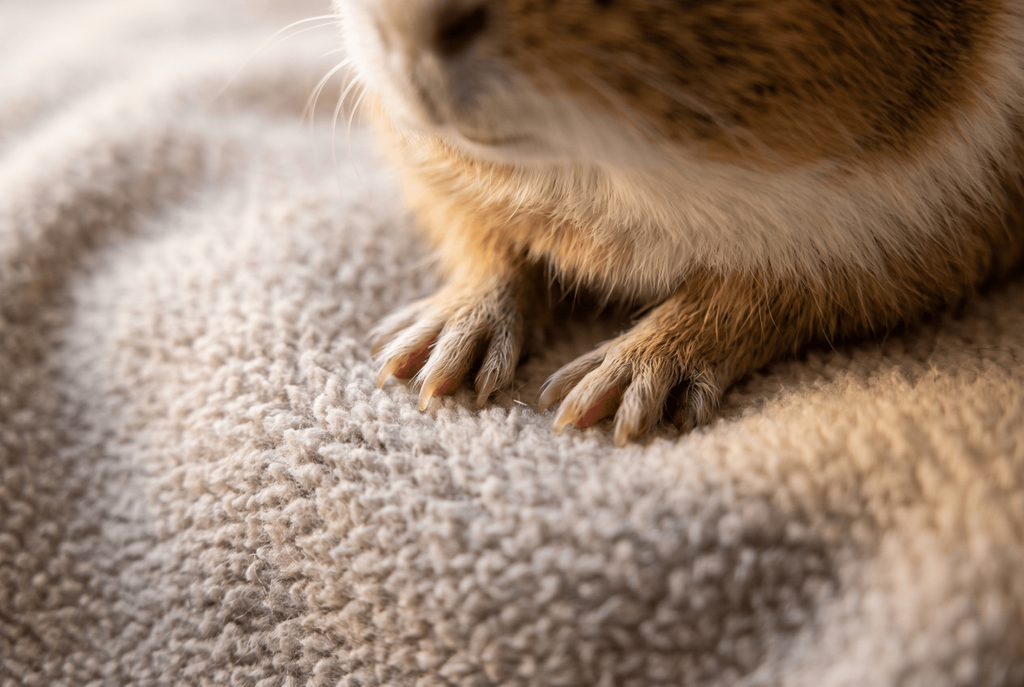
Look for bedding that absorbs well, stays dry on top, and is low in dust and unscented. It should also be safe if chewed, comfortable underfoot, and realistic for you to keep clean.
Bedding does more than cover the cage floor. It’s your guinea pigs’ bathroom, the surface they walk and sleep on all day, and something they will almost certainly taste. The Merck Veterinary Manual stresses that bedding should stay dry and not collect moisture, because damp bedding can irritate feet and skin.
Use this quick check before buying any bedding:
| Look for | Why it matters | Red flags |
|---|---|---|
| Absorbency | Pulls urine away so the surface stays dry | Damp patches, ammonia smell between cleans |
| Low dust | Guinea pigs have sensitive respiratory systems | Visible dust cloud when you pour it |
| No added scent | Fragrances can irritate their airways | “Fresh scent,” baking soda, perfumes |
| Chew safety | Guinea pigs taste everything they can reach | Plastic backing, foam, loose threads, fluffy strands |
| Comfort | Delicate feet walk on it all day | Hard pellets or rough material on the surface |
| Cost over time | Some bedding is cheap per bag but replaced often | Needing a new bag every few days |
Highlights
- Dry, absorbent, low-dust and unscented are the non-negotiables.
- Anything in the cage should be safe if chewed.
- The “best” bedding is the safe option you can realistically keep clean.
Guinea Pig Haven Tip
Before buying any bedding, ask the question we use for everything in the cage: what happens if they chew it?
Washable Fleece Liners (Best Reusable Option)
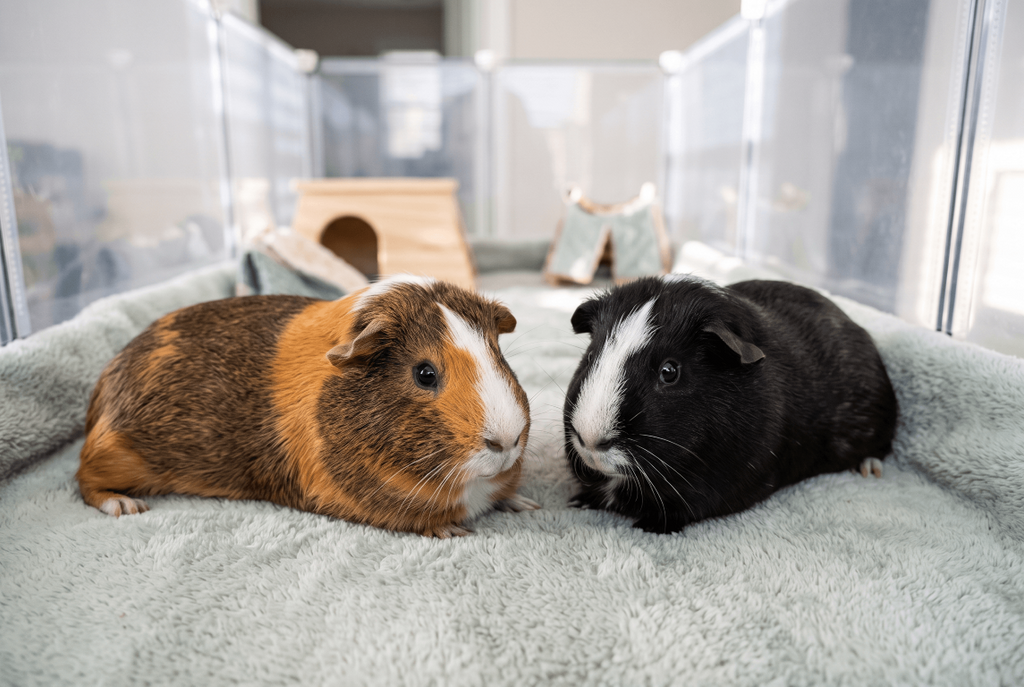
Washable fleece liners are one of the best guinea pig bedding options when they have an absorbent core. The fleece top lets urine pass through to the layer underneath, keeping the surface dry, and the whole liner goes in the washing machine.
Are fleece liners good for guinea pigs?
Yes, when they’re built correctly. A good liner has a fleece top that wicks moisture down, an absorbent middle layer that holds it, and a bottom layer that protects the cage floor. Plain fleece on its own doesn’t absorb urine.
Fleece liners are popular for a reason: they’re reusable, soft underfoot, low in dust, and they make droppings easy to see and sweep up. Over months, they can cost less than buying bag after bag of disposable bedding.
The key is understanding how they work. Fleece itself doesn’t hold liquid; it lets urine pass through to an absorbent layer below. Experienced keepers and liner makers note that new fleece often needs several washes before it starts wicking well, and fabric softener can stop it wicking altogether.
Our experience: After paper bedding, we switched to washable fleece-topped liners, and cleaning got so much easier. The catch was that ours shrank in the wash, so we bought more and now layer them to fit under the cage. We wash them at home, and our laundry doesn’t smell like guinea pig.
Pros and Cons
- ✅ Reusable, so it costs less over time
- ✅ Very low dust, and droppings are easy to see and sweep
- ✅ Soft underfoot
- ⚠️ Needs an absorbent core and several pre-washes before it wicks well
- ⚠️ Can shrink in the wash, and frayed edges become chew risks
- ⚠️ Means regular laundry
Guinea Pig Haven Tip
Check liners every time you wash them. Loose threads, frayed edges or exposed padding should be fixed or replaced, because guinea pigs will find and chew them.
Paper Bedding (Best Loose Bedding)
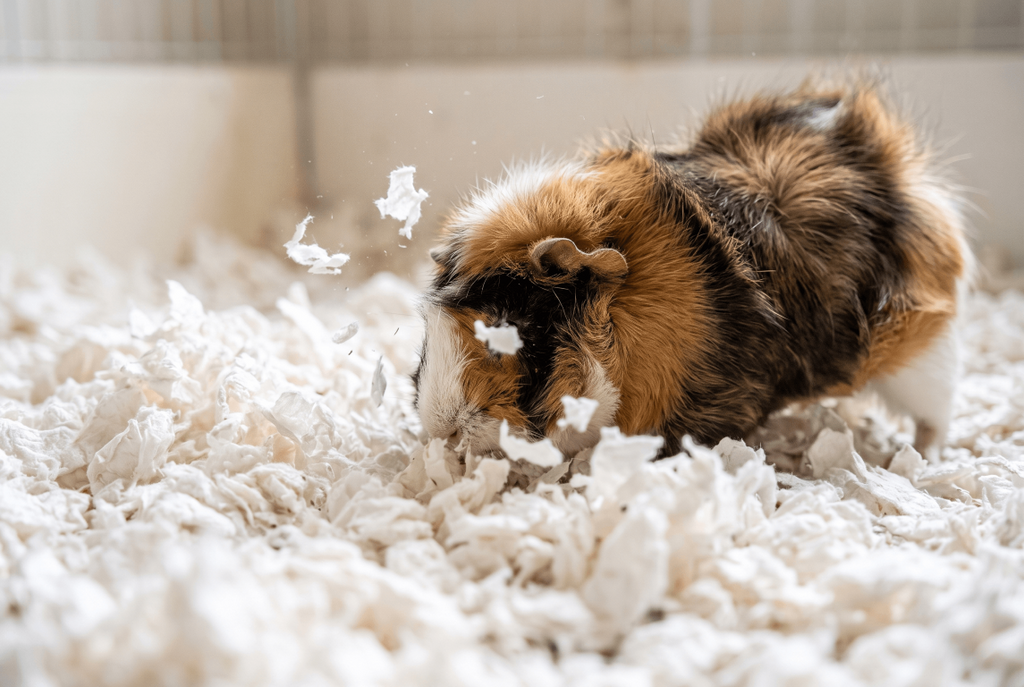
Low-dust, unscented paper bedding is one of the safest loose beddings for guinea pigs. It’s absorbent, soft, and easy to spot clean, though it can get expensive in a large cage.
Is paper bedding safe for guinea pigs?
Yes. The Merck Veterinary Manual lists paper-based products as preferred bedding and notes paper is safer than wood shavings because it’s digestible if nibbled. Humane World for Animals recommends paper bedding about 2–3 inches deep.
Paper bedding is soft, absorbent, and easy to scoop out in wet spots. Look for unscented, low-dust products made for small animals rather than shredded printed paper or newspaper, which doesn’t absorb well on its own.
The tradeoff is cost and waste. A properly sized cage for two guinea pigs needs a lot of bedding, and you’ll replace it regularly.
Our experience: Paper bedding was our first choice. It controlled odor reasonably well for about five days in our setup, but we were changing it about every five days, it got expensive fast, and keeping it clean was harder than we expected. That’s what pushed us toward washable liners.
Pros and Cons
- ✅ Widely recommended by vets and welfare groups
- ✅ Digestible if nibbled, unlike wood
- ✅ Easy to spot clean wet areas
- ⚠️ Gets expensive in larger cages
- ⚠️ Creates ongoing waste
- ⚠️ Needs 2–3 inches to absorb properly
Kiln-Dried Aspen Shavings (Good Budget Wood Option)
Kiln-dried aspen shavings are a lower-cost wood bedding option. Aspen is a hardwood without the strong aromatic oils found in cedar and pine, but shavings can be dusty and are less digestible than paper.
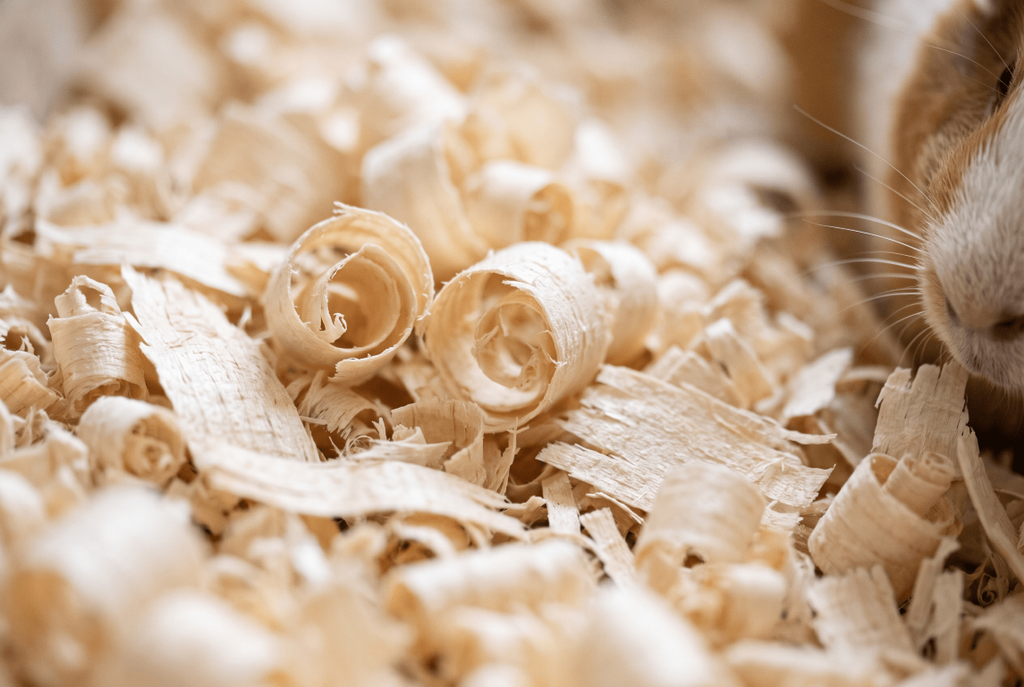
Are aspen shavings safe for guinea pigs?
Many keepers use kiln-dried aspen shavings safely, and the RSPCA supports dry, dust-free wood shavings. Choose dust-extracted shavings and watch for sneezing. Note that Humane World for Animals recommends paper only.
Aspen appeals to budget-minded owners because it’s absorbent, affordable and controls odor reasonably well. Unlike cedar and pine, it isn’t an aromatic softwood.
The cautions are real, though. Wood shavings can be dusty, can stick to long-haired guinea pigs, and the Merck Veterinary Manual notes wood can cause blockages if eaten, while paper is digestible.
Pros and Cons
- ✅ Affordable and absorbent
- ✅ No strong aromatic oils like cedar or pine
- ⚠️ Can be dusty; choose dust-extracted
- ⚠️ Less digestible than paper if eaten
- ⚠️ Clings to long-haired guinea pigs
Guinea Pig Haven Tip
If your guinea pigs start sneezing more after switching to shavings, switch back to paper or fleece, and see a vet if it continues.
Wood or Paper Pellets (Base Layer Only)
Compressed wood or paper pellets are very absorbent and good at controlling odor, but they’re hard underfoot. Use them only as a bottom layer, covered with softer bedding.
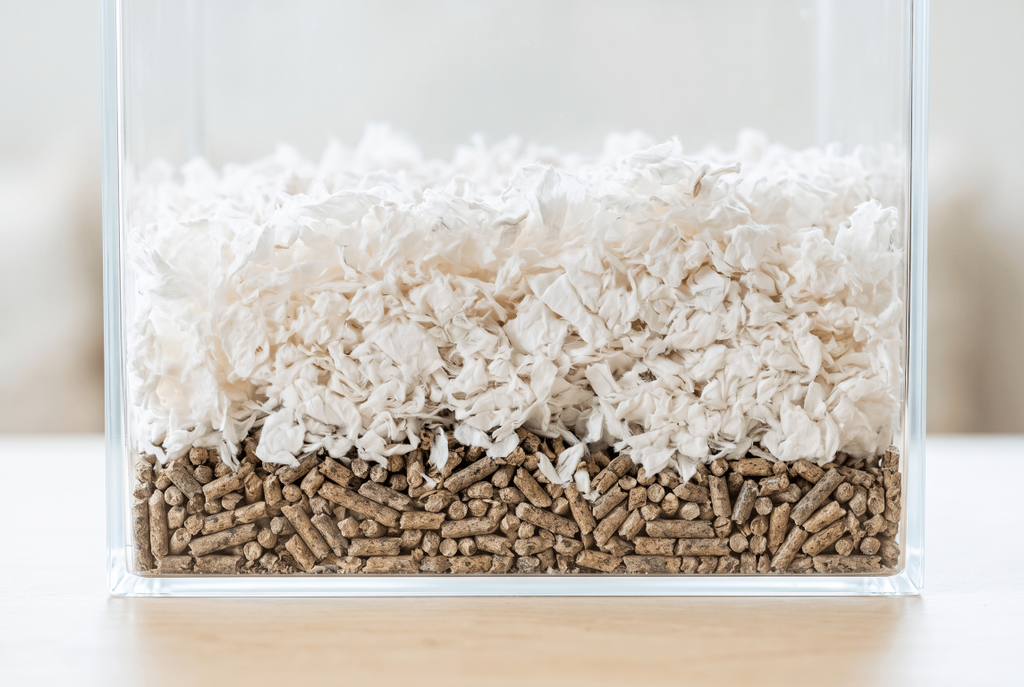
Can guinea pigs live on pellet bedding?
Not as the only surface. Pellets are firm and can be uncomfortable for guinea pigs’ soft foot pads over time. Many keepers use a thin pellet layer underneath paper bedding or fleece to boost absorbency.
Pellets soak up a lot of liquid for their size, which makes them useful in high-pee corners or under a kitchen area. The problem is comfort: guinea pigs spend all day on their feet, and a hard, lumpy surface isn’t kind to them.
If you use wood pellets, choose ones made for small animals from kiln-dried wood, not heating pellets, which may contain additives.
Pros and Cons
- ✅ Very absorbent for its size
- ✅ Strong odor control in wet spots
- ⚠️ Too hard to use as the only bedding
- ⚠️ Heating pellets may contain additives; use small-animal pellets only
Guinea Pig Haven Tip
Try pellets just under the hay area first. It’s the wettest spot in most cages and the easiest place to test whether a base layer helps.
Kiln-Dried Pine Shavings (Use With Caution)
Kiln-dried pine is controversial. The Merck Veterinary Manual lists it as an acceptable bedding, but other veterinary and welfare sources recommend avoiding pine altogether. If you have a choice, paper, fleece or aspen are safer bets.
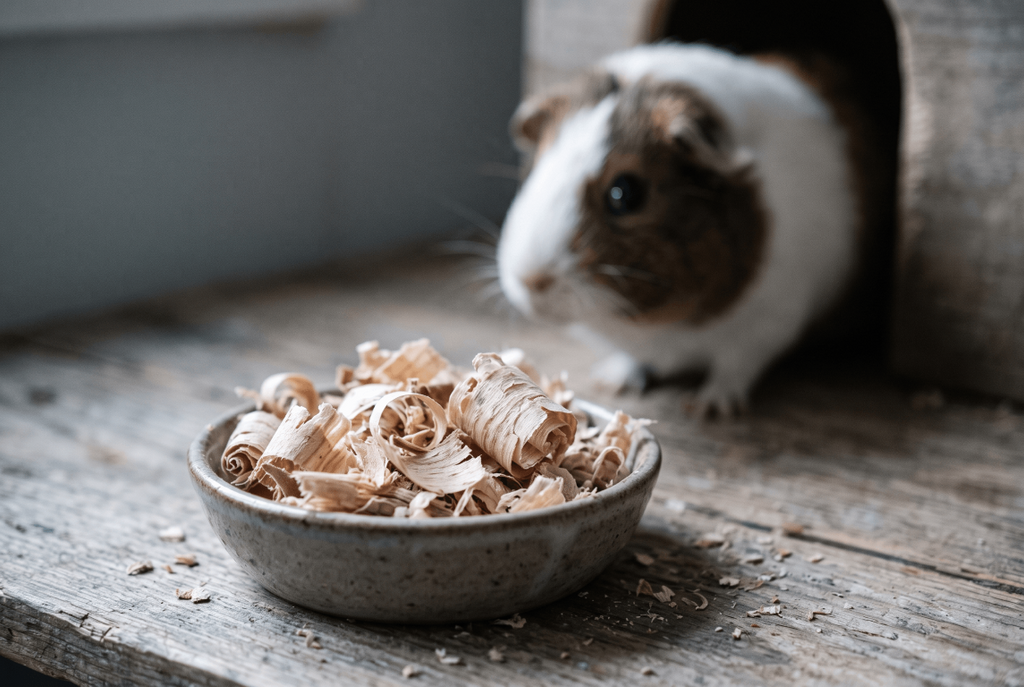
Is pine bedding safe for guinea pigs?
Sources disagree. Kiln drying reduces the aromatic oils in pine, and the Merck Veterinary Manual includes kiln-dried pine among preferred beddings. Purdue’s veterinary hospital says it’s better than cedar but best avoided, and Humane World for Animals doesn’t recommend pine.
The concern with pine, like cedar, is its natural aromatic oils (phenols), which can irritate the respiratory system. Kiln drying lowers them, but the amount left can vary by product. The RSPCA advises against softwood products such as pine.
Because trusted sources land in different places, we don’t recommend pine as a first choice. If you already use kiln-dried pine, choose a dust-extracted product with little or no smell, and watch closely for breathing changes.
Pros and Cons
- ✅ Inexpensive and easy to find
- ✅ Kiln drying reduces aromatic oils
- ⚠️ Trusted sources disagree on its safety
- ⚠️ Remaining oils vary from product to product
- ⚠️ Raw, untreated pine should never be used
Guinea Pig Haven Tip
A strong pine smell is a warning sign. The weaker the scent, the fewer aromatic oils it’s likely to contain.
Cotton Blankets and Towels (Still Testing)
Cotton blankets and towels absorb well and are reusable, but they hold moisture in the fabric rather than wicking it away. They need frequent changes, and any fraying or loops must be watched closely.
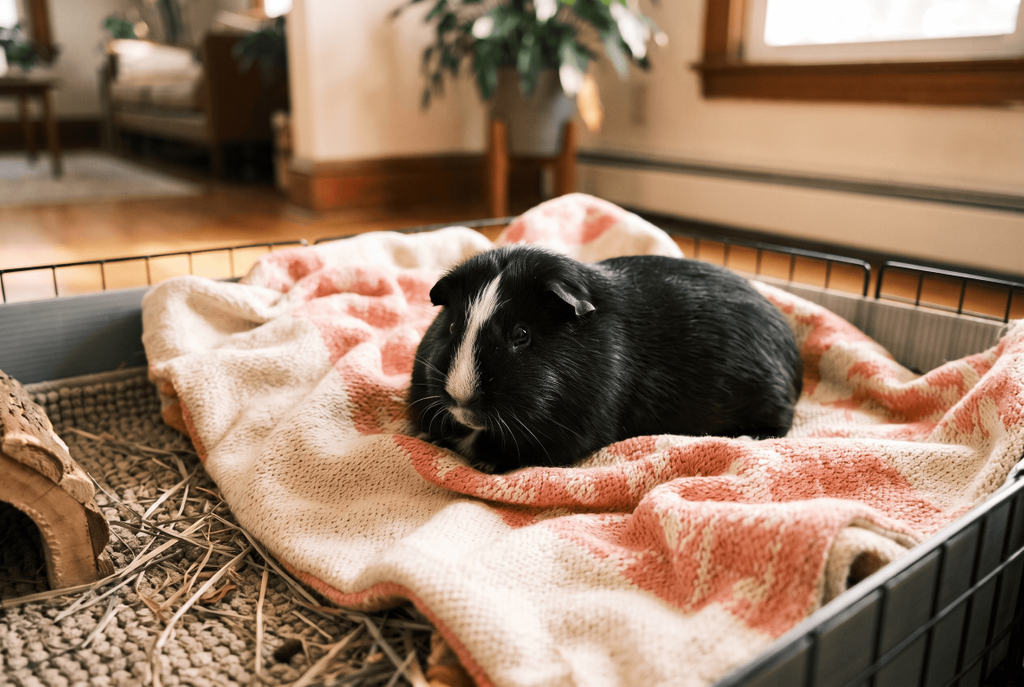
Can I use towels or blankets as guinea pig bedding?
Some owners do, but cotton keeps moisture in the fabric, so the surface can stay damp if it isn’t changed often. Avoid fabrics that shed fibers, form loops, or unravel, since guinea pigs may chew and swallow loose strands.
Towels and blankets are easy to find and simple to wash, and they’re often used as the absorbent layer underneath fleece. Used on top, they need more attention.
The RSPCA warns against bedding that separates into thin strands, because guinea pigs can get tangled in it and it isn’t safe to eat. That’s a good reason to inspect fabric bedding every time you change it.
Our experience: This is what we’re testing right now. We’re using cotton and chenille blankets alongside our liners, swapping one blanket a day and alternating washes, and they’ve been surprisingly absorbent. One thing we’re watching: the chenille is starting to unravel and bead with washing. We haven’t seen any nibbling yet, but if it becomes a chew risk, it’s out. We’ll share a full verdict once we’ve used them longer.
Pros and Cons
- ✅ Absorbent, reusable and easy to find
- ✅ Works well as the absorbent layer under fleece
- ⚠️ Holds moisture in the fabric, so it needs frequent changes
- ⚠️ Fraying, loops and unraveling are chewing and tangling risks
Guinea Pig Haven Tip
Feel the surface after a few hours. If it’s damp to the touch, it’s time to swap, or to use the blanket as an absorbent layer under fleece instead.
Hay (Great to Eat, Not a Primary Bedding)
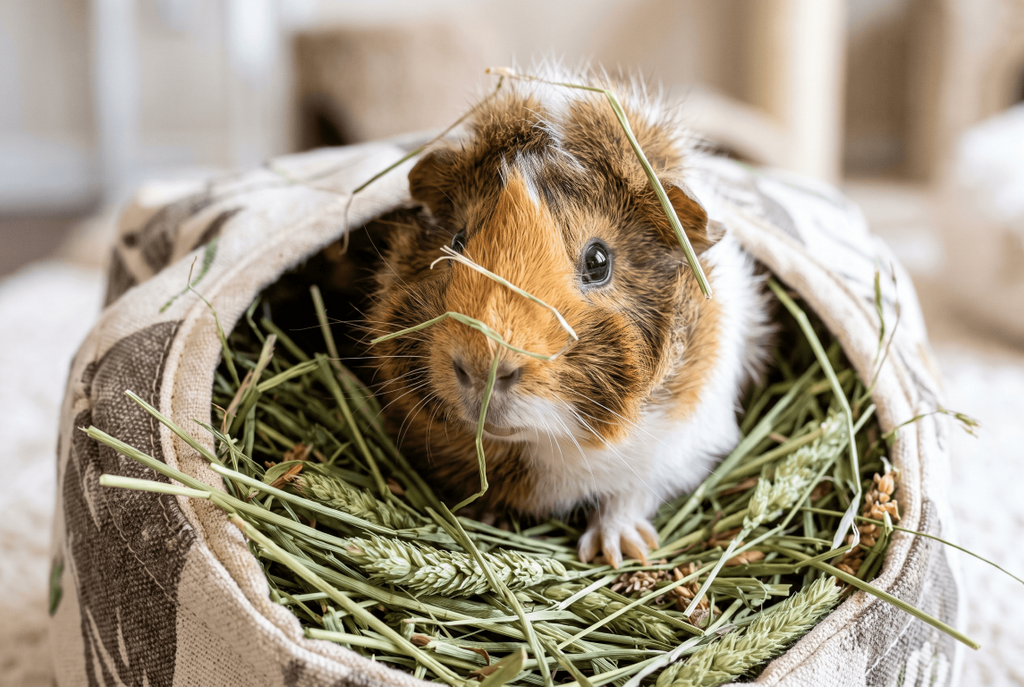
Hay is essential food and a favorite hiding and burrowing material, but it doesn’t absorb urine well. Use it in a feeding area or hay bag, not as the main bedding.
Can hay be used as guinea pig bedding?
Not as the primary bedding. Hay isn’t very absorbent, and soiled hay quickly becomes unappetizing and unhygienic. Keep fresh hay available to eat all day, ideally in a rack or hay bag, and use proper bedding underneath.
Guinea pigs love burrowing into hay, and having it everywhere sounds cozy. In practice, it gets wet, matted and dirty fast, and guinea pigs are less likely to eat hay they’ve soiled.
The RSPCA suggests supplementing bedding with hay so guinea pigs can tunnel and hide, which is a great way to use it: as an extra, not the base.
Our experience: Loose hay ended up everywhere in our cage, so we switched to hay bags. A bag of hay now lasts us almost twice as long. And our boys love hiding inside the hay bags.
Pros and Cons
- ✅ Essential food that should be available all day
- ✅ Great for burrowing, hiding and foraging
- ⚠️ Doesn’t absorb urine well
- ⚠️ Soiled hay gets eaten less and turns unhygienic fast
Guinea Pig Haven Tip
Put your hay area over your most absorbent bedding. Guinea pigs often eat and pee in the same spot.
Exposed Disposable Pee Pads and Liners (Avoid)
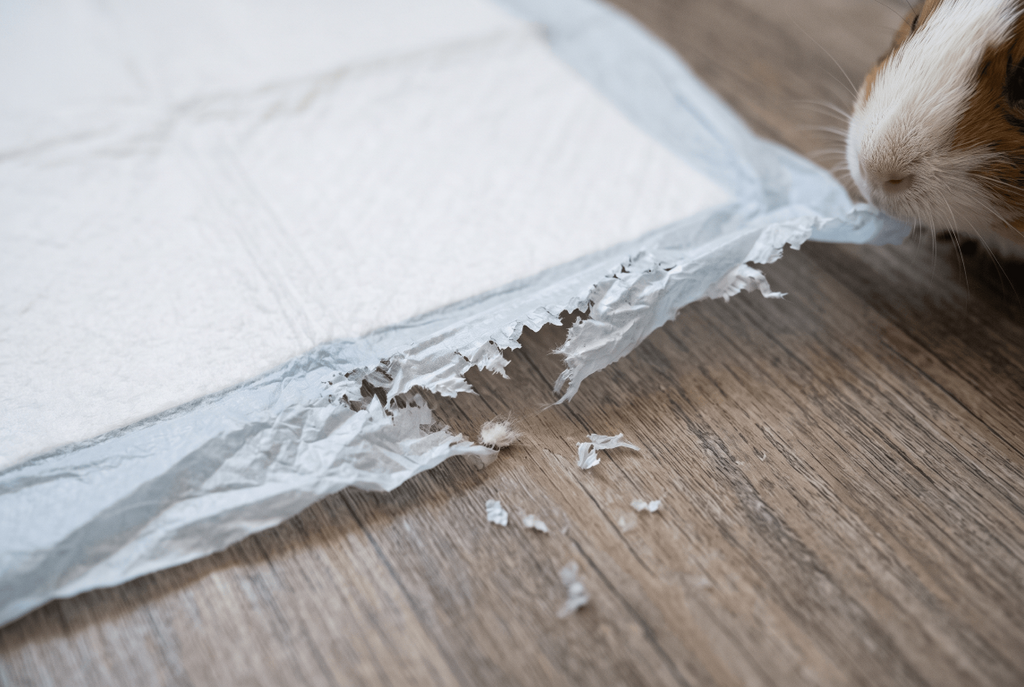
Disposable pee pads and paper liners shouldn’t be used where guinea pigs can reach them. Pads have plastic backing and sealed edges that guinea pigs chew, and thin disposable liners can be chewed through quickly.
Can I use puppy pads in a guinea pig cage?
Not where your guinea pigs can reach them. Guinea pigs chew plastic edges and backing, which can be swallowed. If you use a pad at all, it must be completely covered and out of reach, such as sealed inside a liner.
Disposable pads look like an easy, absorbent shortcut, which is exactly why so many new owners try them. But guinea pigs explore with their teeth, and a pad’s plastic layer and sealed edges are right at mouth level.
Our experience: We tried dog pee pads once. Our boys went straight for the plastic borders and chewed them quickly, and it was our biggest scare so far. We also tried disposable paper liners; the boys chewed through those and almost escaped. They were clunky, not reusable and expensive for something you throw away. Neither will go back in our cage.
Pros and Cons
- ✅ Absorbent and convenient, which is why so many people try them
- ⚠️ Plastic backing and sealed edges are a chewing hazard
- ⚠️ Thin disposable liners can be chewed through
- ⚠️ Single-use, so costly over time
Guinea Pig Haven Tip
If you need extra absorbency, use a washable liner with a sewn-in absorbent core, or add a towel layer underneath fleece, instead of a disposable pad.
Cedar and Untreated Pine Shavings (Avoid)
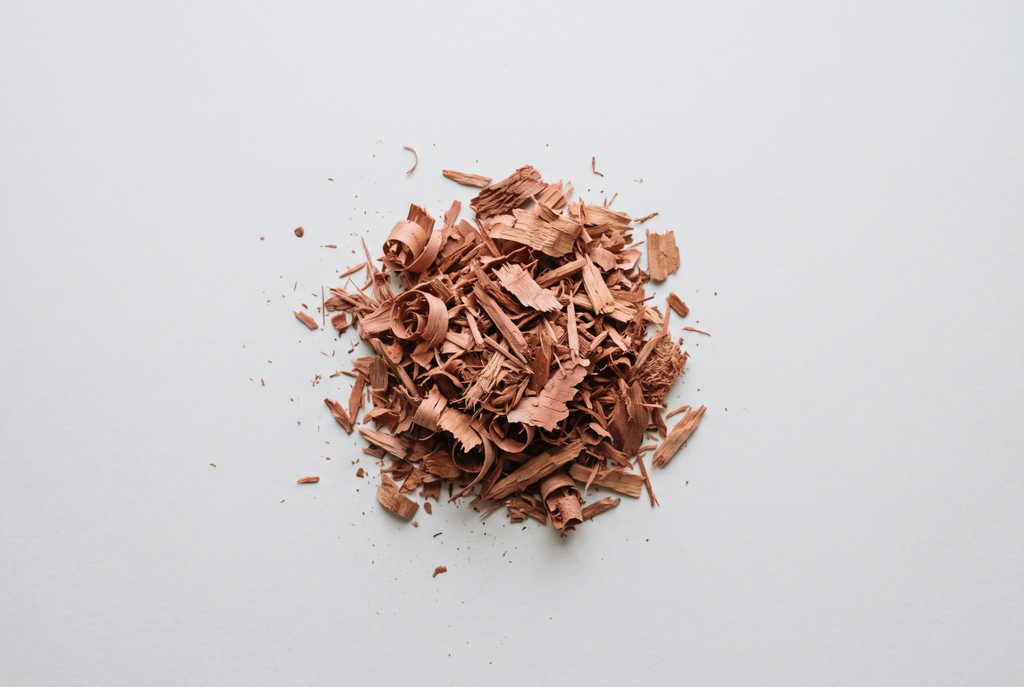
Cedar shavings and raw, untreated pine contain aromatic oils that can irritate guinea pigs’ lungs. Vets and welfare organizations consistently recommend avoiding them.
Why is cedar bedding bad for guinea pigs?
Cedar and raw pine contain aromatic oils, the source of their strong smell, that can irritate the respiratory system. Purdue’s veterinary hospital says cedar should be avoided at all costs, citing links to chronic respiratory problems and liver changes.
Cedar is often sold as small-animal bedding because it smells fresh to us and repels insects. That same scent comes from oils that are hard on a guinea pig’s sensitive airways. The Merck Veterinary Manual, Humane World for Animals and the RSPCA all advise against cedar and untreated softwood shavings.
Pros and Cons
- ✅ Cheap, and smells fresh to people
- ⚠️ Aromatic oils can irritate the lungs
- ⚠️ Cedar has been linked to respiratory and liver problems
- ⚠️ Recommended against by vets and welfare groups
Guinea Pig Haven Tip
Check bag labels carefully. “Natural wood” or mixed shavings can still contain cedar or untreated pine.
Corn Cob, Cat Litter, Sawdust and Straw (Avoid)
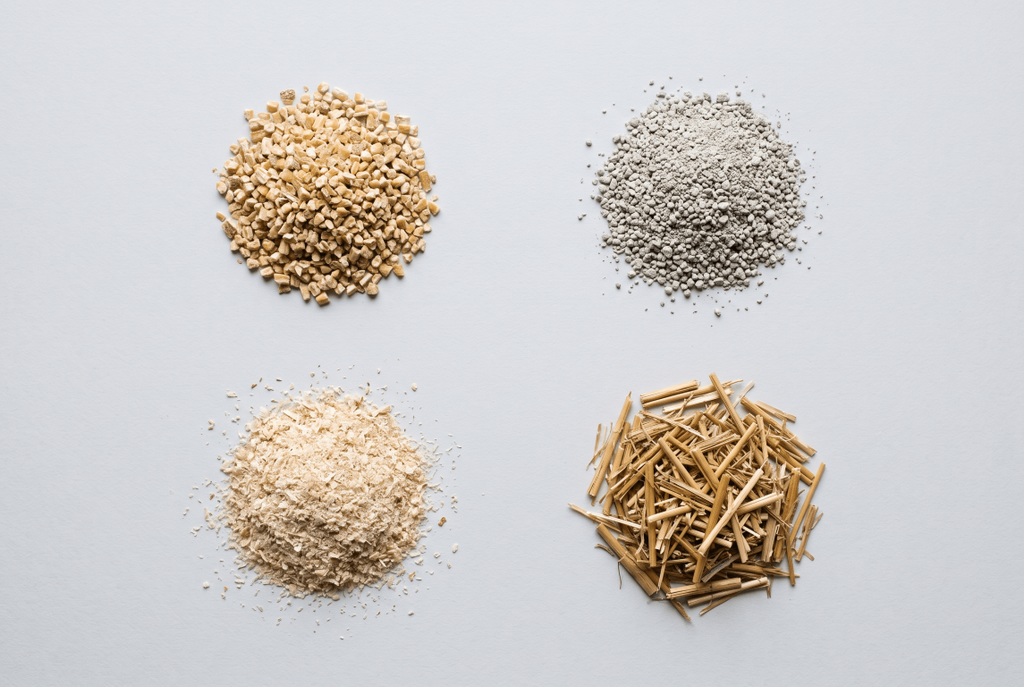
Corn cob, cat litter, sawdust and straw all cause problems for guinea pigs, from blockages and mold to dust and eye injuries. None should be used as guinea pig bedding.
What bedding should you never use for guinea pigs?
Avoid corn cob, cat litter (especially clumping litter), sawdust and straw, along with cedar, untreated pine and anything scented. Each carries a risk of blockage, respiratory irritation or injury.
Here’s why each one is a problem:
- Corn cob: not very digestible, can cause blockages if eaten, and is prone to mold, according to Purdue’s veterinary hospital.
- Cat litter: the Merck Veterinary Manual notes it can’t be digested; clumping litter is especially risky if eaten.
- Sawdust: too fine and dusty, and a respiratory hazard, per the Merck Veterinary Manual.
- Straw: the RSPCA warns its coarse stalks can cause eye injuries, and it doesn’t absorb well.
- Scented or fluffy bedding: added fragrance can irritate airways, and the RSPCA warns that fluffy bedding that separates into thin strands can tangle and isn’t safe to eat.
Pros and Cons
- ✅ Easy to find in pet aisles
- ⚠️ Corn cob and cat litter can cause blockages if eaten
- ⚠️ Sawdust is a respiratory hazard
- ⚠️ Straw can cause eye injuries
- ⚠️ Corn cob is prone to mold
Guinea Pig Haven Tip
If a bedding is marketed for multiple species, read the label for guinea pigs specifically. A product being safe for one animal doesn’t mean it’s right for yours.
Guinea Pig Bedding Comparison Chart
Washable fleece liners and paper bedding score best overall for guinea pigs. Pellets and aspen work with care, pine and fabric need caution, and cedar, corn cob, litter, sawdust, straw and exposed pads should be avoided.
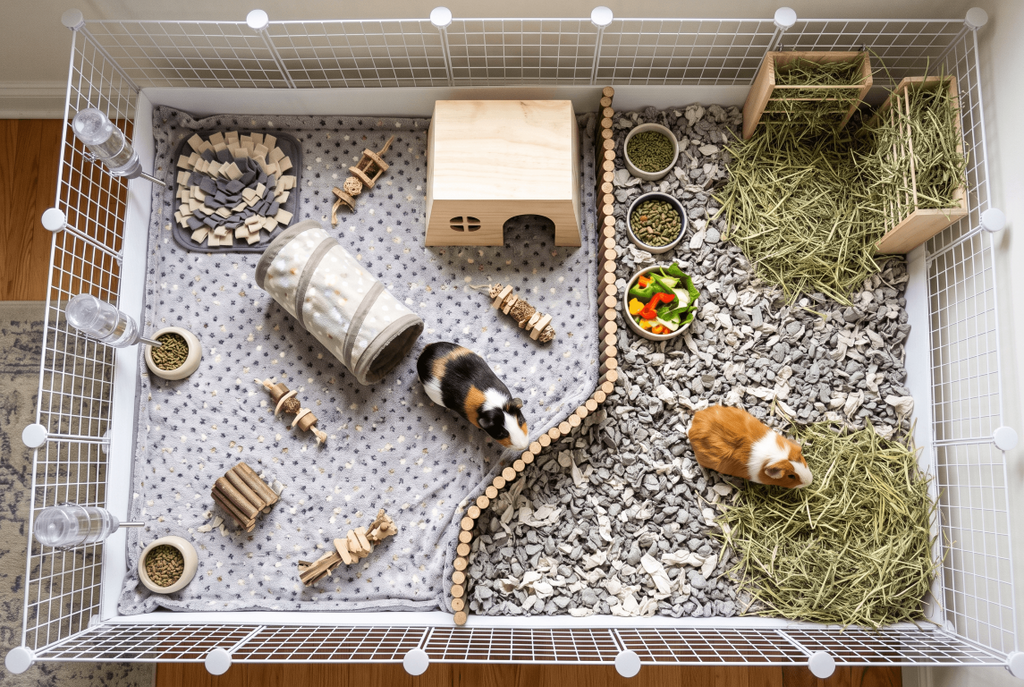
Which guinea pig bedding is best overall?
There’s no single winner for every home. Fleece liners suit owners who prefer laundry over buying bedding, and paper bedding suits those who want easy spot cleaning. Both are widely recommended and safe when used correctly.
This chart gives a general comparison based on veterinary and welfare guidance plus our own testing. Results vary with cage size, cleaning routine and your guinea pigs’ habits.
| Bedding | Absorbency | Dust | Chew safety | Cost over time | Verdict |
|---|---|---|---|---|---|
| Fleece liners (absorbent core) | High | Very low | Good if intact | Low (reusable) | Best |
| Paper bedding | High | Low | Good (digestible) | High | Best |
| Kiln-dried aspen | Good | Moderate | Fair | Low to moderate | Good with care |
| Pellets (base layer) | Very high | Low to moderate | Fair | Low | Base layer only |
| Kiln-dried pine | Good | Moderate | Fair | Low | Caution |
| Cotton blankets or towels | Good, stays damp | Very low | Watch for fraying | Low (reusable) | Caution |
| Hay | Low | Low | Edible | Moderate | Food, not bedding |
| Exposed disposable pads/liners | High | Low | Poor | High | Avoid |
| Cedar or untreated pine | Good | Moderate to high | Poor (aromatic oils) | Low | Avoid |
| Corn cob, litter, sawdust, straw | Varies | Varies | Poor | Varies | Avoid |
Highlights
- Fleece and paper are the safest all-round choices.
- Pellets work best underneath softer bedding.
- Everything in the Avoid rows is a health or chewing risk.
Guinea Pig Haven Tip
Mix and match. Many owners use fleece across the cage with extra absorbency or paper bedding in the kitchen and hide areas, where guinea pigs pee most.
Our Guinea Pig Bedding Journey So Far
We’ve gone from paper bedding to washable liners, learned hard lessons with disposable pads and paper liners, and are now testing cotton blankets. Our biggest takeaway: chew safety matters as much as absorbency.
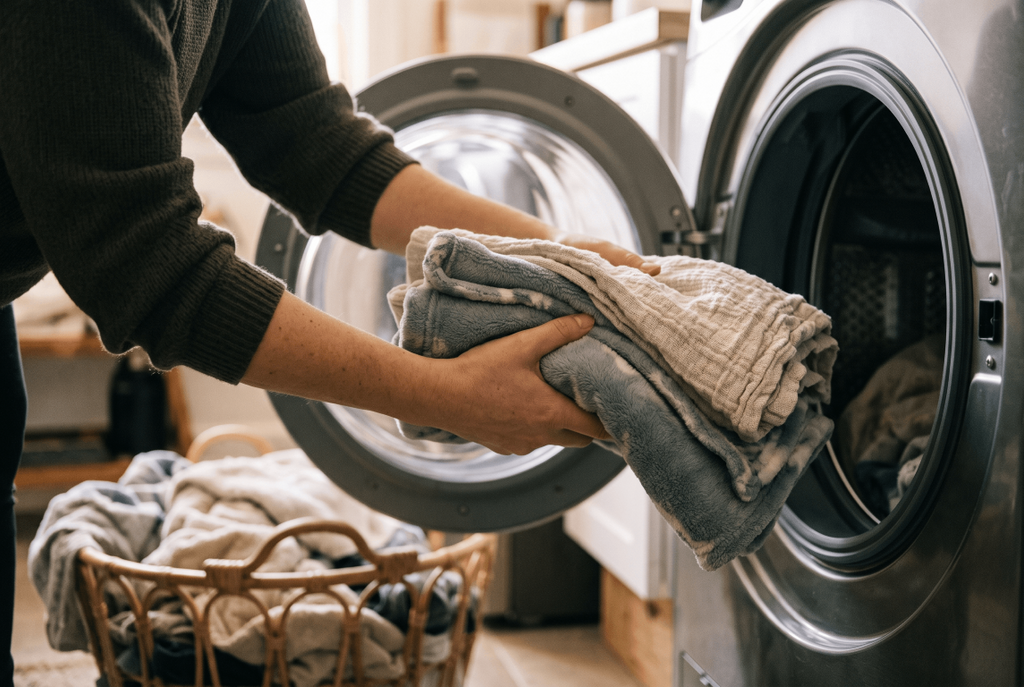
What bedding do we use for our guinea pigs?
Right now we use washable liners layered to fit our cage, plus cotton blankets we’re testing. We swap one blanket a day and alternate washes. We’ll share a full comparison once we’ve used this setup longer.
This is our firsthand experience with Pumpkin and Spice, separate from the research above:
- Paper bedding: controlled odor for about five days, but we changed it that often, it got expensive, and it was harder to keep clean than we expected.
- Washable fleece-topped liners: much easier to clean. They shrank in the wash, so we bought more and layer them.
- Disposable paper liners: the boys chewed through them and almost escaped.
- Dog pee pads: chewed at the plastic edges almost immediately. Our biggest scare, and never again.
- Cotton and chenille blankets: our current test. Surprisingly absorbent so far, but we’re watching the chenille as it starts to bead.
We skipped fleece blankets on their own because fleece doesn’t absorb, and we didn’t want to prep it in the dryer every day. We may add small fleece pads for high-pee spots later.
While we swap bedding, the boys wait safely in a carrier, and everything gets washed at home with no lingering smell in our laundry. You can follow the rest of our journey in Our Guinea Pig Journey.
Highlights
- We’ve tested five bedding types so far.
- Chewing ruled out two of them quickly.
- Our current setup is liners plus cotton blankets.
Guinea Pig Haven Tip
Change one thing at a time. When we switched bedding, testing one type for a week or two made it much easier to tell what was actually working.
Signs Your Guinea Pig Bedding Isn’t Working
Strong ammonia smells, damp fur or feet, sneezing, sore feet, or chewed bedding all mean something needs to change. Breathing problems or sore, swollen feet need a vet.
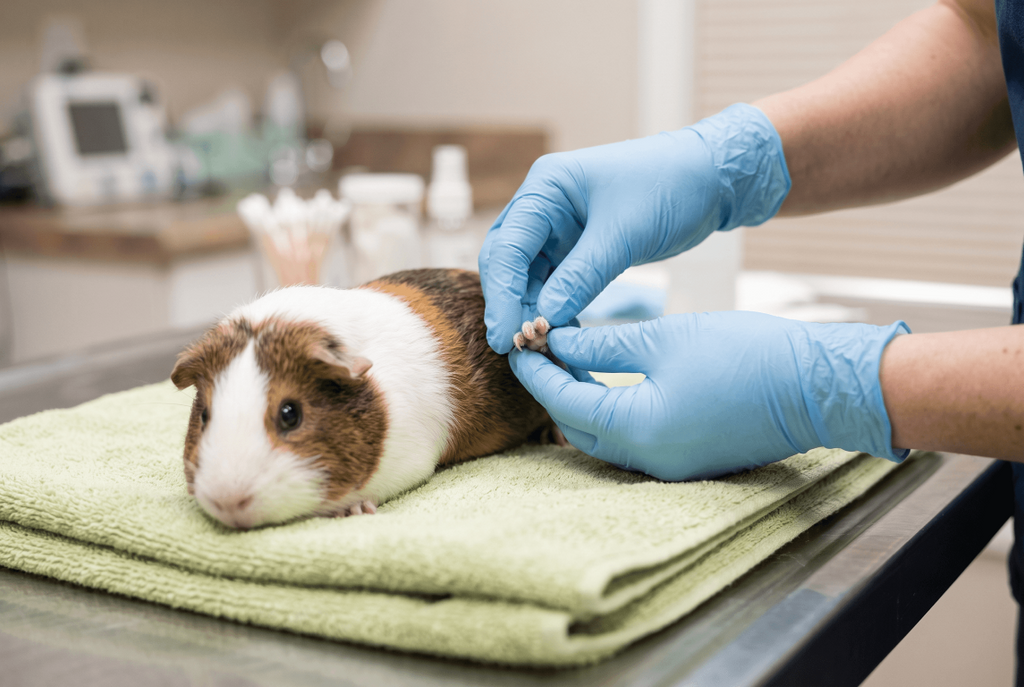
When should I change my guinea pig’s bedding type?
Change it if the cage smells of ammonia between cleans, your guinea pigs’ feet or bellies stay damp, they’re chewing the bedding apart, or you notice more sneezing. Respiratory signs or sore feet should be checked by a vet.
Bedding problems usually show up in a few predictable ways:
- A strong ammonia smell between cleans means the bedding isn’t absorbing enough, or needs changing more often.
- Damp feet, bellies or fur suggest moisture is sitting on the surface.
- Chewed edges, holes or swallowed pieces mean the material isn’t chew-safe for your guinea pigs.
- Sneezing or noisy breathing may point to dusty or aromatic bedding.
- Red, swollen or scabbed feet can be linked to wet bedding or hard surfaces.
Contact an exotic-pet or guinea-pig-savvy vet promptly if you notice breathing changes, sore feet, or signs your guinea pig may have swallowed bedding, such as eating less or producing fewer droppings. These can have several causes, so a vet should examine them rather than treating at home.
Highlights
- Smell, dampness and chewing are early warning signs.
- Breathing changes and sore feet need a vet.
- Switching bedding is often the first fix for odor or dampness.
Guinea Pig Haven Tip
Check your guinea pigs’ feet during regular handling. It’s the easiest way to spot bedding problems early.
Guinea Pig Bedding FAQs: Your Questions Answered
Still deciding which guinea pig bedding is right for your cage? These are the questions new owners ask most.
What is the safest bedding for guinea pigs?
Low-dust, unscented paper bedding and washable fleece liners with an absorbent core are among the safest options. Both are low in dust, and paper is digestible if nibbled. Whatever you choose, keep it dry and check it for chewing damage.
How often should you change guinea pig bedding?
Spot clean wet areas and droppings daily, and do a full bedding change regularly, often weekly, depending on cage size, bedding type and how many guinea pigs you have. The RSPCA recommends daily spot cleaning and at least a weekly deep clean.
How deep should guinea pig bedding be?
For loose paper bedding, Humane World for Animals recommends about 2–3 inches so it absorbs properly. Fleece liners don’t need depth; their absorbent core does the work.
Do fleece liners smell?
Fleece liners can smell if their absorbent layer is saturated or they aren’t washed often enough. Spot cleaning droppings daily and washing liners regularly usually keeps odor under control. Washing new fleece several times before use helps it wick properly.
Is newspaper safe for guinea pig bedding?
Newspaper isn’t a good main bedding. It doesn’t absorb well on its own, gets soggy, and printed ink isn’t ideal to chew. Choose unscented paper bedding made for small animals instead.
Can guinea pigs be allergic to bedding?
Guinea pigs can react to dusty or aromatic bedding with sneezing or breathing problems. If you notice respiratory changes after switching bedding, change back to a low-dust option and contact your vet.
Choosing the Right Bedding for Your Guinea Pigs
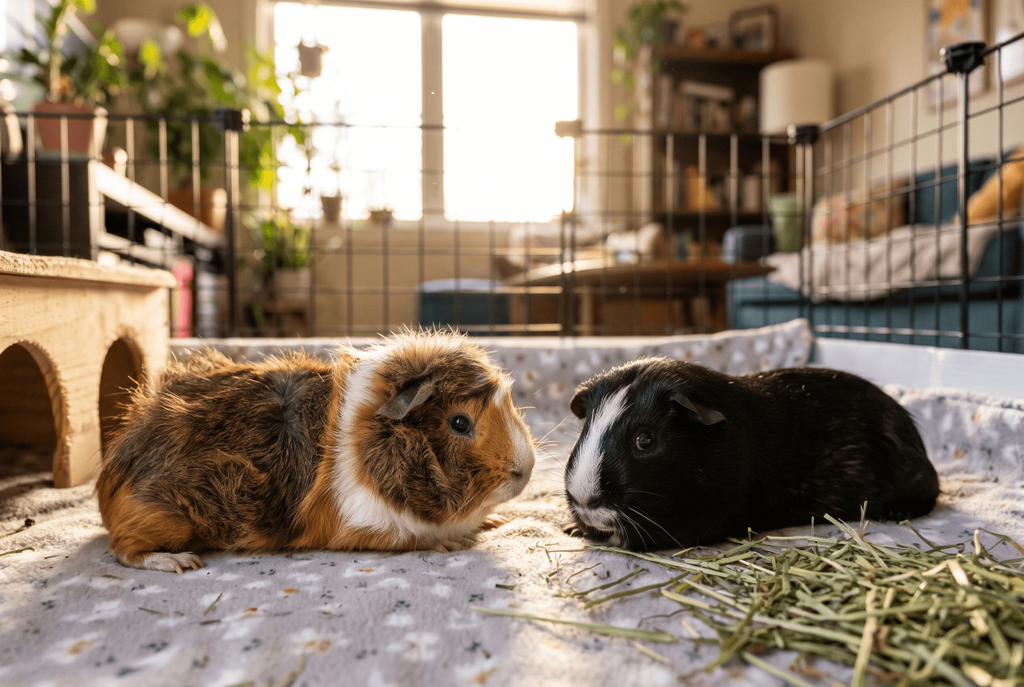
The best guinea pig bedding is the safe one you can keep dry and clean. For most homes, that means washable fleece liners with an absorbent core or low-dust, unscented paper bedding. Skip cedar, untreated pine, corn cob, litter, sawdust, straw and anything your guinea pigs can chew into plastic.
Bedding is just one piece of a good setup. See how it fits into the whole cage in Guinea Pig Cage Setup: 7 Essential Steps That Work, make sure your space is big enough with Guinea Pig Cage Size: 10 Safe Rules for Happy Pigs, and read the bedding mistakes we made in Our First Guinea Pig Cage: 10 Costly Mistakes We Fixed. New to guinea pigs? Start with The Complete Guinea Pig Care Guide for Beginners.