A good guinea pig cage setup needs to do much more than keep your guinea pigs contained. Their enclosure is where they eat, sleep, run, forage, socialize, hide when they feel nervous, and spend much of their day. The amount of space they have, what is underneath their feet, how their food and hides are arranged, and even which materials they can reach all affect how safe and comfortable that space really is.
This is also one of those parts of guinea pig care that seems much simpler before you actually have guinea pigs.
We started with one setup, realized our boys needed more room, changed bedding systems, moved from paper bedding to washable pads, expanded the enclosure, experimented with a second level, and learned that a cage that looks wonderful in a photo is not automatically easy to clean or maintain. Add a toddler into the household, and cage access and safety suddenly become part of the design too.
That experience changed the way we look at guinea pig housing. Instead of asking only whether an enclosure looks good, we now think about whether our guinea pigs can move comfortably, whether both can reach important resources, whether one pig can get away from the other when needed, whether we can clean every corner without dismantling the cage, and what happens when they decide to chew something we never expected them to chew.
That last question matters more than many beginners realize. Guinea pigs investigate their surroundings with their mouths. Liners, mats, hides, tunnels, barriers, ramps, plastic edges, cardboard, and other materials may all become chewing targets. A safe enclosure therefore needs to work with normal guinea pig behavior instead of assuming they will leave certain things alone.
This guide walks you through seven essential steps for creating a guinea pig cage setup that works in everyday life, not just in a perfectly staged photo.
TLDR: What Does a Good Guinea Pig Cage Setup Need?
A good guinea pig cage needs plenty of horizontal floor space, a solid floor, safe bedding, multiple hides, unlimited hay, fresh water, chew-safe enrichment, and enough open room for running and exploring. Keep the enclosure in a well-ventilated indoor location away from direct sun and drafts, and design it so you can easily clean, inspect, and maintain it.
Guinea Pig Cage Setup Checklist
Before calling your enclosure finished, make sure it has:
- Enough horizontal floor space for the number of guinea pigs
- A solid floor with no exposed wire grid
- Safe, absorbent bedding or washable liners
- No exposed disposable pee pads or accessible plastic backing
- More hiding spaces than guinea pigs whenever possible
- Unlimited grass hay
- Reliable fresh water
- Food areas that are easy to clean
- Tunnels or other safe enrichment
- Open pathways for running and exploring
- Chew-safe or carefully monitored materials
- Good ventilation
- Protection from direct sunlight, drafts, predators, and household hazards
- A layout you can clean without dismantling half the enclosure
Start With Enough Guinea Pig Cage Space
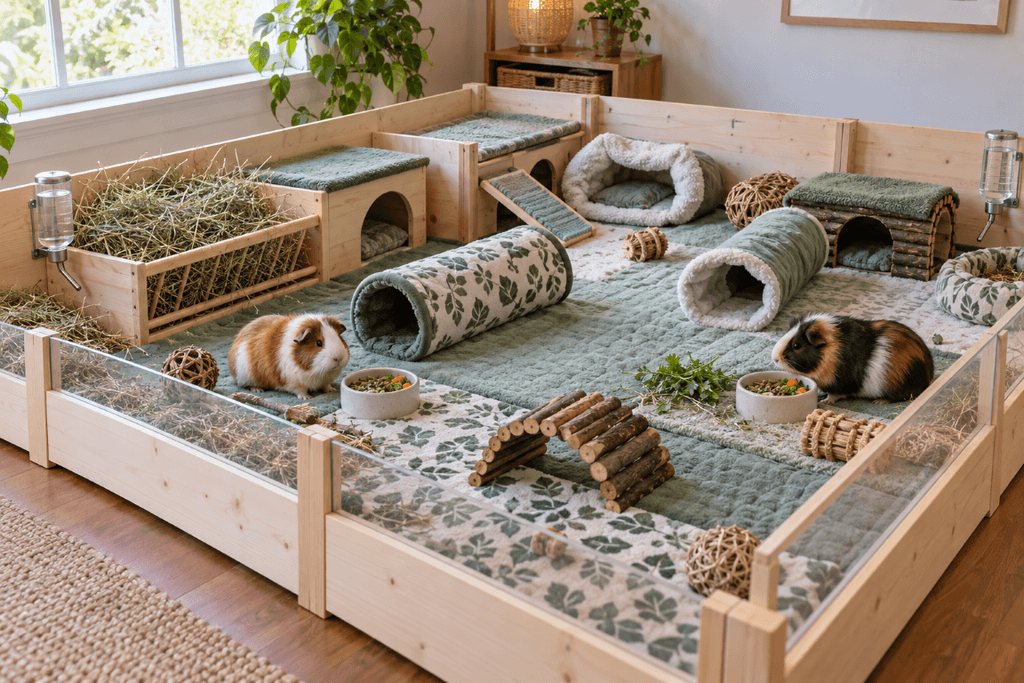
Guinea pigs need generous horizontal floor space where they can walk, run, explore, eat, rest, hide, and move away from each other when needed. A tall cage does not make up for an enclosure with too little usable floor space.
How big should a guinea pig cage be?
A useful starting benchmark is at least about 7.5 square feet for one guinea pig, with additional floor space for every additional guinea pig. More usable horizontal space is generally better, especially when guinea pigs are sharing their home.
The first thing I would tell any new guinea pig owner is not to judge a cage by how large it looks when it is empty.
An empty enclosure can look enormous until you add two guinea pigs, several hiding places, hay, food dishes, water bottles, tunnels, and enrichment. Once everything your guinea pigs actually need is inside, the amount of open floor space can shrink surprisingly fast.
We learned that ourselves as our setup evolved. The more we added appropriate hides, feeding areas, and enrichment, the more obvious it became that floor space has to be evaluated after the cage is furnished.
Guinea pigs spend most of their time moving horizontally. They may use a safely designed loft or second floor, but they are not natural climbers that can compensate for a cramped main level by living vertically.
Space matters socially too. Guinea pigs may enjoy companionship while still wanting the option to eat, rest, or explore away from each other. A larger enclosure gives them room to make those choices instead of forcing them to share the same few feet all day.
What to Look for in a Guinea Pig Cage
Choose an enclosure with:
- Generous horizontal floor space
- A completely solid walking surface
- Good airflow
- Secure walls
- Enough height to contain the guinea pigs safely
- Easy access for cleaning
- Room for several hides without crowding the floor
- Space for hay, water, enrichment, and open movement
Glass aquariums are not ideal because their solid sides restrict ventilation.
Make Sure the Cage Has Room For:
- Multiple hiding places
- Hay and feeding areas
- Water
- Tunnels or enrichment
- Comfortable resting spaces
- Clear walking paths
- Running space
- Enough room for guinea pigs to move apart
If you have to choose between enough hides and enough room to walk, the enclosure itself may need to be larger.
Do Guinea Pigs Need a Two-Story Cage?
A second level can provide additional interest and usable space, but it should be treated as extra space rather than a replacement for an adequate main floor.
We have experimented with a two-story setup ourselves, and one lesson became clear quickly: additional levels affect humans too. Ramps, lofts, and upper sections may create more space for the guinea pigs, but they can also introduce harder-to-reach areas during cleaning.
Ramps should have secure footing, a gentle slope, and protection from falls. You should also watch how your individual guinea pigs respond because not every guinea pig will be equally interested in climbing.
One may race upstairs while the other may decide you built an entire second floor for absolutely no reason.
This is just one of the lessons we learned while caring for our guinea pigs. If you want to learn more about why a 2-story setup isn’t necessary as well as troubleshoot from our mistakes so you can avoid them yourself, checkout our article Our First Guinea Pig Cage: 10 Costly Mistakes We Fixed
Guinea Pig Haven Tip
Put the hides, hay, food dishes, tunnels, and other necessities inside before deciding whether the cage feels spacious enough. Usable space after setup matters more than how impressive the empty cage looked.
If you’re still learning the basics of guinea pig care beyond housing, read our Complete Guinea Pig Care Guide for Beginners for a full walkthrough of feeding, companionship, grooming, enrichment, health, daily care, and more.
Put the Guinea Pig Cage in the Right Location
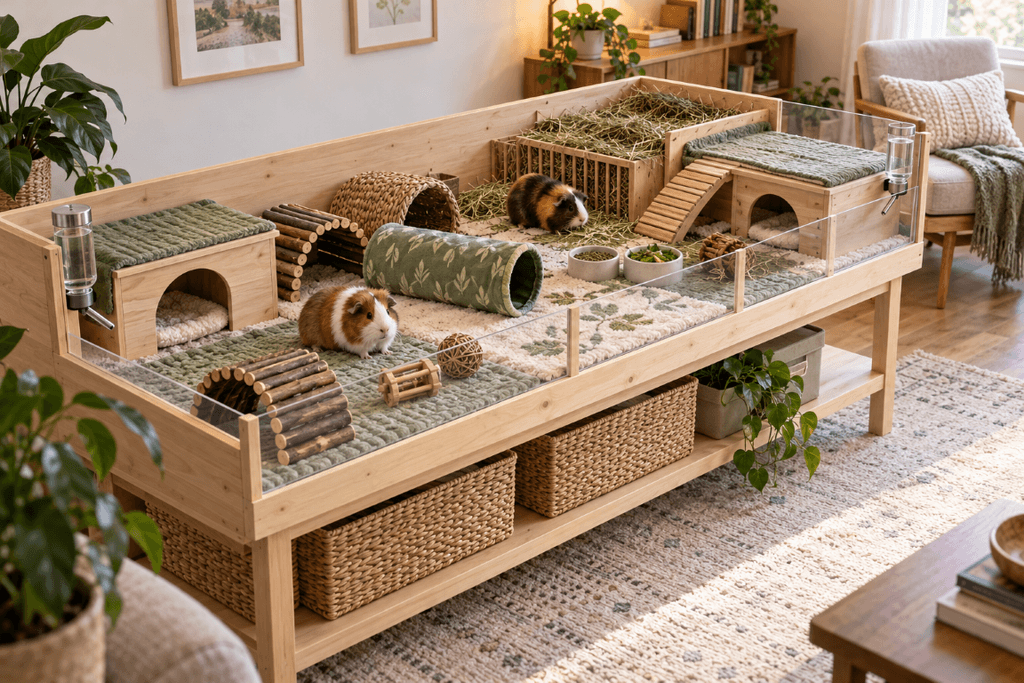
Place a guinea pig enclosure in a quiet, well-ventilated part of the home with a stable temperature, protection from direct sunlight and drafts, and enough household activity for regular observation without constant stress.
What room is best for a guinea pig cage?
Choose a room where your guinea pigs can be part of normal household life without being exposed to constant noise, temperature swings, direct sunlight, or other animals hovering around the enclosure. The cage should also be somewhere you can easily reach for feeding, cleaning, and daily observation.
Where you put the enclosure matters almost as much as what you put inside it.
Guinea pigs are prey animals, so they need to feel secure. That does not mean hiding them in a forgotten room. Keeping them somewhere you regularly spend time can actually help them become accustomed to household routines and makes it easier for you to notice when something seems different.
The goal is to find a middle ground between complete isolation and constant commotion.
Avoid Placing the Cage Directly Beside:
- Heating vents
- Air-conditioning vents
- Drafty exterior doors
- Sunny windows
- Radiators or space heaters
- Loud televisions or speakers
- Frequently slammed doors
- Electrical cords
- Unsafe houseplants
- Areas where dogs or cats can continually approach the cage
Guinea pigs can struggle with excessive heat, so direct sunlight deserves particular attention. A room that seems comfortable in the morning may become much warmer once afternoon sun pours through a nearby window.
Remember That You Need Access Too
One of the lessons from our own enclosure changes has been that a cage can be perfectly positioned for the guinea pigs and terribly positioned for cleaning.
Make sure you can comfortably:
- Reach every corner
- Refill hay
- Change water
- Remove hides
- Spot clean
- Replace liners or bedding
- Pick up a guinea pig when needed
- Inspect enclosure materials
If cleaning the back corner requires moving furniture every day, you will probably grow tired of that arrangement quickly.
Think About Young Children and Other Pets
Household safety also changes according to who else lives with you.
We have a toddler, so our guinea pig setup cannot be designed only around the guinea pigs. Stability, access, and barriers matter because young children may pull on panels, reach inside, or become very curious about doors and openings.
The same applies to dogs, cats, and other pets. An open enclosure that is perfectly appropriate in one household may need a secure lid or additional barrier in another.
Guinea Pig Haven Tip
Choose the cage location before building the whole setup. Measure the space, open nearby doors and drawers, and make sure you can comfortably get around the enclosure for cleaning.
Build a Solid, Dry and Chew-Safe Floor
Guinea pigs need a solid walking surface covered with comfortable, absorbent material that stays reasonably dry and does not expose unsafe plastic, foam, stuffing, loose fibers, or other materials when chewed.
What is the best flooring for a guinea pig cage?
Low-dust paper bedding and properly maintained washable liners can both work well for indoor guinea pigs. The best option is one you can keep clean and dry while preventing your guinea pigs from reaching unsafe internal materials.
Guinea pigs should not live directly on exposed wire flooring. Their feet need a solid surface that allows them to walk, run, and rest comfortably.
Once you have that solid base, you have several choices for what goes on top.
This is an area where our own setup changed significantly. We started with paper bedding and later moved to washable pads as our enclosure grew and our cleaning routine changed.
Neither system is perfect for every household.
The important question is whether the bedding works for your guinea pigs and whether you can realistically maintain it.
Paper Bedding
Paper bedding can be convenient because wet areas are easy to remove and replace.
Look for bedding that is:
- Low in dust
- Unscented
- Absorbent
- Soft enough for comfortable footing
The downside is that larger enclosures can require a lot of bedding, which creates ongoing cost and waste.
Washable Liners and Pads
Washable liners can work especially well in larger indoor cages. They can be reused many times and make daily droppings easier to see and remove.
The tradeoff is laundry and inspection.
Washable does not automatically mean chew-safe.
Regularly check for:
- Loose threads
- Frayed edges
- Torn seams
- Exposed stuffing
- Foam
- Damaged waterproof backing
- Plastic edges
- Areas your guinea pigs repeatedly chew
A pad that was safe when new can become unsafe after enough washing or chewing.
Why Exposed Disposable Pee Pads Are a Problem
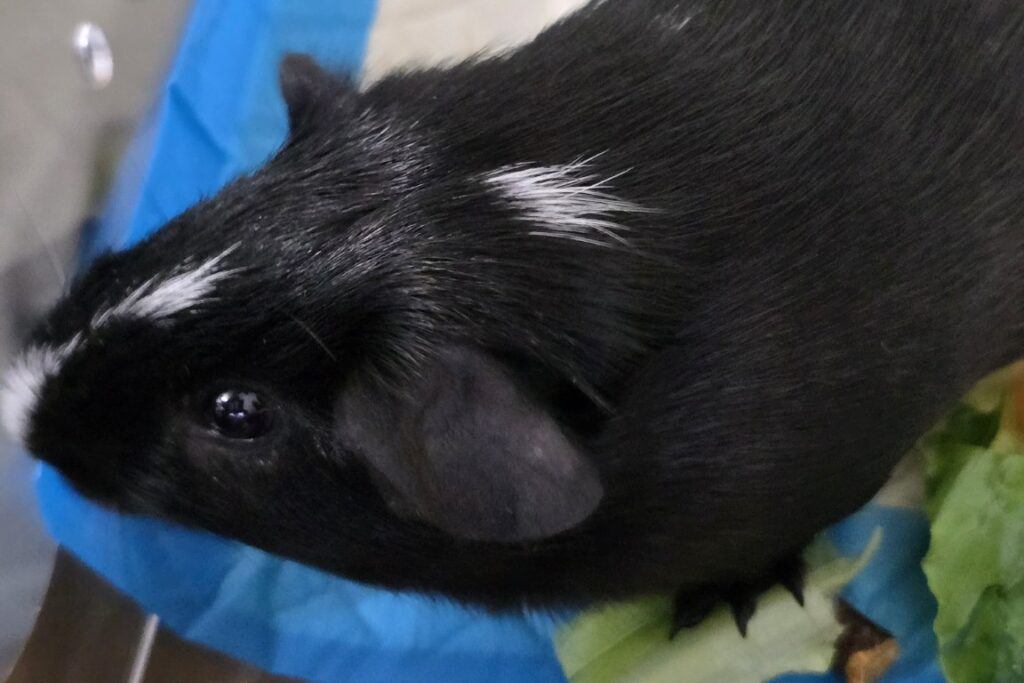
Disposable puppy pads and similar products can seem ideal for absorbing urine, but many contain plastic backing, sealed edges, or internal absorbent material that guinea pigs should not be able to reach.
And guinea pigs chew.
We have our own photos and content showing why this needs to be taken seriously. A guinea pig can find an exposed corner and start chewing something we never intended to become part of the menu.
That is why I would not use exposed disposable pee pads as a guinea pig cage surface.
Whenever you add a layered product to the enclosure, ask one useful question:
What will they reach if they chew through the outside?
That applies to liners, beds, tunnels, ramps, barriers, and other cage materials too.
Bedding Safety Check
Look for:
- Exposed plastic
- Foam
- Loose fibers
- Fraying
- Torn seams
- Stuffing
- Tape
- Staples
- Strong fragrances
- Excessive dust
- Areas that stay wet
- Materials your guinea pigs are chewing apart
For a more in depth look at guiinea pig bedding optiions, checkout our guide, Guinea Pig Bedding: 10 Best and Worst Options Compared
Guinea Pig Haven Tip
Do not evaluate bedding only when you first buy it. Inspect it during cage cleaning too. Guinea pigs have an impressive ability to turn a tiny loose corner into a much larger opening before you notice.
Give Your Guinea Pigs Enough Hiding Places
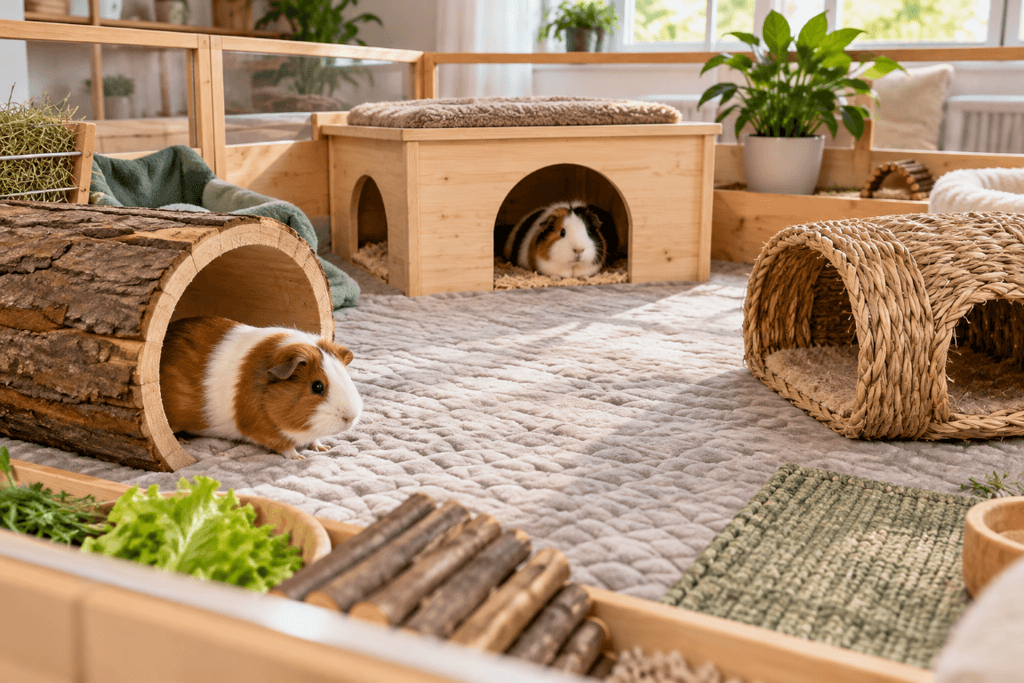
Guinea pigs need several safe places to hide, rest, sleep, and retreat from people, household activity, and other guinea pigs. Shared enclosures should provide enough hiding options that one guinea pig does not control every secure space.
How many hideouts do guinea pigs need?
For two guinea pigs, three or more hiding options is a useful goal. Having more hides than guinea pigs gives everyone choices and can reduce competition over favorite shelters.
Hiding is normal guinea pig behavior.
It can be a little disappointing when you bring home new guinea pigs and they immediately disappear inside a hut. You are ready to admire them, bond with them, and watch them explore.
They are wondering why a giant is staring through the wall of their new house. Give them time.
Having secure places to retreat can actually help guinea pigs become more confident because they know somewhere safe is nearby.
Look for Multiple Entrances
In shared enclosures, hides with more than one entrance are especially helpful.
A single-entry hide can become a dead end if another guinea pig blocks the doorway during a disagreement. A tunnel or hide with another exit gives the guinea pig inside a way to leave.
Hideout Options Can Include
- Plain cardboard houses
- Open-ended tunnels
- Untreated wooden hides
- Safe fabric shelters
- Purpose-built guinea pig shelters
Every hide still needs to pass the chew-safety test.
Cardboard will probably be chewed.
Wood may be gnawed.
Fabric needs to be checked for loose threads or exposed filling.
Plastic should be monitored if your guinea pigs begin removing pieces.
Do Not Turn the Cage Into a Furniture Store
It is possible to provide so many hides, beds, tunnels, bowls, ramps, and decorations that very little floor remains.
Try to place larger objects around the perimeter while leaving open routes through the enclosure.
Guinea Pig Haven Tip
If adding enough hides suddenly makes the cage feel cramped, the answer may not be fewer hides. It may be more floor space.
Set Up Hay, Water and Food Areas That Make Sense
Guinea pigs need constant access to hay and fresh water, while food areas should be arranged so everyone can eat comfortably without one guinea pig controlling all the important resources.
Where should hay go in a guinea pig cage?
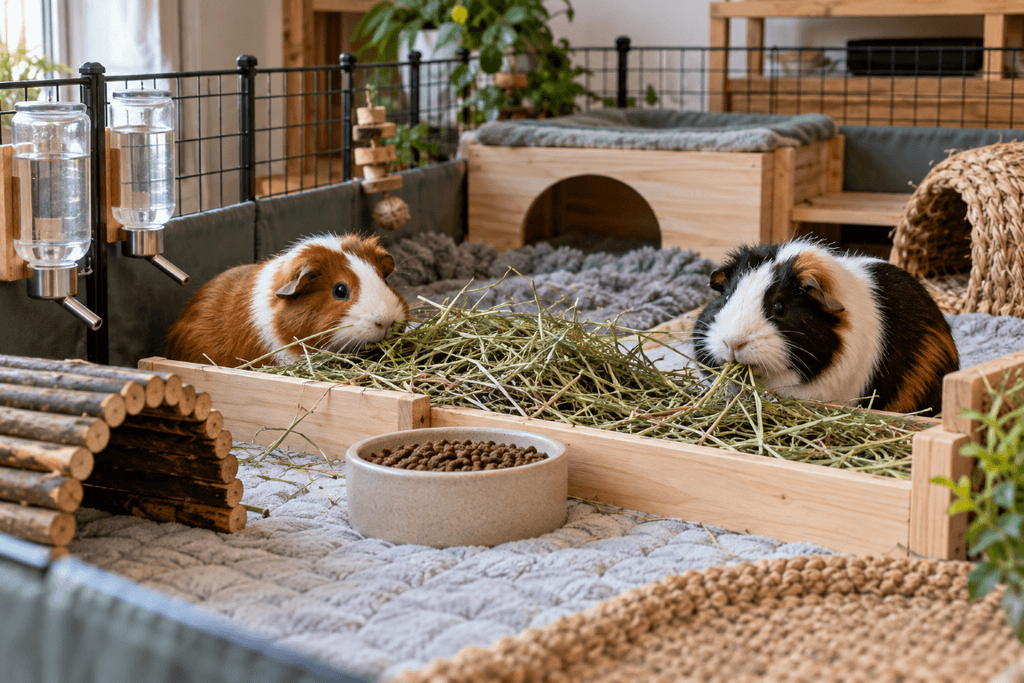
Put hay somewhere your guinea pigs can reach comfortably at all times. Many owners create a dedicated hay or kitchen area because guinea pigs tend to spend plenty of time eating, pooping, and sometimes urinating around their hay.
Hay is going to get everywhere. You can accept this now, or your guinea pigs can break the news to you later.
Grass hay is one of the most important parts of a guinea pig’s diet, so the enclosure needs enough room for a generous and consistently available supply.
You can use an accessible hay pile, feeding area, or appropriately designed hay holder. Avoid feeders with openings where a head or limb could become trapped.
Consider a Kitchen Area
Creating a dedicated hay and feeding area can make cleanup easier because guinea pigs often produce plenty of waste while they eat.
That does not mean they will respectfully use that section as their only bathroom.
They have agreed to no such zoning law.
But concentrating one messy activity in an easy-to-clean location can still help.
Water Setup
Fresh water should always be available.
If you use bottles:
- Attach them securely.
- Check the nozzle every day.
- Make sure water is actually flowing.
- Watch for leaks.
- Clean them regularly.
- Position them where every guinea pig can reach comfortably.
If you use bowls, choose something heavy enough that your guinea pigs are less likely to tip it and check frequently for bedding, hay, or droppings.
Food Bowls
Heavy ceramic dishes can work well for pellets because they are easy to clean and difficult to flip.
For multiple guinea pigs, watch how they behave around food. If one repeatedly pushes the other away, additional bowls or feeding locations may help.
Reduce Competition
Depending on your guinea pigs, consider:
- Multiple hay access points
- More than one water source
- Separate pellet bowls
- Enough space around feeding areas
Guinea Pig Haven Tip
Before permanently arranging a kitchen area, watch where your guinea pigs naturally prefer to eat and leave most of their droppings. Sometimes they make the floor-plan decision for you.
Add Chew-Safe Enrichment Without Crowding the Cage
Guinea pig enrichment should encourage natural behaviors such as foraging, exploring, hiding, chewing, and running without covering every inch of the enclosure or introducing materials that become dangerous when chewed.
What should I put in a guinea pig cage for enrichment?
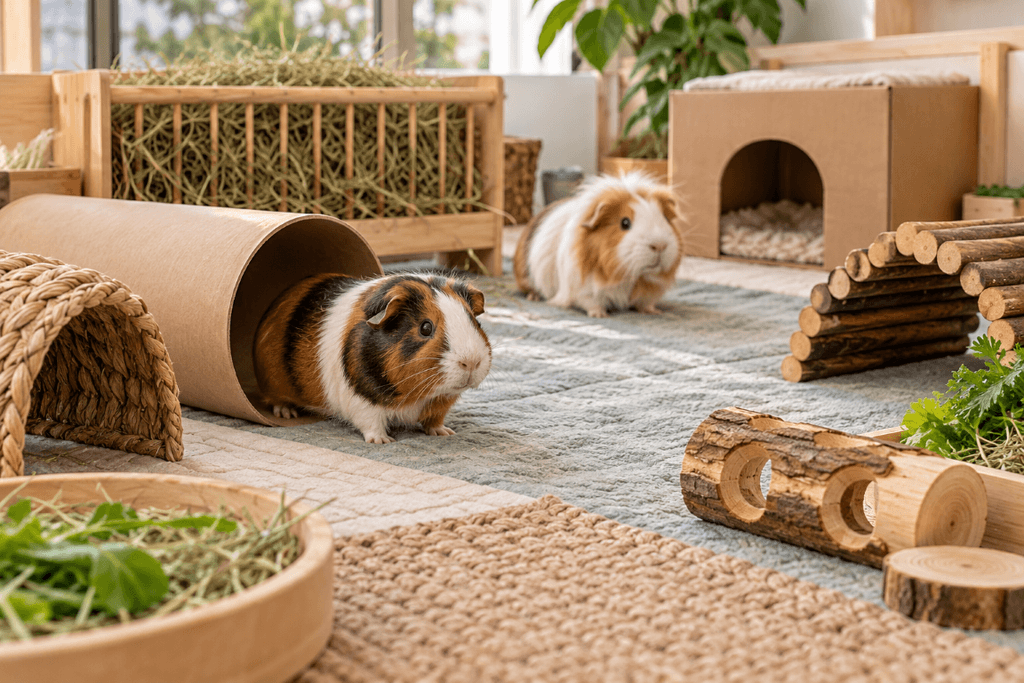
Tunnels, cardboard hides, hay piles, forage activities, and appropriate untreated wooden items can all provide useful enrichment. You do not need a cage overflowing with toys for guinea pigs to have an interesting environment.
When we hear the word enrichment, it is easy to imagine buying a collection of fancy small-animal toys.
Guinea pigs may have other opinions about your shopping efforts.
A plain cardboard box can become the most exciting object in the enclosure while the expensive toy beside it remains untouched.
The goal is not to provide the most toys. It is to encourage normal guinea pig behavior.
Good Enrichment Encourages Guinea Pigs to
- Explore
- Hide
- Forage
- Chew
- Walk
- Run
- Investigate
- Interact with their environment
Easy Enrichment Ideas
Try:
- Plain cardboard boxes
- Cardboard tunnels
- Untreated wooden chews
- Hay piles
- Foraging activities
- Safe paper-based activities
- Rearranging familiar hides
- Supervised floor time
Rotating enrichment can also keep the environment interesting without filling the enclosure with too many objects at once.
Leave Room for Zoomies
One of the easiest mistakes is using every empty section of the cage for another accessory.
Open space is useful too.
Guinea pigs should have clear routes where they can walk and run without weaving through an obstacle course.
Apply the Chew Test
Before adding enrichment, check for:
- Loose strings
- Foam
- Rubber pieces
- Easily broken plastic
- Staples
- Tape
- Exposed glue
- Sharp edges
- Unknown coatings
- Small detachable decorations
Then keep checking the item over time.
A guinea pig may ignore something for weeks and suddenly decide that today is the day it must be dismantled.
Skip Exercise Wheels
Guinea pigs do not need exercise wheels. Their bodies are not designed for the curved posture required to use them safely.
Give them room to move horizontally instead.
Guinea Pig Haven Tip
Watch what your guinea pigs actually enjoy before buying more. If the cardboard tunnel gets daily use and the expensive toy collects dust, your guinea pigs have already submitted their product review.
Design the Cage for Cleaning, Safety and Everyday Care
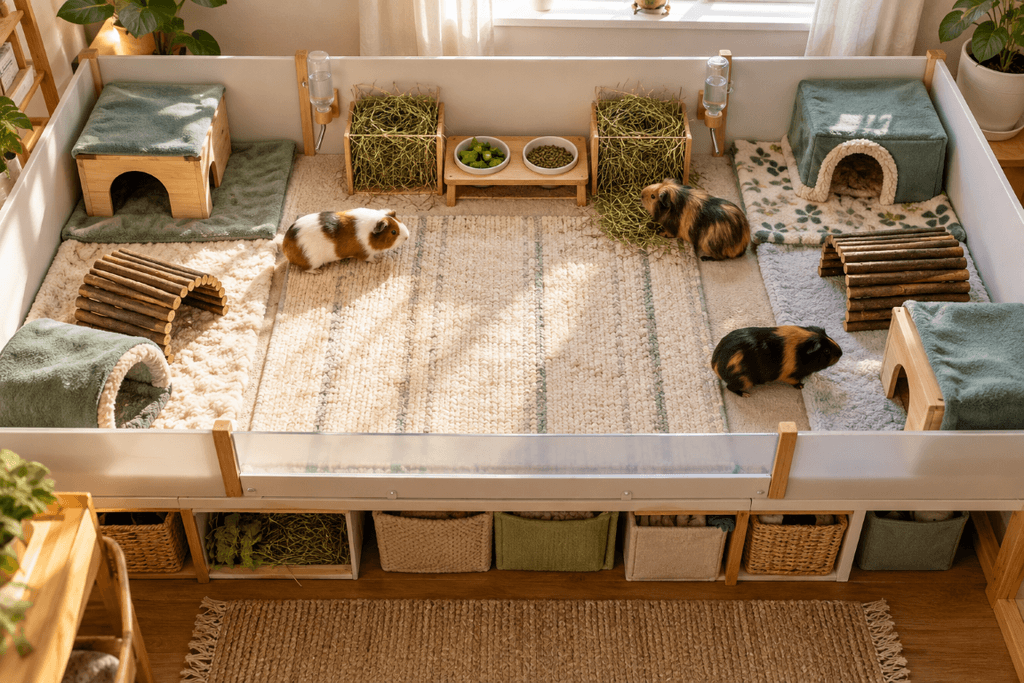
A good guinea pig cage should be easy to spot clean, simple to deep clean, and designed so you can regularly inspect bedding, hides, cage materials, ramps, barriers, and accessories for wear or chewing damage.
How often should I clean a guinea pig cage?
Remove wet bedding, excess droppings, soiled hay, and leftover fresh food every day or as needed. Deeper cleaning depends on the number of guinea pigs, enclosure size, bedding system, and how quickly particular areas become dirty. Once a day is a minimum.
This is the part of cage design I think is easiest to underestimate.
A cage can be beautiful and spacious, but if cleaning it is miserable, that design will eventually become frustrating.
We have experienced this as our own enclosure changed. More space gave our boys more room, but it also changed our cleaning routine. Moving from paper bedding to washable pads changed what daily maintenance looked like. Testing a second level introduced new possibilities but also added more surfaces and harder-to-reach areas.
That is why cleaning should be considered during cage design, not after everything is finished.
Make Daily Spot Cleaning Easy
Keep frequently dirty areas somewhere you can reach without dismantling the enclosure.
During quick daily cleaning, remove:
- Excess droppings
- Wet bedding
- Soiled hay
- Leftover vegetables
- Damp areas around water
- Dirty bedding near feeding zones
- Damaged enrichment
With washable liners, a small cage-safe hand vacuum or broom can make droppings much faster to remove.
Turn Deep Cleaning Into a Safety Inspection
When the cage is empty, check:
- Liners
- Seams
- Cage walls
- Base materials
- Hides
- Tunnels
- Ramps
- Fasteners
- Water bottle hardware
- Corners
- Barriers
Look for:
- Chewed plastic
- Loose fibers
- Exposed foam
- Cracks
- Sharp edges
- Damaged ramps
- Loose hardware
- Exposed adhesives
- Torn backing materials
Chew damage can happen gradually, so a close inspection during cleaning can catch problems before they become significant.
Inspect the Area Around the Cage
Guinea pig safety does not stop at the enclosure wall.
Make sure they cannot reach:
- Electrical cords
- Plastic bags
- Unsafe plants
- Cleaning chemicals
- Medications
- Small children’s toys
- Loose fabric
- Anything that could fall into the enclosure
During floor time, check the room from guinea pig height.
The world looks very different when the main question is apparently, “Could I put my teeth on that?”
Guinea Pig Haven Tip
When we add something to our setup now, we think about three things together: Will the guinea pigs use it? Can they interact with it safely? Can we clean around it? If something fails one of those tests, it usually is not worth keeping.
Common Guinea Pig Cage Setup Mistakes to Avoid
Even a large cage can become a poor setup if the details inside it do not work.
Watch for these common problems:
- Choosing a cage because it is labeled for guinea pigs instead of checking its dimensions
- Using a small main floor and trying to compensate with upper levels
- Using exposed wire flooring
- Filling the enclosure with too many accessories
- Providing too few hiding places
- Using hides that allow one guinea pig to corner another
- Leaving exposed disposable pee pads inside the cage
- Ignoring chewed seams, backing, foam, or plastic edges
- Using exercise wheels
- Providing only one important resource when guinea pigs compete
- Placing the cage in direct sunlight or strong drafts
- Using dusty or heavily scented bedding
- Creating a layout that is difficult to clean
- Assuming a product is safe simply because it is marketed for guinea pigs
A good enclosure does not need to look like a designer showroom. Your guinea pigs are far more interested in whether they can eat, move, hide, explore, rest, and feel secure.
Guinea Pig Cage Setup at a Glance
| Cage Feature | What to Aim For | What to Avoid |
|---|---|---|
| Floor space | Large horizontal footprint with open movement areas | Tiny cages or relying on upper levels for space |
| Flooring | Solid, comfortable surface | Exposed wire grids |
| Bedding | Low-dust paper or safely maintained washable system | Wet bedding, loose fibers, exposed plastic-backed pee pads |
| Hides | More hides than guinea pigs when possible | Too few shelters or easy-to-block single entrances |
| Hay | Unlimited and easy to access | Small amounts or difficult-to-reach feeders |
| Water | Reliable clean bottle or stable bowl | Blocked bottle nozzles or dirty water |
| Enrichment | Tunnels, forage, cardboard, safe chew items | Exercise wheels, unsafe plastic, strings, foam |
| Layout | Clear paths plus protected areas | Wall-to-wall clutter |
| Location | Ventilated, stable temperature, safe household area | Direct sun, drafts, constant threats |
| Maintenance | Easy daily access and regular inspection | Hard-to-reach corners and damaged materials |
Not sure what to buy before you set up the cage? Start with our list of essential guinea pig supplies.
Frequently Asked Questions About Guinea Pig Cage Setup
Can two guinea pigs live in the same cage?
Yes, compatible guinea pigs can and generally should live with guinea pig companionship. Their enclosure needs enough space, hiding places, hay, water, and other resources so both animals can use the cage comfortably without constantly competing.
Are C&C cages good for guinea pigs?
C&C-style cages can work very well because they allow you to create a large horizontal footprint and adjust the layout as your needs change. They still need a solid base, secure construction, appropriate wall height, and protection from other pets or young children where necessary.
Is a pet-store guinea pig cage big enough?
Some may be, but many cages marketed for guinea pigs provide less usable space than you might expect once hides, food, hay, water, and enrichment are added. Always check the actual floor dimensions instead of relying on the guinea pig pictured on the packaging.
Can guinea pigs live on fleece?
Yes. Fleece and washable liners can work well when they remain dry, absorbent, intact, and properly maintained. Check regularly for loose threads, fraying, torn seams, or exposed internal layers.
Can I put puppy pads under guinea pig fleece?
Disposable absorbent pads should not be accessible where guinea pigs can chew the plastic backing, sealed edges, or internal filling. If you use one beneath another system, it needs to remain completely inaccessible to the guinea pigs.
Do guinea pigs need a lid on their cage?
Not every enclosure needs a lid. A secure open-top enclosure can work in some homes, while households with dogs, cats, young children, or other access risks may need a secure lid or additional barrier.
Do guinea pigs need a second level?
No. A second level is optional and should add to the enclosure rather than replace adequate horizontal space on the main floor.
How many hides do two guinea pigs need?
Three or more hiding options is a useful goal for two guinea pigs. Having more hides than guinea pigs gives them choices and can help reduce competition.
What should never be put in a guinea pig cage?
Avoid exposed wire flooring, exercise wheels, exposed disposable pee pads, loose strings, accessible foam, sharp objects, unsafe plastics, strongly scented bedding, and materials your guinea pigs can easily break apart and swallow.
Where should I put my guinea pig cage?
Keep the enclosure in a comfortable, well-ventilated indoor location protected from direct sunlight, strong drafts, temperature extremes, other pets, and household hazards. It should also be somewhere you can easily observe and care for your guinea pigs.
Things to Know Before Setting Up a Guinea Pig Cage
Your first guinea pig cage setup probably will not be your final one, and that is completely normal.
You may start with paper bedding and later discover washable liners work better for your household. You may realize your guinea pigs need more room. You might add a loft and discover that one guinea pig loves it while the other seems personally offended by the concept of stairs.
We have gone through those kinds of changes ourselves.
Our guinea pig housing journey has included starting with a smaller setup, adding more space, moving from paper bedding to washable pads, expanding the enclosure, experimenting with a second level, dealing with cleaning challenges, and thinking about how to make the entire setup safer around a toddler.
Each change taught us something that would have been difficult to learn from a product description alone.
That is why I do not think of cage setup as a one-time decorating project. It is an environment you continue adjusting as you learn how your guinea pigs actually use it.
Watch where they sleep.
Notice where they eat hay.
See which hide they choose.
Pay attention to where the cage becomes dirty fastest.
Notice where they run.
And definitely notice what they chew.
Your guinea pigs will give you plenty of feedback about your enclosure design. They simply will not organize it into a helpful survey.
Building a Guinea Pig Cage That Actually Works
The best guinea pig cage setup is not necessarily the biggest, prettiest, or most expensive setup you can create. It is the enclosure that gives your guinea pigs enough space to behave naturally while making everyday feeding, cleaning, observation, and maintenance realistic for your household.
Start with horizontal floor space. Add a comfortable solid surface, safe bedding, several hiding places, unlimited hay, fresh water, and room to move. Choose enrichment with chewing in mind, leave clear pathways through the enclosure, and make sure you can easily reach every section for cleaning and regular safety checks.
Then pay attention to what your guinea pigs tell you through their behavior.
Something that looked perfect during setup may turn out to be awkward, difficult to clean, unnecessary, or much more chewable than you expected. Adjusting the enclosure when you learn something new is part of good guinea pig care.
Once the setup works well, you have created more than somewhere to keep your guinea pigs. You have given them a home where they can eat, run, rest, hide, explore, socialize, and settle into the wonderfully opinionated little routines that make living with guinea pigs so entertaining.
For the rest of the essentials, including diet, companionship, grooming, health, and daily routines, continue with our Complete Guinea Pig Care Guide for Beginners.