Guinea pig supplies can add up fast, and the pet store doesn’t make it easy. Shelves are packed with cages, wheels, colorful treats and accessories that all claim to be “for guinea pigs,” yet many of them are too small, unnecessary or even unsafe. If you’re getting ready to bring guinea pigs home, you deserve a clear list of what actually matters.
Here’s the short version. Guinea pigs need a properly sized cage with a solid floor, safe bedding, unlimited hay, plain guinea pig pellets, fresh vegetables every day, water, more hides than guinea pigs, sturdy food bowls, a secure carrier and a simple grooming and health kit. Almost everything else can wait until you know what your guinea pigs actually use.
We built our list the hard way with our two boys, Pumpkin and Spice, from skipping the pet-store cage to learning which bedding was worth the money. Below are the 10 essential guinea pig supplies every beginner needs, backed by veterinary and welfare guidance, plus what we’d skip if we were starting over.
Disclosure: This post contains paid affiliate links. If you buy through them, we may earn a commission at no extra cost to you. As an Amazon Associate I earn from qualifying purchases. Learn more in our Affiliate Disclosure.
TLDR: Guinea Pig Supplies Checklist at a Glance
Short on time? Here are the essentials to have ready before day one.
- Home: a cage with at least 7.5 sq ft of solid floor for two (10.5+ sq ft preferred), safe bedding plus a spare set, and more hides than guinea pigs.
- Food: unlimited grass hay, plain guinea pig pellets, fresh vegetables every day and a reliable vitamin C source.
- Water and bowls: a water bottle with a backup, and heavy ceramic food bowls.
- Care: a secure carrier, nail clippers and a digital kitchen scale that weighs in grams.
- Skip: exercise wheels, exercise balls, seed-heavy treat mixes, tiny starter cages and exposed disposable pee pads.
What Do Guinea Pigs Need Before They Come Home?
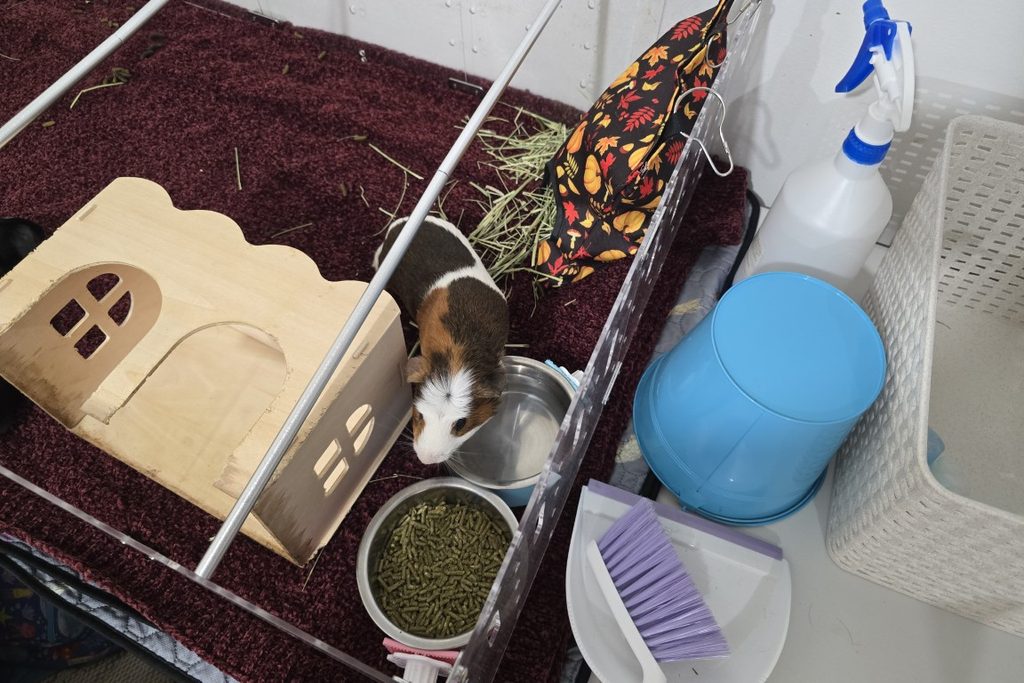
Before guinea pigs come home, they need a properly sized cage set up with safe bedding, hides, hay, water and food. A carrier, basic grooming tools and a guinea-pig-savvy vet should be lined up too.
What should I buy before getting a guinea pig?
Start with the cage, bedding, hides, hay, pellets, fresh vegetables, a water bottle and food bowls. Add a carrier, nail clippers and a kitchen scale, and find a vet who treats guinea pigs before you need one.
The Merck Veterinary Manual recommends having the cage set up and food, bedding, chew items, dishes, a water bottle and a brush ready before your guinea pig arrives. Coming home is stressful enough; walking straight into a finished setup helps them settle.
Here’s how the essentials break down:
| Supply | Why it matters | Must-have or extra? |
|---|---|---|
| Properly sized cage | Floor space for running, hiding and getting along | Must-have |
| Safe bedding | Keeps feet dry and the cage hygienic | Must-have |
| Unlimited grass hay | Main food and keeps teeth worn down | Must-have |
| Plain guinea pig pellets | Balanced nutrition alongside hay | Must-have |
| Fresh vegetables | Daily nutrition and vitamin C | Must-have |
| Water bottle (plus backup) | Constant fresh water | Must-have |
| Hides | Safety and stress relief | Must-have |
| Heavy food bowls | Hard to tip, easy to clean | Must-have |
| Secure carrier | Vet visits and cleaning days | Must-have |
| Nail clippers and scale | Routine grooming and health checks | Must-have |
| Tunnels, playpen, extra liners | Enrichment and convenience | Nice to have |
Highlights
- Set up everything before your guinea pigs arrive.
- Ten items cover the true essentials.
- Extras can wait until you know your guinea pigs’ habits.
Guinea Pig Haven Tip
Find a guinea-pig-savvy vet before your guinea pigs come home, and ask clinics whether they regularly treat guinea pigs and where they send after-hours emergencies. Save the number somewhere easy to find, because the last thing you want is to be searching while your guinea pig is unwell.
1. A Properly Sized Cage
The cage is the most important guinea pig supply you’ll buy. Two guinea pigs need at least 7.5 square feet of solid, single-level floor space, and 10.5 square feet or more is preferred.
What size cage do I need for two guinea pigs?
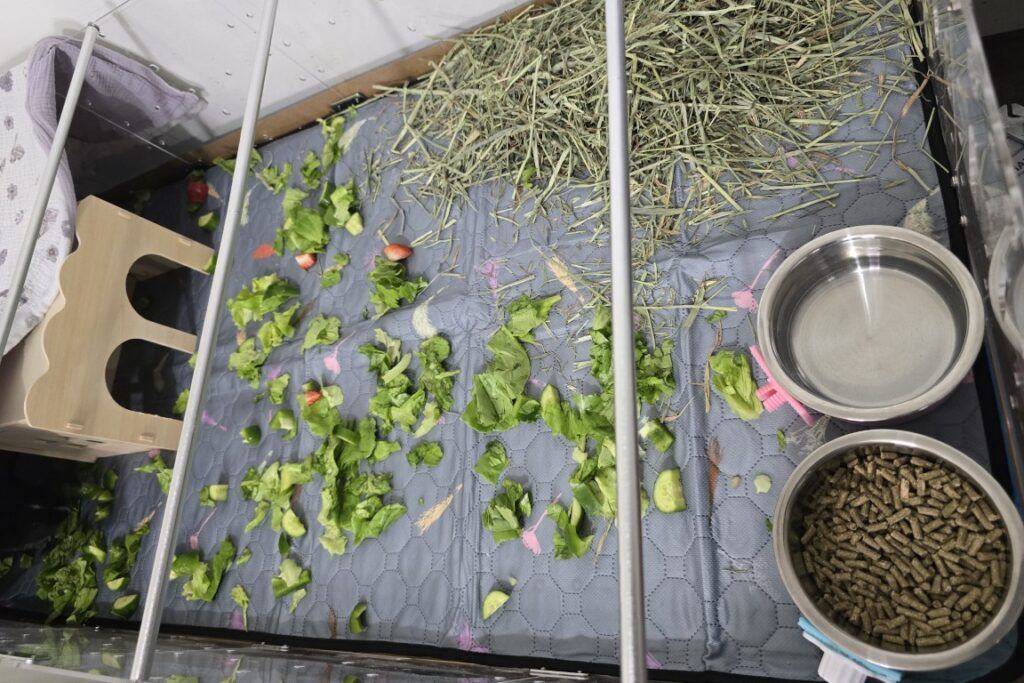
At least 7.5 square feet of flat floor space, with 10.5 square feet (about 30 x 50 inches) preferred, according to Humane World for Animals. It should have a solid floor, never wire, and only the ground level counts.
Many cages sold for guinea pigs are far smaller than welfare groups recommend, so it pays to check the measurements rather than trusting the label. The Merck Veterinary Manual also recommends a cage height of about 18 inches and warns against wire-mesh floors, because guinea pigs have delicate feet.
Modular grid-and-panel cages, often called C&C cages, are popular with rescues because you get more floor space for your money and can expand them later.
Our experience: We skipped the pet-store cages after our research. The ones we found cost over $100 and were still too small, so we chose a modular clear-panel cage for under $50 instead. Later, we learned our size suits two females better than two males, so we’re planning to expand the boys’ space. If we were starting over, we’d buy for two adult males from day one.
Before You Buy
- ✅ At least 7.5 sq ft for two; 10.5+ sq ft if you can
- ✅ Solid floor and easy access for cleaning
- ✅ Room to expand later
- ❌ Wire floors
- ❌ Multi-level cages with a small base
- ❌ “Starter kits” with tiny cages
What We Use: A modular cage with clear acrylic panels and a breathable mesh lid. The solid, see-through panels keep little fingers out while our toddler can still watch and talk to the boys, and because the system is modular, we can add panels to give them more floor space as they grow.
Guinea Pig Haven Tip
Before you buy, measure the inside of the cage floor and the spot where it will live, including the table underneath. A table longer than the cage leaves room for a cleaning caddy and future panels; it took us three tables to learn that one. For exact measurements, see Guinea Pig Cage Size: 10 Safe Rules for Happy Pigs.
2. Safe Bedding (Plus a Spare Set)
Guinea pigs need absorbent, low-dust, unscented bedding that’s safe if chewed. Washable fleece liners with an absorbent core and low-dust paper bedding are the safest common choices.
What bedding should I buy for guinea pigs?
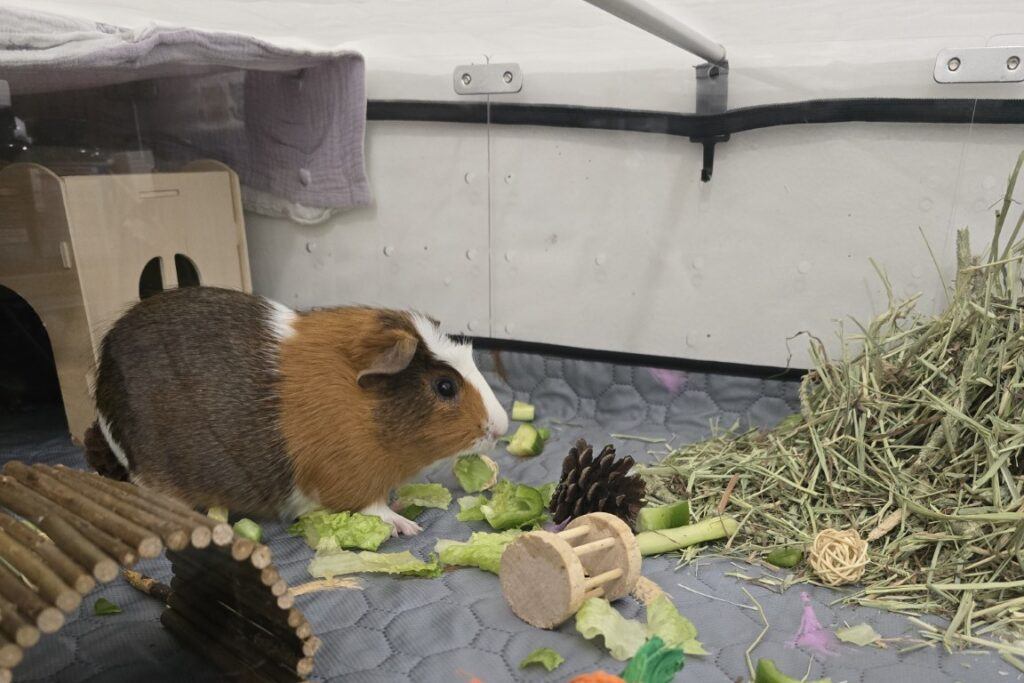
Washable fleece liners with an absorbent core, or unscented, low-dust paper bedding. Avoid cedar, untreated pine, corn cob, cat litter and exposed disposable pee pads. If you choose liners, buy two sets so one can be in the wash.
Bedding is your guinea pigs’ bathroom and the surface they walk on all day, so it needs to stay dry and comfortable. The Merck Veterinary Manual lists paper-based bedding among preferred options and advises avoiding cedar and raw pine, whose oils can irritate the lungs.
Your choice also shapes your budget. Disposable bedding is cheaper per bag but needs constant replacing, while washable liners cost more up front and save money over time.
Our experience: We started with paper bedding and were changing it about every five days, which got expensive. We switched to washable liners, which were much easier to clean, but ours shrank in the wash, so we bought more and now layer them. We also tried dog pee pads once, and the boys chewed the plastic edges almost immediately. That’s one supply we’ll never buy again.
Before You Buy
- ✅ Absorbent, low-dust and unscented
- ✅ Safe if chewed
- ✅ A spare set of liners, or enough paper bedding for several weeks
- ❌ Cedar or untreated pine shavings
- ❌ Scented or fluffy bedding
- ❌ Exposed disposable pee pads
What We Use: Two sets of washable fleece-topped liners, which we layer to cover the full cage floor. Having two sets means one is always in the cage while the other is in the wash.
Guinea Pig Haven Tip
Wash new fleece liners several times before first use and skip fabric softener, or they won’t soak up urine properly. Buy two full sets so one is always clean, and compare every option in Guinea Pig Bedding: 10 Best and Worst Options Compared.
3. Unlimited Grass Hay
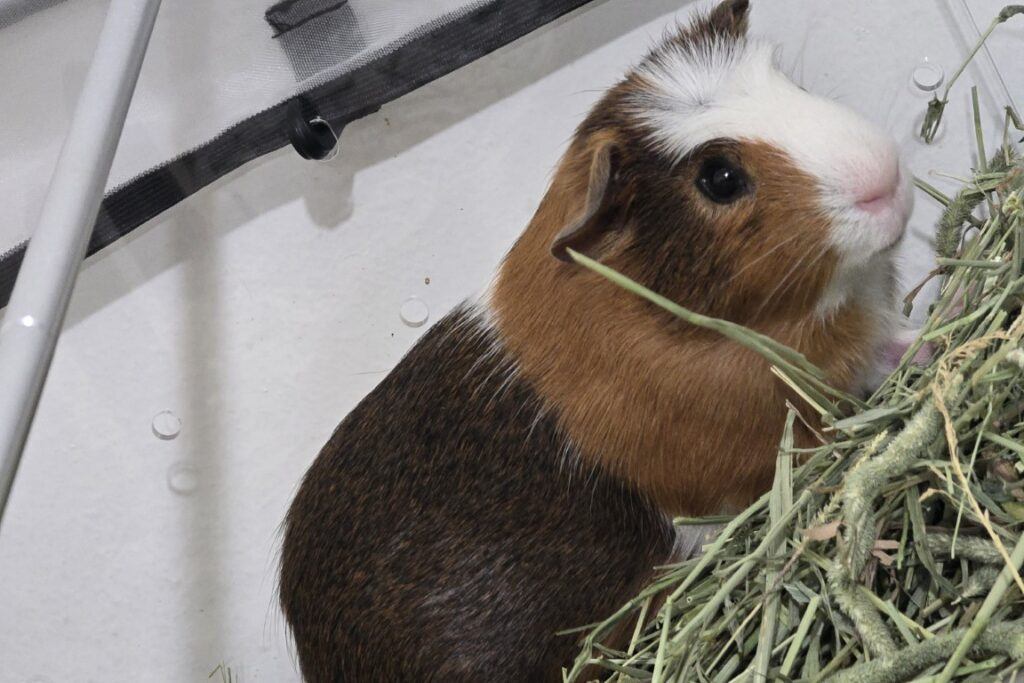
Grass hay is the most important food you’ll buy. Adult guinea pigs should have unlimited grass hay, such as timothy or orchard grass, available all day and night.
What kind of hay do guinea pigs need?
Adult guinea pigs need high-quality grass hay like timothy or orchard grass. The Merck Veterinary Manual notes that growing guinea pigs under about 6 months, and pregnant or nursing guinea pigs, need alfalfa hay instead.
Hay keeps guinea pigs’ digestive systems working and wears down their constantly growing teeth. They eat a lot of it, so buying in larger bags usually saves money.
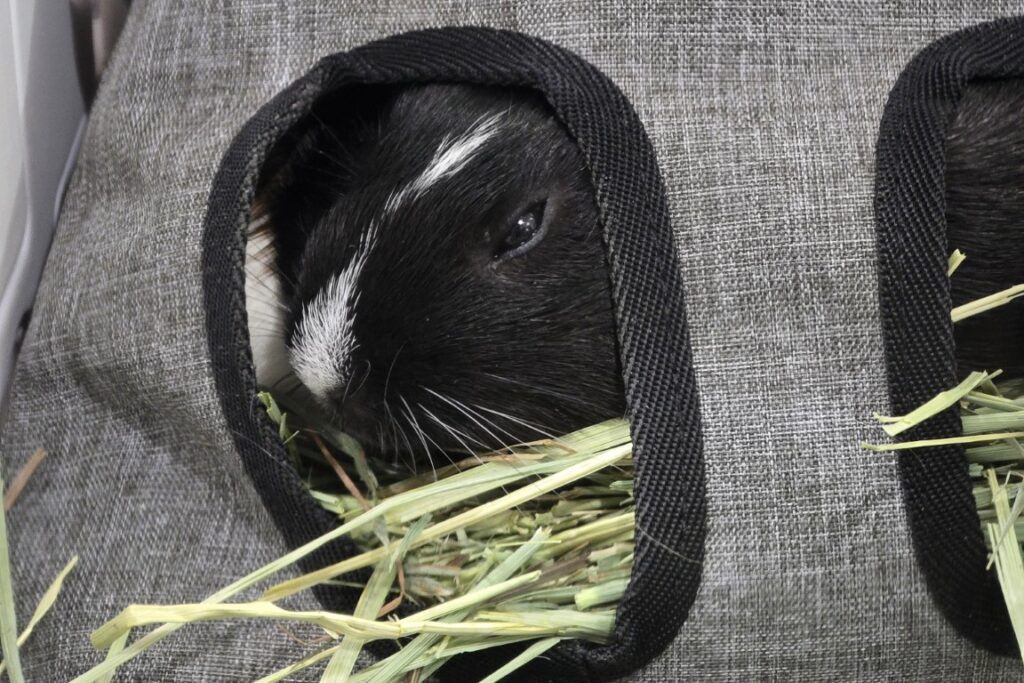
You’ll also want something to hold it. A hay rack or hay bag keeps hay cleaner and off the floor, so less of it gets soiled and wasted.
Our experience: Loose hay used to end up everywhere in our cage. Switching to hay bags made a bag of hay last us almost twice as long. And the boys love hiding inside them.
Before You Buy
- ✅ Fresh-smelling, green grass hay
- ✅ A hay rack or hay bag
- ✅ A sealed storage bin to keep hay dry
- ❌ Dusty, moldy or brown, brittle hay
- ❌ Alfalfa as the main hay for adult guinea pigs
What We Use: Timothy hay that arrives noticeably fresher and greener than the first brand we tried, and the boys dive right into it. We keep it in hay bags, which made each bag of hay last almost twice as long.
Guinea Pig Haven Tip
Good hay smells sweet, looks mostly green and has long strands instead of lots of dust. Store it covered somewhere cool and dry, and if your guinea pigs suddenly snub a new bag, try a fresh batch before assuming they’ve gone off hay.
4. Plain Guinea Pig Pellets
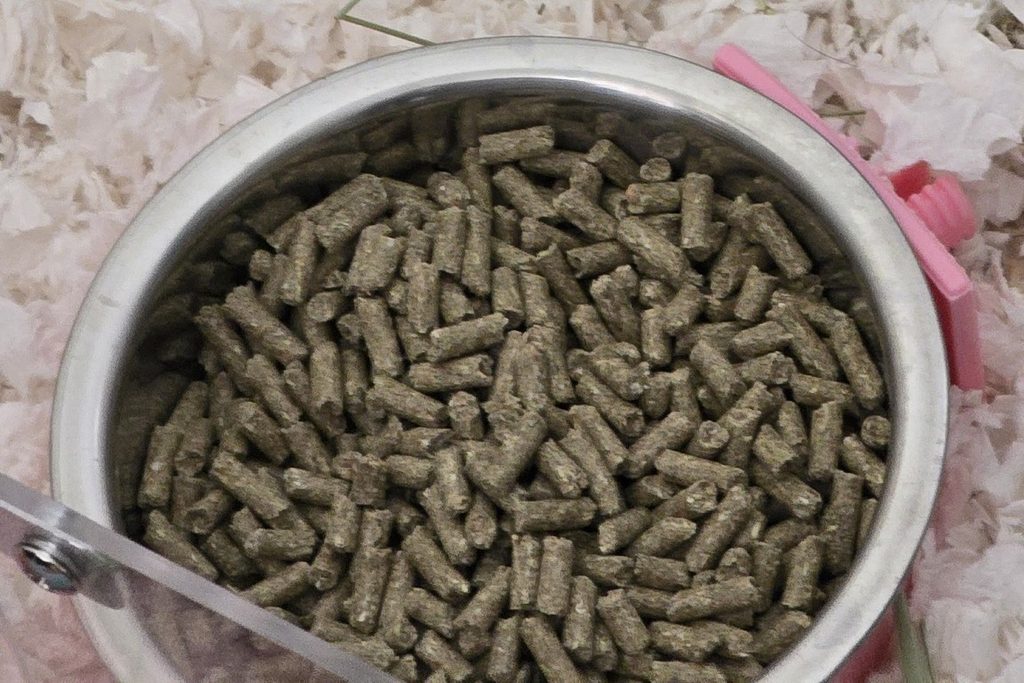
Guinea pigs need plain pellets made specifically for guinea pigs, fed in measured amounts alongside hay and vegetables. Skip colorful mixes with seeds, nuts and dried fruit.
What pellets should I buy for my guinea pig?
Choose plain pellets formulated for guinea pigs. The Merck Veterinary Manual recommends grass-based pellets for adults and notes many contain a stabilized form of vitamin C. Avoid rabbit pellets and seed-heavy mixes.
Pellets add balanced nutrition, but they’re a supplement to hay, not a replacement for it. Mixes full of colorful pieces encourage guinea pigs to pick out the tasty bits and leave the rest, which unbalances their diet.
Check the date on the bag, too. Vitamin C in pellets breaks down over time, so fresher is better.
Before You Buy
- ✅ Plain, uniform pellets made for guinea pigs
- ✅ A recent milling or best-by date
- ✅ A sealed container for storage
- ❌ Seed, nut or dried-fruit mixes
- ❌ Rabbit or “small animal” pellets
What We Use: Plain timothy-based guinea pig pellets. We tried two brands, and these are the ones Pumpkin and Spice clearly prefer, so they’re what we feed alongside their hay and veggies.
Guinea Pig Haven Tip
Offer a measured daily portion of pellets instead of keeping the bowl full, so hay stays the main meal. When you switch brands, mix the old and new over about a week to keep tummies happy.
5. Fresh Vegetables and a Vitamin C Plan
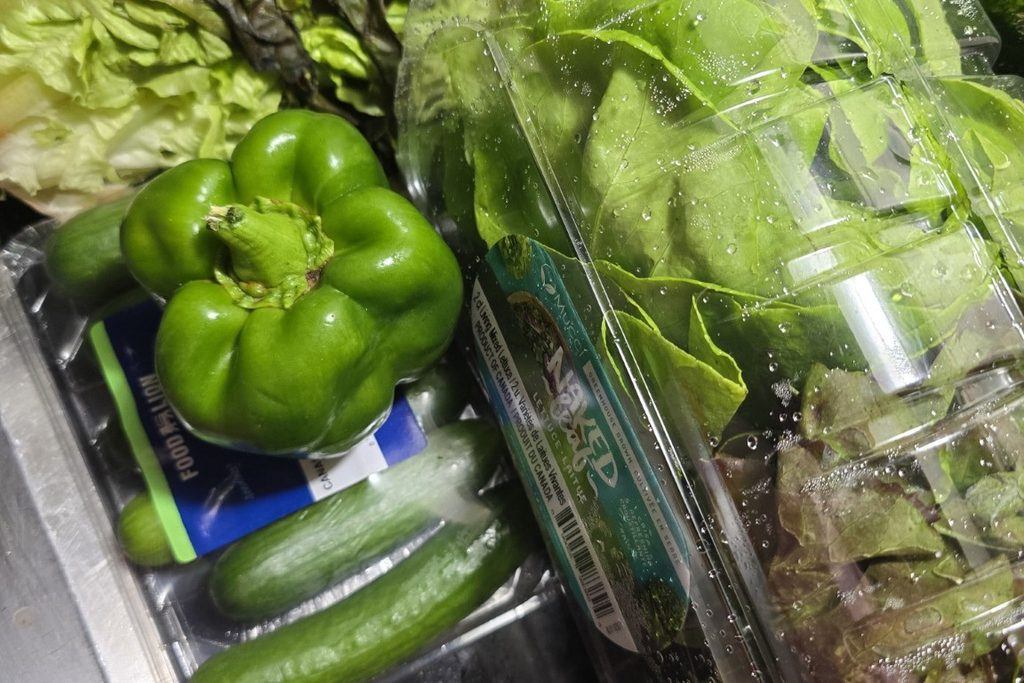
Guinea pigs need fresh vegetables every day, and they need a reliable source of vitamin C because their bodies can’t make it. Bell peppers and leafy greens are common favorites.
Do guinea pigs need vitamin C?
Yes. Guinea pigs can’t produce their own vitamin C, so they need it from their diet every day. Vitamin C-rich vegetables and fresh, properly stored pellets help meet that need; ask your vet before adding supplements.
The Merck Veterinary Manual explains that guinea pigs lack the enzyme needed to make vitamin C, which is why diet matters so much. Fresh vegetables add vitamin C, moisture and variety, and introducing new ones slowly helps avoid tummy upsets.
This one isn’t a single purchase so much as a weekly habit. Plan vegetables into your grocery list from the start.
Our experience: Fresh food, mostly vegetables, is part of the boys’ routine every day. Spice is famously addicted to green peppers, and Pumpkin will tolerate his brother for lettuce and cucumbers.
Before You Buy
- ✅ A rotating mix of fresh, washed vegetables
- ✅ Vitamin C-rich options such as bell peppers
- ✅ A shallow dish for serving
- ❌ Fruit as a daily staple (it’s a treat)
- ❌ Vitamin C drops in the water bottle unless your vet recommends them
What We Do Instead: We don’t use a veggie dish. We scatter veggies around the cage or leave small piles in different spots, which gets the boys moving, foraging and exploring, so mealtime doubles as enrichment.
Guinea Pig Haven Tip
If your guinea pigs don’t finish everything right away, put part of the serving in a shallow dish so it stays fresh and off the bedding. Introduce one new veggie at a time, and keep a list of favorites (Spice’s is green peppers) to make grocery runs faster.
6. Fresh Water (Bottle or Heavy Bowl)
Guinea pigs need fresh water available at all times, from either a water bottle or a heavy bowl that can’t tip. Bottles stay cleaner, while bowls are easy to drink from and simple to wash but need refreshing more often.
Is a water bottle or bowl better for guinea pigs?
Many owners use a bottle because it stays cleaner, and the Merck Veterinary Manual notes guinea pigs drink more from a bottle than a bowl. A heavy, stable bowl works too if you check it often for bedding and droppings.
Whichever you choose, check it daily. A bottle can look full while the nozzle is blocked, so tap the spout to make sure water flows. A bowl collects hay and bedding quickly, so plan to refresh it more than once a day.
Before You Buy
- ✅ A leak-resistant bottle that mounts securely on your cage type, or a heavy bowl that can’t tip
- ✅ A backup bottle or second bowl
- ✅ A small bottle brush for cleaning
- ❌ Bottles too small for two guinea pigs
- ❌ Lightweight bowls that tip easily
What We Use: A heavy metal bowl for water. The boys never really took to a bottle, and we didn’t want to hang one on our clear panels, since they aren’t designed to hold that weight.
Guinea Pig Haven Tip
Check that a bottle is made for your cage type before hanging it, since acrylic panels often aren’t built to hold the weight. If you use a bowl like we do, keep it away from the hay corner and refresh it at least twice a day, more often when it’s hot.
7. Hides (More Than You Have Guinea Pigs)
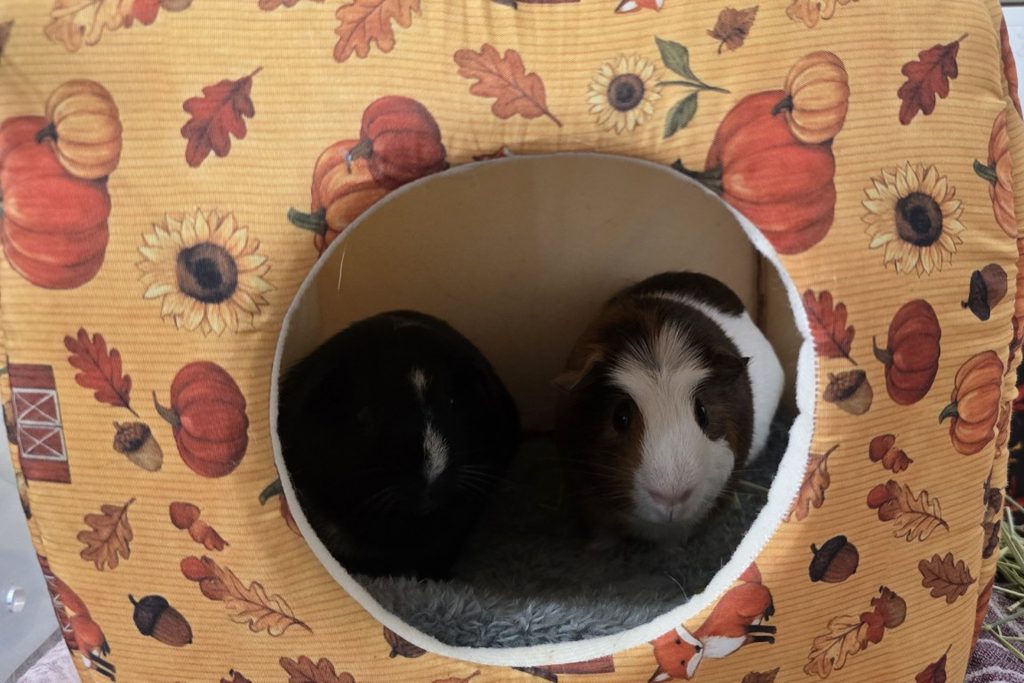
Guinea pigs need places to hide so they feel safe. You should have more hides than guinea pigs, so two guinea pigs need at least three.
How many hides do guinea pigs need?
More hides than guinea pigs. The Merck Veterinary Manual says there should be more hiding spots than guinea pigs, and the RSPCA recommends refuges that outnumber the animals by one.
Guinea pigs are prey animals, and hiding is how they cope with stress. With two or more, extra hides mean no one gets stuck without a safe spot. Hides with two exits are even better, because one guinea pig can’t trap the other inside.
Everything here should be chew-safe. The RSPCA recommends tunnels and untreated wooden items, and warns that plastic toys can harm guinea pigs if chewed or swallowed.
Our experience: We started with just one wooden hide. The boys share it happily while they’re small, but we’ve learned each guinea pig needs their own, plus a spare. For now, we also drape a blanket over about a third of the cage as a full hideaway, and they use it constantly.
Before You Buy
- ✅ At least one hide per guinea pig, plus one extra
- ✅ Two-exit hides or tunnels
- ✅ Untreated wood, safe fabric or plain cardboard
- ❌ Thin plastic hides they can chew apart
- ❌ Painted or treated wood
What We Use: A small wooden hide with two doors, so neither boy can get trapped inside, plus a larger cushioned hideout we added for their fall setup.
Guinea Pig Haven Tip
A plain cardboard box with two doorways makes a great free hide, and building them is a fun DIY project for kids. Use unprinted cardboard and skip tape, glue, staples, paint, markers and stickers, because guinea pigs will chew whatever you add.
8. Heavy Food Bowls
Choose heavy ceramic or metal bowls that guinea pigs can’t tip over or chew. With two guinea pigs, a second bowl helps prevent squabbles at mealtime.
What kind of food bowl is best for guinea pigs?
A heavy, shallow ceramic or metal bowl is a popular choice because it’s hard to tip, easy to wash and can’t be chewed. Avoid lightweight plastic bowls, which flip easily and can be chewed.
Guinea pigs love to stand in, nudge and flip their bowls. A heavy base keeps pellets where they belong, and a shallow shape lets them eat comfortably.
If one guinea pig tends to push the other away from food, a second bowl in a different spot gives everyone a fair chance.
Before You Buy
- ✅ Heavy ceramic or weighted metal
- ✅ Shallow and wide
- ✅ One bowl per guinea pig if they compete
- ❌ Lightweight plastic bowls
- ❌ Deep bowls that are hard to reach into
What We Use: A heavy metal food dish that’s easy to wash and hard for the boys to tip over.
Guinea Pig Haven Tip
Keep a spare bowl so there’s always a clean one ready on wash day. If one guinea pig guards the food, set a second bowl on the opposite side of the cage so everyone eats in peace.
9. A Secure Carrier
A secure, well-ventilated carrier is essential for vet visits, emergencies and cleaning days. Bonded guinea pigs can usually travel together in one carrier.
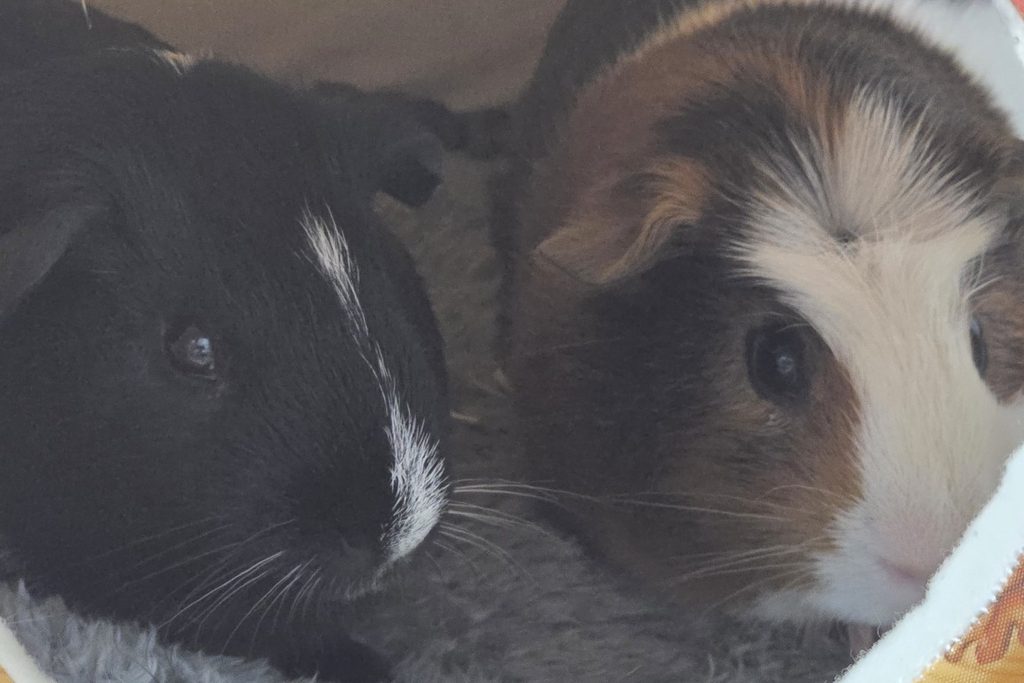
Do I need a carrier for my guinea pig?
Yes. You’ll need one to bring your guinea pigs home, take them to the vet, and keep them safe during deep cleans. Choose a sturdy carrier with good ventilation and a secure door.
It’s easy to put off buying a carrier until there’s an emergency, which is exactly when you won’t want to be shopping for one. A carrier that opens from the top makes it easier to lift guinea pigs in and out gently.
Line it with a towel and a handful of hay so it feels familiar, and keep bonded companions together; the RSPCA notes guinea pigs feel calmer traveling with their companions.
Our experience: We use our carrier every time we swap bedding. The boys wait safely inside while we clean, which keeps them calm and out of the way.
Before You Buy
- ✅ Sturdy sides and a secure door
- ✅ Good ventilation
- ✅ Top opening, if possible
- ❌ Flimsy cardboard boxes for anything beyond the ride home
- ❌ Carriers too small for two guinea pigs to sit comfortably
What We Use: A collapsible pet carrier with good ventilation. The boys wait in it every cleaning day, and it folds flat for storage when we’re done.
Guinea Pig Haven Tip
Give new guinea pigs time to learn your routine before expecting them to become confident around you. Sitting near the enclosure, talking softly, offering food, and moving predictably can help them begin associating your presence with safety and good things.
10. A Simple Grooming and Health Kit
Every guinea pig owner needs small-animal nail clippers and a digital kitchen scale that weighs in grams. Together they cover routine nail trims and the weight checks that help you spot health changes early.
What grooming supplies do guinea pigs need?
At minimum, small-animal nail clippers and a soft brush. A digital kitchen scale is just as important, because regular weigh-ins help you notice weight loss, which is often hard to see under fur.
Guinea pig nails grow continuously and need regular trims. If you’re nervous, ask your vet to show you how the first time.
A kitchen scale might not seem like a pet supply, but it’s one of the most useful tools you can own. Guinea pigs can hide illness, and a steady drop in weight is often an early sign something isn’t right.
Before You Buy
- ✅ Small-animal nail clippers
- ✅ A digital kitchen scale that measures in grams
- ✅ A soft brush (essential for long-haired guinea pigs)
- ❌ Human nail clippers that crush rather than cut
- ❌ Bathing products for routine use; guinea pigs rarely need baths
Guinea Pig Haven Tip
Weigh your guinea pigs at the same time each week and jot it down, using a small container if they wiggle. A steady drop, appetite changes or fewer droppings are worth a call to your vet, and if nail trims make you nervous, ask your vet to show you the first time.
Nice-to-Have Guinea Pig Supplies
Once the essentials are covered, a few extras make daily care easier and more fun: tunnels, a playpen for floor time, extra liners, a cleaning caddy and a hay storage bin.
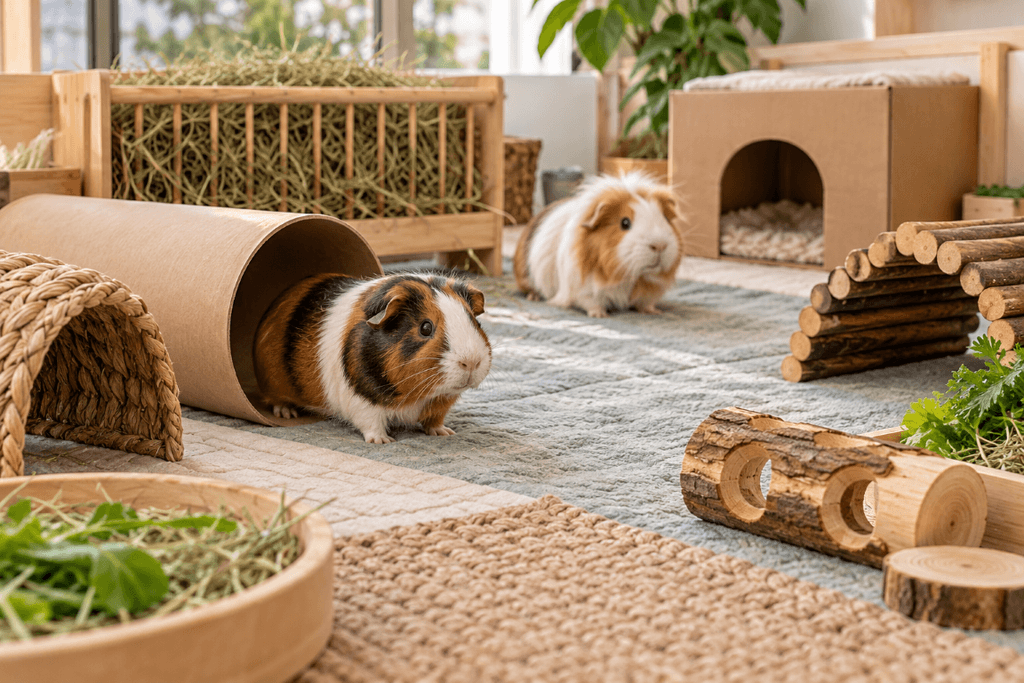
What extra supplies are worth buying for guinea pigs?
Tunnels and safe chew items for enrichment, a playpen for supervised floor time, a spare set of liners, a dustpan and small vacuum for cleaning, and a sealed bin to keep hay fresh.
These aren’t must-haves on day one, but they’re worth adding once you see how your guinea pigs spend their time:
- Tunnels: fabric or untreated wooden tunnels for hiding and zoomies
- Chew items: untreated wooden chews or willow sticks; the RSPCA recommends these for gnawing
- Playpen: a safe space for daily floor time, which the Merck Veterinary Manual recommends
- Extra liners or bedding: so a clean set is always ready
- Cleaning caddy: dustpan and brush, small vacuum, spray bottle and cloths in one place
- Hay storage bin: keeps hay dry and fresh
What We Do Instead: We’re focusing on getting the basics right first, so we haven’t added extras yet. For now, the boys’ hay bags, hides and blanket-covered corner give them plenty to explore, and we’ll share what we add as we go.
Highlights
- Add extras after you learn what your guinea pigs actually use.
- Simple enrichment, like cardboard and tunnels, is often the favorite.
- Convenience items make daily care faster.
Guinea Pig Haven Tip
Watch your guinea pigs for a couple of weeks before buying toys, then shop for what they actually love. A plain cardboard box or an unprinted paper bag stuffed with hay often beats an expensive accessory.
Guinea Pig Supplies to Skip
Skip exercise wheels and balls, seed-heavy treat mixes, tiny starter cages, exposed disposable pee pads, cedar or untreated pine bedding and thin plastic chew toys. They’re either unsafe or unnecessary.
What should you not buy for a guinea pig?
Avoid exercise wheels and balls, small cages sold as complete homes, colorful seed or yogurt treats, scented or cedar bedding, exposed pee pads and plastic toys meant for chewing.
Plenty of products are marketed for guinea pigs that don’t belong in their cage. Here’s what we’d leave on the shelf:
| Skip | Why |
|---|---|
| Exercise wheels and balls | The Merck Veterinary Manual warns wheels can injure guinea pigs |
| Tiny “starter kit” cages | Far smaller than welfare guidelines for even one guinea pig |
| Seed, nut and yogurt treat mixes | Encourage picky eating and don’t fit a guinea pig’s diet |
| Cedar and untreated pine bedding | Aromatic oils can irritate guinea pigs’ lungs |
| Exposed disposable pee pads | Plastic edges and backing are a chewing hazard |
| Thin plastic chew toys | The RSPCA warns plastic can harm guinea pigs if chewed or swallowed |
| Harnesses for walking | Guinea pigs aren’t built for leash walking; a playpen is safer |
Highlights
- If it isn’t safe to chew, it doesn’t belong in the cage.
- “For guinea pigs” on the packaging doesn’t guarantee it’s right for them.
- Skipping these saves money and prevents problems.
Guinea Pig Haven Tip
Before buying anything, ask the question we use for everything: what happens if they chew it? Be wary of products labeled for several small pets at once, since guinea pigs have their own size, diet and safety needs.
What We Learned Buying Guinea Pig Supplies
Our biggest supply lessons were to skip the pet-store cage, plan bedding around cost and cleaning, avoid anything with chewable plastic, and buy enough hides from the start.
What would we buy differently?
We’d size the cage for two adult males from day one, buy enough hides for both boys plus a spare, start with hay bags, and skip disposable pee pads entirely.
This is our firsthand experience with Pumpkin and Spice, separate from the research above:
- The cage: skipping pet-store cages saved money and got us more space, but we later learned two males need more room, so we’re planning to expand.
- The table: we went through three before finding one long enough for the cage, so plan the stand along with the cage.
- Bedding: paper bedding added up fast. Washable liners cost more up front but were easier, though ours shrank, so buy a spare set.
- Pee pads: a quick chewing scare, and never again.
- Hay bags: one of our best buys, since hay lasts almost twice as long.
- Hides: our small two-door wooden hide won’t fit both boys for long, so we added a bigger cushioned hideout, and a third is next.
- Carrier: we use it every cleaning day, not just for vet trips.
You can follow the rest of our setup changes in Our Guinea Pig Journey.
Highlights
- The cage and bedding are where most of the money goes.
- Chew safety ruled out our worst purchase.
- Small items like hay bags made a big difference.
Guinea Pig Supplies FAQs: Your Questions Answered
Still putting together your guinea pig supplies list? These are the questions new owners ask most.
How much do guinea pig supplies cost?
It depends on the cage and bedding you choose, which are the biggest expenses. Hay, vegetables and bedding are ongoing costs, so budget for regular weekly and monthly spending, not just the first shopping trip.
Do guinea pigs need toys?
They need enrichment, but it doesn’t have to be store-bought. Tunnels, hides, cardboard boxes, hay piles and safe chew items keep guinea pigs busy. Avoid plastic toys meant for chewing.
Can I buy a guinea pig starter kit?
Most starter kits include a cage that’s too small and extras guinea pigs don’t need. You’ll usually do better buying a properly sized cage and the essentials separately.
Do I need two of everything for two guinea pigs?
Not everything, but you’ll want more hides than guinea pigs, enough room for both to eat at once, and a backup water source. A second food bowl helps if one tends to guard the food.
What should I have ready on the first day?
A fully set-up cage with bedding, hides, hay, water and pellets, plus fresh vegetables, a carrier and a vet’s number saved. Keep the first day quiet and let your guinea pigs explore at their own pace.
Do guinea pigs need a vitamin C supplement?
Guinea pigs need vitamin C every day, but most get enough from fresh vegetables and fresh guinea pig pellets. Talk to your vet before adding a supplement.
Ready to Bring Your Guinea Pigs Home
With these 10 guinea pig supplies, you’ll have everything your new guinea pigs truly need: a roomy home, safe bedding, the right food, fresh water, places to hide and the basics for their care. Everything else can come later, once you know their personalities.
Keep learning as you set up:
- Guinea Pig Cage Setup: 7 Essential Steps That Work: put all your new supplies together into a safe, comfortable cage.
- Guinea Pig Cage Size: 10 Safe Rules for Happy Pigs: make sure the cage you buy has enough floor space.
- Guinea Pig Bedding: 10 Best and Worst Options Compared: choose the bedding that fits your budget and cleaning routine.
- Guinea Pig Cage Cleaning: 10 Easy Steps for Less Odor: learn the daily and weekly routine that keeps your new setup fresh.
- The Complete Guinea Pig Care Guide for Beginners: everything else new owners need to know, from diet to health.