A young guinea pig needs the same basics as an adult, just with more support for growth. That means unlimited hay, plain pellets made for guinea pigs, fresh veggies every day, a daily source of vitamin C and clean water at all times. Growing guinea pigs need more vitamin C than adults, and many vets add alfalfa until about 6 months old.
We brought Pumpkin and Spice home from a pet store while they were still small, likely just a couple of months old. Pumpkin had been there about two weeks longer and kept getting overlooked, so he’s always been a little bigger than Spice. Raising two young boys growing at slightly different rates is how we learned to feed young guinea pigs firsthand. These 10 rules combine guidance from veterinary sources with what has worked for our two boys.
TLDR: Young Guinea Pig Diet at a Glance
- Hay: unlimited grass hay, day and night. Many vets add alfalfa as a supplement until about 6 months.
- Pellets: plain guinea pig pellets, about 2 tablespoons (1/8 cup) a day unless your vet says otherwise.
- Vitamin C: every day from veggies like bell peppers and fresh pellets. Growing guinea pigs need more per kilogram of body weight than adults, up to three times the adult minimum.
- Veggies: fresh every day, mostly leafy greens, with one new veggie introduced at a time.
- Water: fresh and clean at all times, with nothing added.
- Treats: fruit only as a small, occasional treat. Never feed seeds, nuts, dairy or sugary snacks.
- Switching to adult food: around 6 months, done gradually over about a week.
- Weigh weekly: a young guinea pig should gain steadily. Any weight loss or drop in appetite means calling your vet.
Give Unlimited Hay, With Alfalfa Until About 6 Months
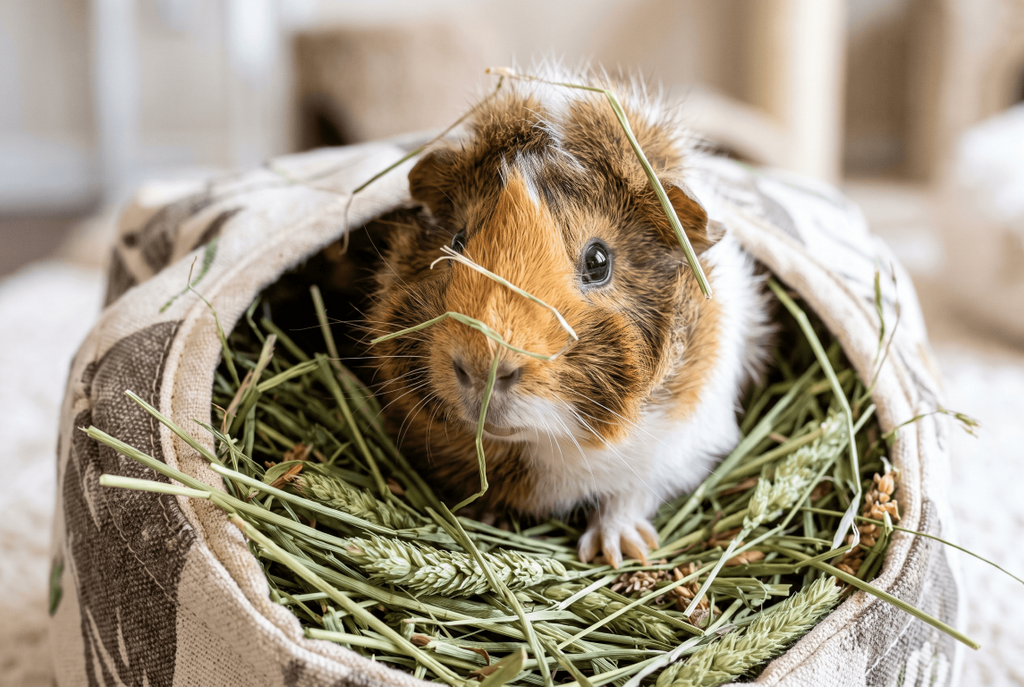
Young guinea pigs need unlimited hay every day. Many vets recommend adding alfalfa hay until about 6 months old, because it’s richer in protein and calcium for growth.
Can baby guinea pigs eat timothy hay?
Yes. Grass hay like timothy or orchard grass is safe at any age and should always be available. Alfalfa is an extra for growing guinea pigs, not a replacement for grass hay.
Hay is the most important food in a guinea pig’s diet at every age. It keeps the gut moving and wears down teeth that never stop growing. The Merck Veterinary Manual says guinea pigs should eat about their body size in hay every day.
Where vets differ is alfalfa. Merck says guinea pigs under 6 months need alfalfa hay and pellets, and the University of Florida’s veterinary hospital calls alfalfa a good supplement for young, growing guinea pigs. Some UK vets, including the Royal Veterinary College, advise against alfalfa because of its high calcium. The common ground is simple: keep grass hay available at all times, and if you add alfalfa for a young guinea pig, treat it as an extra and stop around 6 months.
Orchard Grass vs. Timothy vs. Alfalfa Hay
Orchard grass and timothy are both grass hays, while alfalfa is a legume hay. That’s the key difference: grass hays are lower in protein and calcium and high in fiber, so they’re safe as the main hay at any age. Alfalfa is richer in protein and calcium, which helps growing guinea pigs but is too much for most adults.
| Hay | Type | Protein and calcium | Best for |
|---|---|---|---|
| Timothy | Grass hay | Lower | Main hay at any age |
| Orchard grass | Grass hay | Lower | Main hay at any age; often softer and leafier, a good option for picky eaters |
| Alfalfa | Legume hay | Higher | Extra for guinea pigs under about 6 months, or pregnant and nursing guinea pigs |
You can mix timothy and orchard grass, or switch between them. Our boys were skeptical of orchard grass at first, but now they choose it over timothy.
Feeding Checklist
- Unlimited grass hay at every age, day and night.
- Alfalfa is an optional extra for growing guinea pigs under about 6 months.
- Adults shouldn’t get alfalfa as their main hay, because of its calcium.
Guinea Pig Haven Tip
Put hay in a hay bag or rack instead of loose on the floor. Our hay lasts almost twice as long that way, and it stays cleaner, which matters when little guinea pigs are eating and pooping in the same spot.
Feed Plain Pellets Made for Young Guinea Pigs
Young guinea pigs do best on plain, uniform pellets made for guinea pigs, with alfalfa-based pellets suited to growing guinea pigs. Most vets suggest about 2 tablespoons (1/8 cup) a day, alongside unlimited hay.
How many pellets should a young guinea pig eat?
About 2 tablespoons a day is the usual guideline from Merck and the University of Florida, but follow your vet’s advice for your own guinea pig. Pellets are a supplement, so hay should always be the bulk of what they eat.
The Merck Veterinary Manual says alfalfa-based pellets suit young, growing guinea pigs because they’re higher in calcium, while adults do better on timothy-based pellets. Look for plain pellets that all look the same. The University of Florida’s vet hospital suggests about 20% crude protein and 16% fiber on the label.
Skip muesli-style mixes with seeds, nuts, dried fruit or colored pieces. Guinea pigs pick out the sugary bits and leave the rest, which unbalances their diet. Never use rabbit pellets either, because they don’t contain enough vitamin C for guinea pigs.
Feeding Checklist
- Plain, uniform pellets made for guinea pigs.
- Alfalfa-based for growing guinea pigs, timothy-based for adults.
- About 2 tablespoons a day, with hay as the main food.
Guinea Pig Haven Tip
Check the milling or best-by date before you buy. Vitamin C in pellets breaks down within a few months, so a smaller, fresher bag does more for a growing guinea pig than a big bargain bag that sits open for months.
Give Vitamin C Every Single Day
Guinea pigs can’t make their own vitamin C, so they need it from food every day. Growing guinea pigs need more than adults, about 30 mg per kilogram of body weight daily, according to the Merck Veterinary Manual.
What are the best vitamin C foods for young guinea pigs?
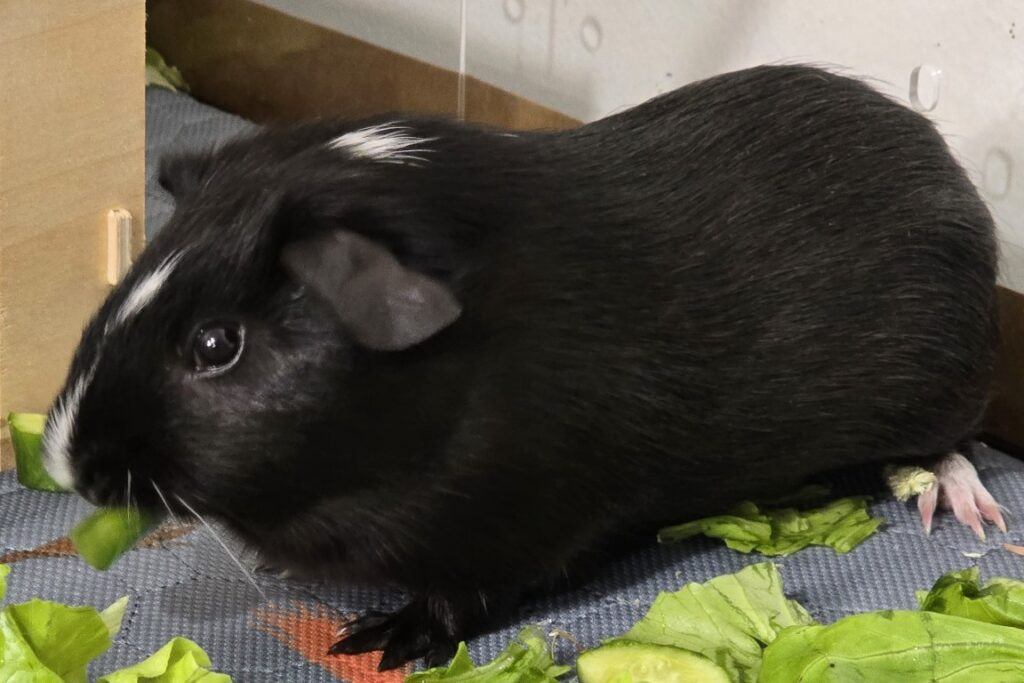
Red and green bell peppers are among the best, along with leafy greens like romaine. Fresh pellets with stabilized vitamin C help too, but they shouldn’t be the only source.
The Merck Veterinary Manual puts adult needs at about 10 to 25 mg per kilogram a day and growing guinea pigs at 30 mg per kilogram or more. For a young guinea pig weighing 400 grams, that works out to about 12 mg a day. That sounds small, but it has to come in every day, because guinea pigs can’t store it.
Skip vitamin C drops in the water. Merck and the Royal Veterinary College both advise against it, because vitamin C breaks down quickly in water and the taste can put guinea pigs off drinking. If your vet recommends a supplement, a tablet or a measured dose by mouth is the better route.
Feeding Checklist
- Vitamin C every day, from food.
- Growing guinea pigs need more per kilogram than adults.
- Bell peppers and fresh pellets are the easiest sources.
- No vitamin C in the water bottle or bowl.
Guinea Pig Haven Tip
Make bell pepper part of the daily routine rather than an occasional treat. Spice is obsessed with green peppers, so a few slices a day is the easiest vitamin C win in our house.
Introduce Fresh Veggies Slowly, One at a Time
Young guinea pigs should get fresh veggies every day, mostly leafy greens. Add one new veggie at a time in small amounts, so their sensitive gut can adjust.
When can baby guinea pigs eat vegetables?
Guinea pigs are usually weaned at about 3 weeks old, according to the Merck Veterinary Manual. By the time a young guinea pig comes home, it can eat veggies, but new foods should still go in slowly.
The Merck Veterinary Manual says guinea pigs form food preferences early and recommends keeping a new guinea pig on the diet it’s used to, then adding new foods slowly. Ask the breeder, shelter or rescue what your guinea pig was eating, and start there.
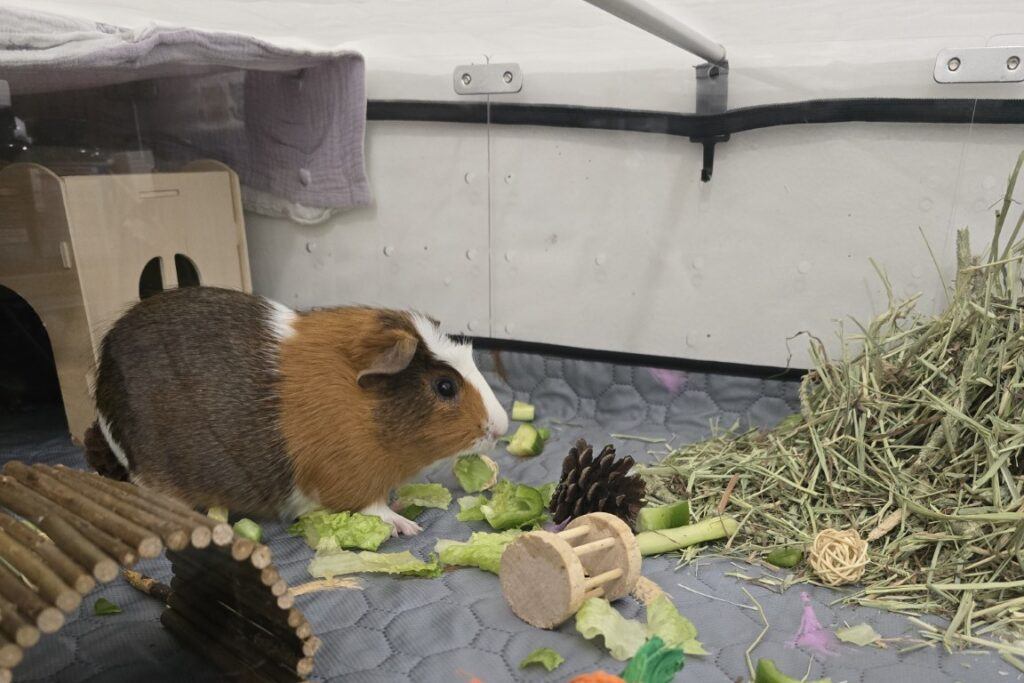
Leafy greens like romaine and green or red leaf lettuce should make up most of the veggies, plus bell peppers for vitamin C. Skip iceberg lettuce, which is mostly water. Feed high-calcium greens like parsley, kale and spinach only now and then. Merck also notes that guinea pigs offered a wider variety of produce were less likely to develop bladder stones, so build up variety over time.
Feeding Checklist
- Fresh veggies every day, mostly leafy greens.
- One new veggie at a time, starting small.
- Keep to the foods they already know at first.
- Build up to a wide variety over the first few months.
Guinea Pig Haven Tip
Add one new veggie every few days and watch the droppings the next day. Soft or smaller droppings mean that food can wait a while longer before you try it again.
Keep Fresh Water Available at All Times
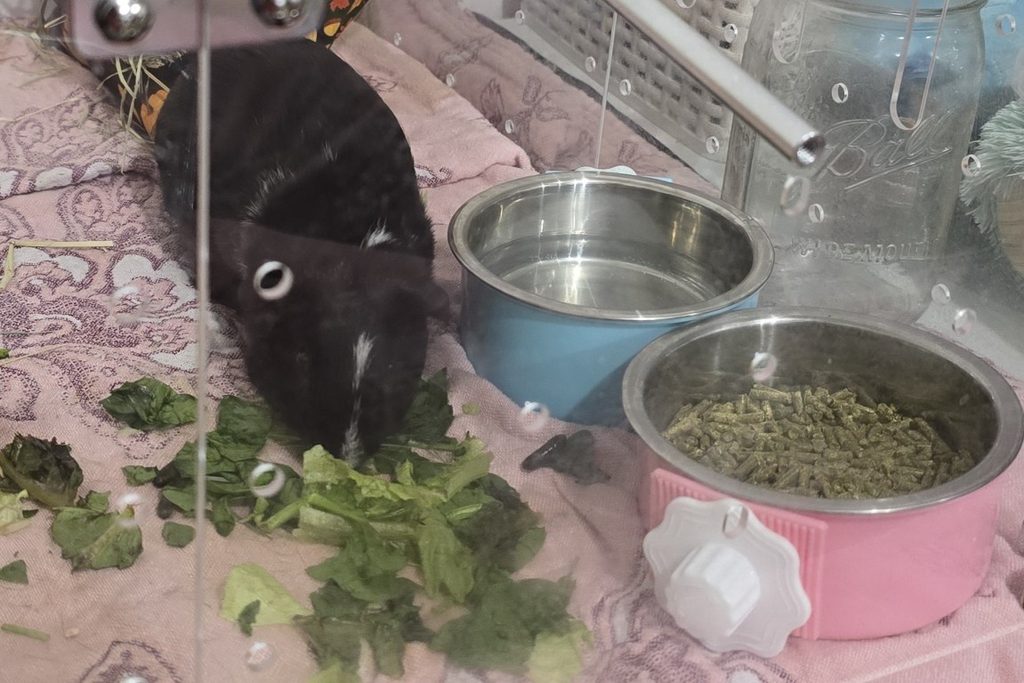
Young guinea pigs need clean, fresh water around the clock, from a bottle that flows or a heavy bowl that can’t tip. Change it daily and never add anything to it.
Is a water bottle or bowl better for baby guinea pigs?
Either works if it’s clean and easy to reach. Merck notes guinea pigs tend to drink more from a bottle, while a heavy, shallow bowl is easier for some guinea pigs to use.
With a bottle, mount the spout low enough for a small guinea pig to reach comfortably, and check every day that it actually flows. A blocked spout can look full while your guinea pig goes thirsty. With a bowl, pick one heavy enough that it can’t tip and shallow enough for a little guinea pig to drink from easily.
Merck also advises against adding supplements to the water and against distilled water or water with very high mineral content. Plain, fresh tap water that’s safe for your family is the usual choice.
Feeding Checklist
- Fresh water at all times, changed daily.
- A bottle that flows, or a heavy bowl that can’t tip.
- Nothing added to the water.
Guinea Pig Haven Tip
Our boys never took to a water bottle, so we use a heavy metal bowl and refresh it at least twice a day. Keep the bowl away from the hay corner, because young guinea pigs kick hay and bedding into it fast.
Keep Fruit and Treats Tiny and Occasional
Fruit is a treat for young guinea pigs, not a daily food. A small piece once or twice a week is plenty, and store-bought treats with sugar, seeds or yogurt should be skipped completely.
Can baby guinea pigs eat fruit?
Yes, in very small amounts once they’re eating veggies well. The Royal Veterinary College suggests fruit only once or twice a week, because the sugar can upset a guinea pig’s digestion.
Young guinea pigs have sensitive guts, and the University of Florida’s vet hospital warns that simple sugars and starches are particularly dangerous for guinea pigs. Fruit is high in sugar, so keep pieces small: a thin slice of apple without the seeds, or a single blueberry.
Many pet-store treats are made for marketing, not for guinea pigs. Yogurt drops, seed sticks, honey-coated treats and dried fruit are all high in sugar or fat. A favorite veggie, like a strip of bell pepper, works just as well as a reward.
Feeding Checklist
- Fruit once or twice a week, in tiny pieces.
- No yogurt drops, seed sticks or dried fruit.
- A favorite veggie makes the best everyday treat.
Guinea Pig Haven Tip
Use treat time for bonding. Offering a small piece of veggie from your hand helps a young guinea pig learn that your hand means good things, which makes handling easier later.
Know the Foods Young Guinea Pigs Should Never Eat
Never feed young guinea pigs onion, garlic, chives, leeks, avocado, potato, rhubarb, chocolate, dairy, nuts, seeds or sugary human snacks. Skip iceberg lettuce and any plant you can’t identify for certain.
What foods are toxic to guinea pigs?
Avocado, potato plants, rhubarb, tomato leaves and stems, and the onion family are among the most commonly listed as harmful. Many garden and house plants are toxic too, including daffodils, lilies, ivy, foxglove and yew.
The UK charity Woodgreen lists these foods as unsafe for guinea pigs: avocado, all parts of potato and rhubarb plants, tomato leaves and stalks, onions, garlic, leeks, chives, hot peppers, fruit pips and seeds, and nuts. Seattle Animal Shelter’s guinea pig care sheet adds chocolate, dairy, peanut butter, beans and iceberg lettuce.
Young guinea pigs are curious and will taste almost anything, so keep them away from houseplants and only offer foods you know are safe. When in doubt, leave it out.
Feeding Checklist
- No onion family, avocado, potato, rhubarb or chocolate.
- No dairy, nuts, seeds or sugary human snacks.
- No houseplants or wild plants you can’t identify.
Guinea Pig Haven Tip
Tape a short “never feed” list inside a kitchen cabinet. It helps when kids or guests want to share a snack, because a young guinea pig can’t tell you what’s safe.
Switch to an Adult Diet Gradually Around 6 Months
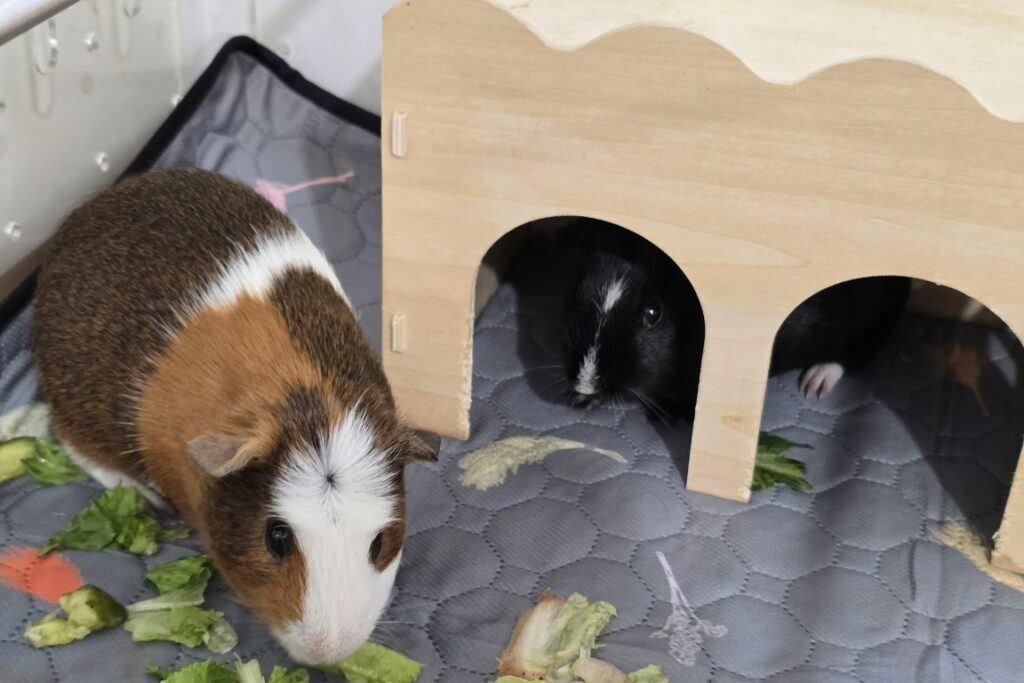
Around 6 months old, move young guinea pigs from alfalfa to grass hay only and from alfalfa-based to timothy-based pellets. Make the switch slowly, over about a week, to avoid an upset stomach.
When should guinea pigs stop eating alfalfa?
Around 6 months old, which is when the Merck Veterinary Manual moves guinea pigs from alfalfa to grass-based hay and pellets. Adults on alfalfa long term take in extra calcium, which the University of Florida’s vet hospital links to bladder stones.
The University of Florida’s vet hospital warns that a sudden diet change, even switching pellet brands, can cause serious stomach upset and loss of appetite. Mix a little of the new pellets into the old ones and increase the new mix every couple of days until the switch is complete. Cut back alfalfa hay the same way while grass hay stays unlimited.
Feeding Checklist
- Switch around 6 months old.
- Alfalfa hay and pellets out, grass hay and timothy pellets in.
- Mix old and new over about a week.
Guinea Pig Haven Tip
Put a reminder on your calendar for your guinea pig’s 5-month mark. That gives you time to buy adult pellets and start mixing before the 6-month switch, instead of remembering after the alfalfa bag is empty.
Weigh Your Young Guinea Pig Every Week
Weigh young guinea pigs once a week on a kitchen scale that reads in grams. A healthy young guinea pig gains steadily, so a stall or drop in weight is an early warning sign worth acting on.
How much should a young guinea pig weigh?
It varies with age and breed, so the trend matters more than any one number. The Merck Veterinary Manual lists adult guinea pigs at about 850 to 1,000 grams, and males often end up on the heavier side.
Weight loss is hard to spot under fur, especially in a fluffy young guinea pig. Weighing at the same time each week, before breakfast if you can, gives you numbers you can compare. Write them down, and look for steady gains while your guinea pig is growing.
A small container on the scale keeps a wiggly guinea pig still. Just remember to zero out the scale with the container on it first.
Feeding Checklist
- Weigh once a week, at the same time.
- Use a kitchen scale that reads in grams.
- Steady gains are good; a stall or drop needs attention.
Guinea Pig Haven Tip
Keep a simple weight log on your phone or on the fridge, with each guinea pig’s name, the date and the weight. If you ever need a vet visit, that log tells the vet more than “he seems thinner.”
Call the Vet Fast When Eating Changes
A young guinea pig that eats less, stops eating, has fewer droppings or loses weight needs a vet promptly, ideally the same day. Small guinea pigs have little reserve, so problems can turn serious quickly.
What are signs of vitamin C deficiency in guinea pigs?
The Merck Veterinary Manual lists a rough coat, lameness, swollen joints, weight loss, diarrhea and loss of appetite. A young guinea pig showing any of these needs a vet check, not a home remedy.
Guinea pigs need food moving through their gut constantly, so a guinea pig that isn’t eating is an emergency, not a wait-and-see problem. Watch for fewer or smaller droppings, a hunched posture, diarrhea, or a guinea pig that ignores its favorite veggie.
Find a guinea-pig-savvy vet before you need one. Not every clinic treats exotic pets, so ask whether they regularly see guinea pigs and where they send after-hours emergencies.
Feeding Checklist
- Not eating is an emergency for a guinea pig.
- Watch appetite, droppings and weekly weight.
- Have an exotic-pet vet’s number saved before you need it.
Guinea Pig Haven Tip
Notice who eats first at mealtime. Pumpkin lives for food and is always first to the veggies, so if he ever hung back, we’d know to look closer. Knowing each guinea pig’s normal habits makes a change in appetite easy to spot early.
How We Feed Pumpkin and Spice
Our boys get unlimited grass hay in hay bags, a measured portion of plain pellets, fresh veggies scattered around the cage every day and water in a heavy metal bowl. Bell peppers are a daily staple for vitamin C.
What did we change as the boys grew?
We moved hay into hay bags, which made a bag last almost twice as long. We also stopped using a veggie dish and started scattering veggies instead, which gets both boys moving and foraging.
We’ll be honest: our boys have only ever had grass hay, first timothy and now orchard grass. Nobody told us that young guinea pigs can benefit from alfalfa, and every piece of advice we got said timothy. We only learned about alfalfa recently, and it’s a big reason we wrote this guide, because so few new owners hear it. If that’s you too, don’t panic. Grass hay is safe at any age, and your vet can tell you whether adding alfalfa makes sense for your guinea pig’s age.
We’ve tried two brands of timothy hay and two brands of pellets with Pumpkin and Spice. The boys clearly preferred one hay, which seemed fresher, and a different brand’s pellets, so we mix and match rather than sticking to one brand for everything. Their likes are just as clear with veggies: Spice is obsessed with green peppers, and Pumpkin goes for lettuce and cucumbers first.
More recently, we tried orchard grass. The boys were skeptical at first, but now they eat it better than timothy, and they’ve barely touched the timothy since. Orchard grass is a grass hay like timothy, so it’s a safe swap at any age, and it’s worth trying if your guinea pigs seem bored with their hay.
We scatter veggies around the cage or leave small piles in different spots instead of using one bowl. Two growing boys don’t have to compete over one dish, and mealtime turns into a little foraging game.
Feeding Checklist
- Unlimited grass hay in hay bags, now mostly orchard grass.
- Plain pellets the boys actually eat.
- Veggies scattered for foraging, with bell peppers every day.
- A heavy metal water bowl, refreshed at least twice a day.
Guinea Pig Haven Tip
If your guinea pig turns its nose up at a new hay or pellet, try a fresh bag or a different type before assuming it’s being picky. Ours made their preferences very clear, and following them meant less waste.
Young Guinea Pig Diet FAQs
What do baby guinea pigs eat?
After weaning at about 3 weeks, baby guinea pigs eat the same foods as adults: unlimited hay, plain guinea pig pellets, fresh veggies and water. The main differences are more vitamin C and, under many vets’ advice, alfalfa until about 6 months.
How much should a young guinea pig eat a day?
As much grass hay as it wants, about 2 tablespoons of pellets, and a daily serving of fresh veggies, mostly leafy greens. Hay should always make up most of what it eats.
Can young guinea pigs eat adult guinea pig food?
Yes. Timothy-based adult pellets are safe for young guinea pigs, and grass hay is the right hay at any age. Alfalfa-based pellets and alfalfa hay simply add extra protein and calcium during growth.
Do baby guinea pigs need vitamin C supplements?
Most get enough from fresh pellets and vitamin C-rich veggies like bell peppers. Ask your vet before adding a supplement, and never put vitamin C drops in the water.
Is alfalfa hay bad for guinea pigs?
Not for young, pregnant or nursing guinea pigs, according to Merck and the University of Florida’s vet hospital. For adults it’s too high in calcium as a main hay and is linked to bladder stones.
When can baby guinea pigs leave their mother?
Guinea pigs are usually weaned at about 3 weeks old. Many rescues and breeders wait a little longer before rehoming, so ask yours what age they go home.
Setting Your Young Guinea Pig Up for a Healthy Life
A young guinea pig’s diet comes down to a few daily habits: unlimited hay, a small portion of plain pellets, fresh veggies with plenty of vitamin C, and clean water. Add new foods slowly, weigh weekly, and switch to an adult diet gradually around 6 months. Those habits build a healthy eater for life.
Keep learning with these guides:
- The Complete Guinea Pig Care Guide for Beginners: everything a new owner needs, from housing to health checks.
- Guinea Pig Supplies: 10 Essential Beginner Must-Haves: the hay bags, bowls and kitchen scale that make daily feeding easier.
- Guinea Pig Cage Setup: 7 Essential Steps That Work: where to put the hay, water and food so your guinea pigs eat well and stay clean.