Guinea pig cage cleaning is the part of guinea pig care nobody puts on the adoption poster, but it’s the part that keeps your boys or girls healthy and your home smelling like a home. Guinea pigs produce a surprising amount of waste for their size, and urine left sitting in bedding breaks down into ammonia, a strong respiratory irritant.
Here’s the short version. Spot clean droppings, wet bedding and old food every day, and do a full deep clean about once a week. Use mild, unscented cleaners like diluted white vinegar or gentle soap and water, then rinse and dry everything before your guinea pigs go back in.
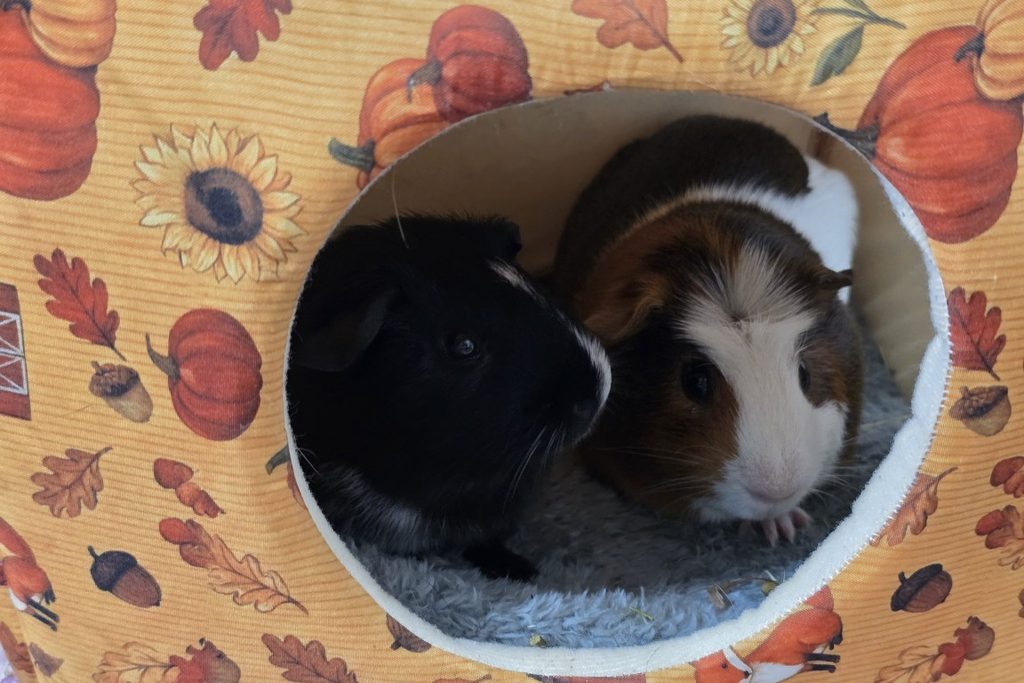
We clean up after two boys, Pumpkin and Spice, so we know how fast a cage can go from fresh to “what is that smell?” Below are the 10 steps we use, five daily and five weekly, backed by welfare and veterinary guidance, plus the small habits that make the routine faster.
TLDR: Guinea Pig Cage Cleaning at a Glance
Short on time? Here’s the routine in a nutshell.
- Daily (5–10 minutes): remove droppings and wet bedding, clear old fresh food, refresh hay, and wash and refill water and bowls.
- Weekly (30–60 minutes): move your guinea pigs somewhere safe, strip all bedding, wash the cage base and corners, clean hides and accessories, then rebuild.
- Cleaners: diluted white vinegar or mild unscented soap and water. Rinse well and let everything dry.
- Avoid: strong chemicals, ammonia-based cleaners, scented sprays and air fresheners near the cage.
- Rule of thumb: a clean cage shouldn’t smell. If it does between cleans, clean more often or change your bedding.
How Often Should You Clean a Guinea Pig Cage?
Spot clean a guinea pig cage every day and deep clean it about once a week. Larger groups, smaller cages or less absorbent bedding may need deep cleans more often.
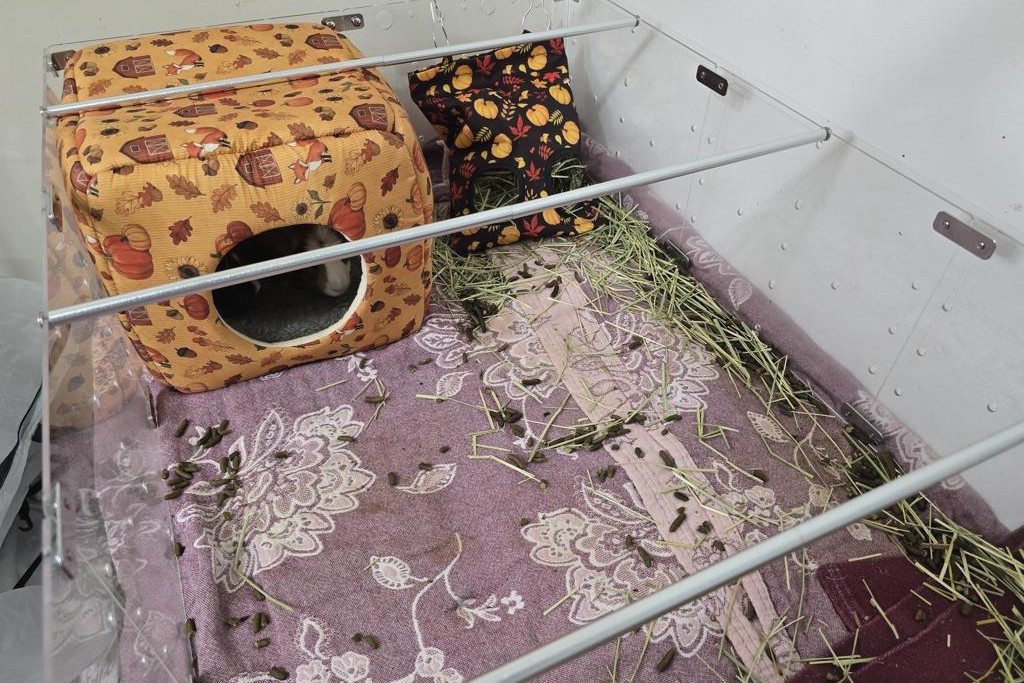
How often should I clean my guinea pig’s cage?
The RSPCA recommends spot cleaning daily and a deep clean at least once a week. How often you need a full clean depends on your cage size, bedding and how many guinea pigs live together.
The RSPCA also points out a balance: clean often enough to keep the cage safe and hygienic, but not so often that your guinea pigs are constantly disturbed. Daily spot cleaning does most of the work, so the weekly clean stays manageable.
Cage size makes a real difference. Humane World for Animals notes that larger enclosures are actually easier to clean, because waste doesn’t build up as quickly and guinea pigs can keep their bathroom area separate from where they eat and sleep.
| Task | How often | Time |
|---|---|---|
| Remove droppings and wet spots | Daily (twice if needed) | 5 minutes |
| Clear old veggies, refresh hay | Daily | 2 minutes |
| Wash and refill water and bowls | Daily | 3 minutes |
| Change all bedding and wash the base | Weekly | 30–60 minutes |
| Clean hides, hay bags and accessories | Weekly | 10 minutes |
| Check for chew damage and wear | Weekly | 5 minutes |
| Scrub urine scale from corners and joints | Every 1–2 weeks, or as needed | 10 minutes |
Highlights
- Daily spot cleaning is what keeps odor away.
- A full deep clean about once a week is the usual baseline.
- Bigger cages build up waste more slowly.
Guinea Pig Haven Tip
Put your daily spot clean right before feeding time. Your guinea pigs will be busy eating, and you’ll never forget it.
Step 1: Gather a Simple Cleaning Kit
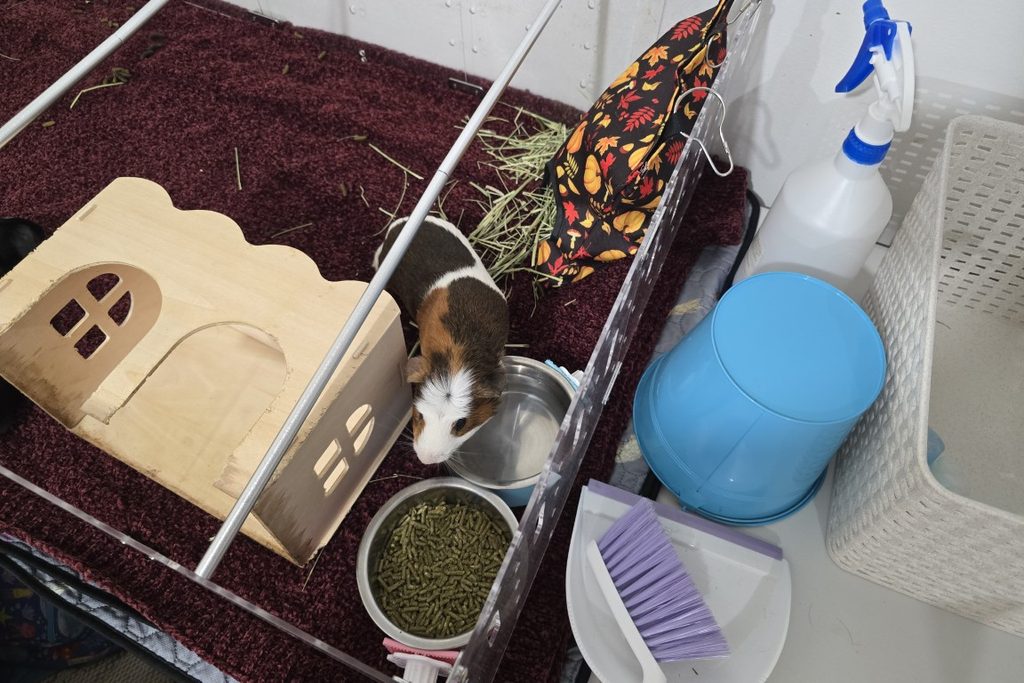
Keep a small cleaning kit right next to the cage: a dustpan and hand brush, a trash bag, paper towels or cloths, a spray bottle of diluted white vinegar, and spare bedding. When everything is within reach, the daily clean takes minutes.
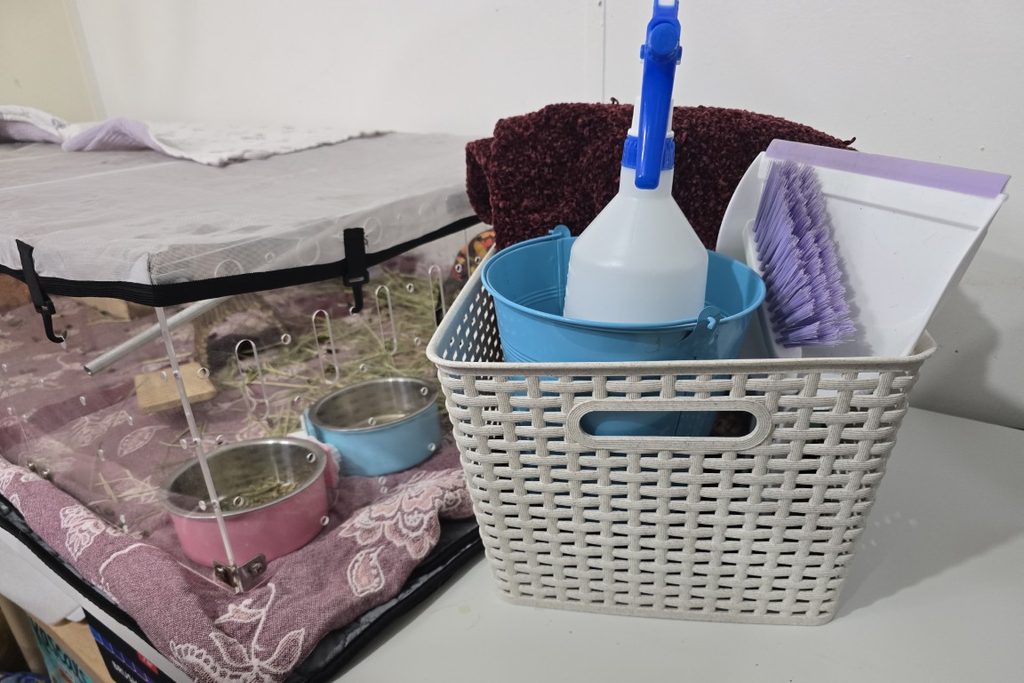
What do I need to clean a guinea pig cage?
A dustpan and brush or small cage vacuum, a lined trash can, cloths or paper towels, a spray bottle of diluted vinegar or mild soap solution, a bottle brush, and fresh bedding. Gloves are optional but handy.
The biggest time-saver in cage cleaning isn’t a fancy product. It’s not having to hunt for things. A caddy or bin under the cage table means you can spot clean in the time it takes your guinea pigs to finish a pile of greens.
Your basic kit:
- Dustpan and hand brush, or a small handheld vacuum for liners
- Lined trash can or compost bin nearby
- Spray bottle of diluted white vinegar
- Mild, unscented dish soap
- Cloths or paper towels
- Bottle brush for water bottles
- Spare bedding, liners or blankets
- A carrier or safe playpen for your guinea pigs
Step Snapshot
- How often: set up once, restock weekly
- Time: about 10 minutes to set up
- You’ll need: a caddy or bin near the cage
- Skip it and: every clean takes longer, and quick spot cleans get skipped
Common Mistakes
- ❌ Storing supplies in another room
- ❌ Reusing spray bottles that held strong household chemicals
- ❌ Having no spare bedding, so you’re stuck waiting on laundry
Guinea Pig Haven Tip
Label your vinegar spray bottle clearly, and never reuse a bottle that held strong household chemicals.
Step 2: Spot Clean Droppings Every Day
Remove droppings daily, focusing on the kitchen area, under hides and along the walls where guinea pigs tend to go. On fleece or liners, a dustpan and brush or small vacuum works best.
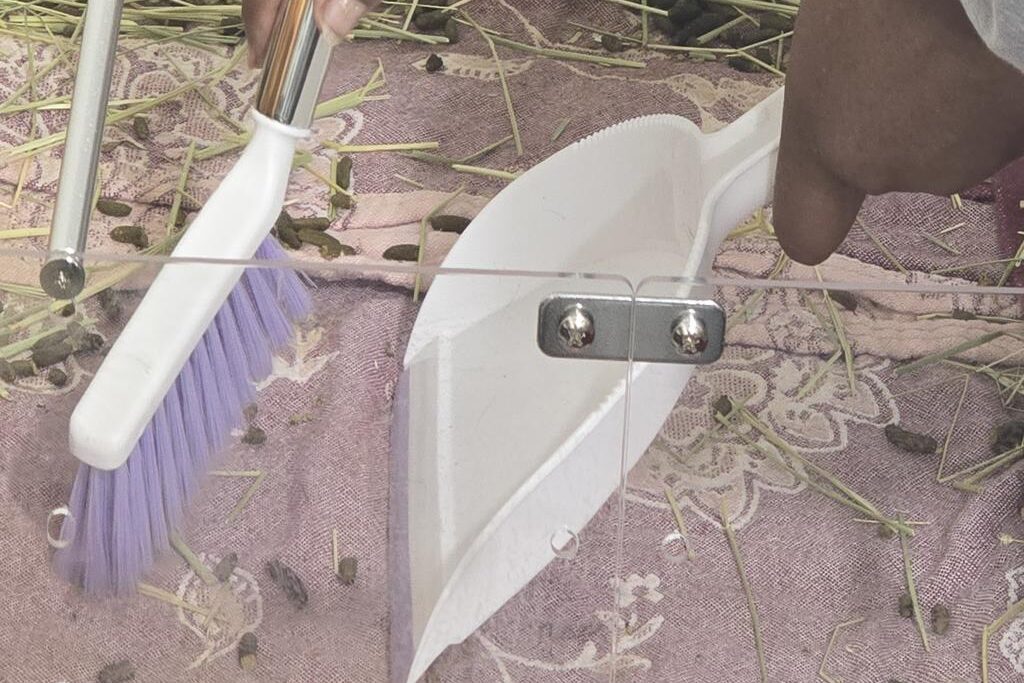
Do you have to clean guinea pig poop every day?
Yes. Guinea pigs poop constantly, and droppings build up fast. Removing them daily keeps the cage hygienic, keeps your guinea pigs’ feet and fur clean, and makes the weekly deep clean much easier.
Guinea pigs don’t use one tidy bathroom corner. They poop while they eat, while they walk and while they nap. You’ll find the biggest piles near the hay, in and around hides, and in corners.
On washable liners or blankets, droppings sit on top, so sweeping them up is quick. On paper bedding, scoop out droppings along with any bedding stuck to them.
Step Snapshot
- How often: daily, or twice a day for busy cages
- Time: about 5 minutes
- You’ll need: dustpan and brush or a small vacuum, trash can
- Skip it and: droppings get ground into bedding, and the weekly clean gets much harder
Common Mistakes
- ❌ Cleaning only the open floor and missing under hides
- ❌ Leaving droppings on liners until wash day
- ❌ Doing one big clean instead of two quick ones in a busy cage
Guinea Pig Haven Tip
Lift each hide when you spot clean. Guinea pigs often treat the space underneath as a private bathroom.
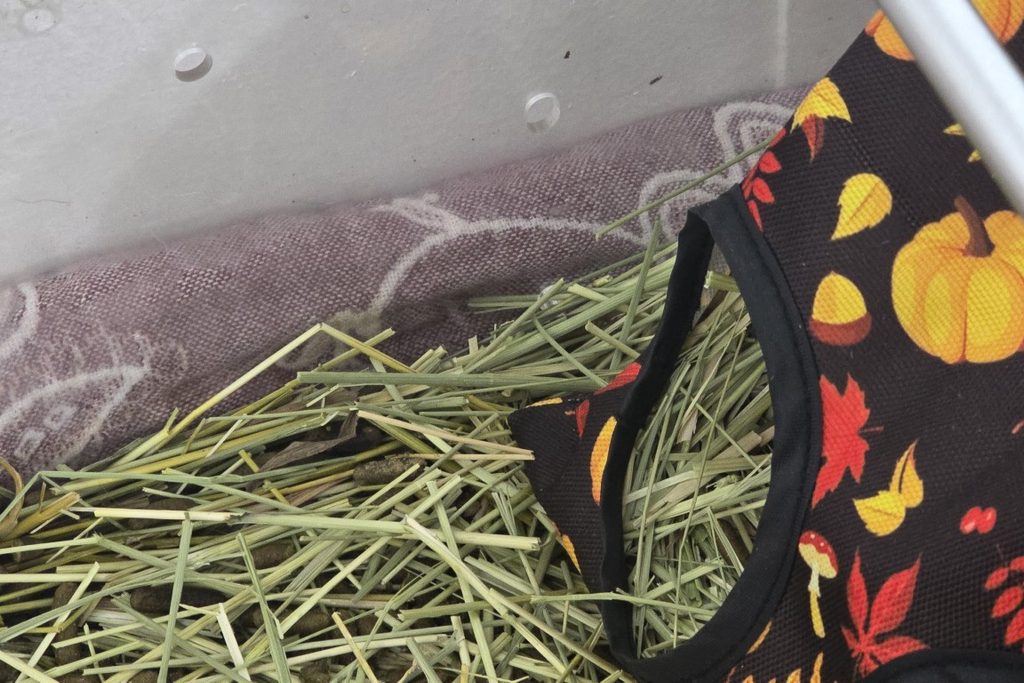
Step 3: Remove Wet Bedding and Soiled Hay
Swap out wet bedding and urine-soaked hay every day. Wet spots are where ammonia and odor start, and damp bedding can irritate your guinea pigs’ feet and skin.
Why does wet bedding matter for guinea pigs?
Urine breaks down into ammonia, a strong respiratory irritant, and damp bedding can irritate feet and skin. The Merck Veterinary Manual notes bedding should stay dry and not collect moisture, so remove wet patches daily.
Your nose is a great guide here. If an area smells sharp or looks darker and damp, it needs replacing. With paper bedding, scoop out the wet patch and top up with fresh bedding. With liners or blankets, swap the soaked section or the whole piece if it’s saturated.
Hay that’s been peed on should go too. Guinea pigs are less likely to eat soiled hay, and damp hay can grow mold.
Step Snapshot
- How often: daily
- Time: 3–5 minutes
- You’ll need: fresh bedding or a spare liner, trash bag
- Skip it and: ammonia builds up, and damp bedding can irritate feet and skin
Common Mistakes
- ❌ Covering wet spots with fresh bedding instead of removing them
- ❌ Leaving peed-on hay in the cage
- ❌ Forgetting to check under hides and the hay area
Guinea Pig Haven Tip
Notice where the wettest spots appear each day. Putting extra absorbency there, like a thicker layer or a spare liner, makes the whole cage stay fresher longer.
Step 4: Clear Old Fresh Food and Refresh Hay
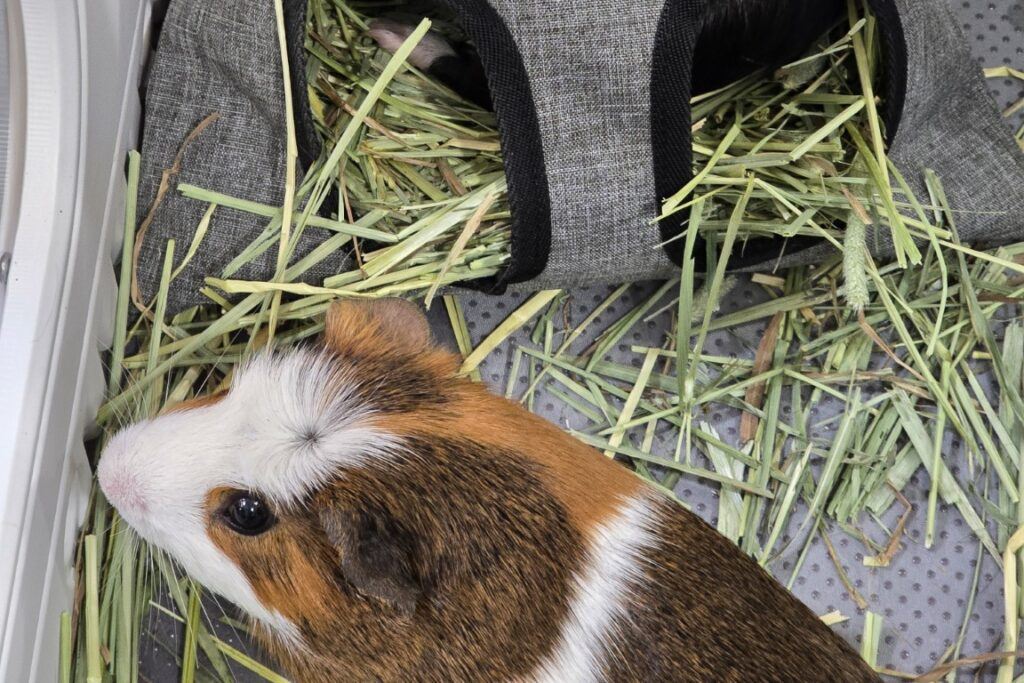
Remove uneaten vegetables daily before they wilt or spoil, and top up hay so your guinea pigs have a constant supply. Leftover produce attracts flies and adds to odor.
How long can vegetables stay in a guinea pig cage?
Remove uneaten fresh vegetables within the day, before they wilt, spoil or get buried in bedding. Hay, on the other hand, should be available at all times and topped up daily.
Fresh veggies are an important part of a guinea pig’s daily diet, but leftovers left too long go soft, smell, and can get mixed into bedding. A quick sweep of the food area before each new serving keeps it clean.
Hay is different: it should never run out. Top it up daily, and remove any hay that’s been soiled or trampled.
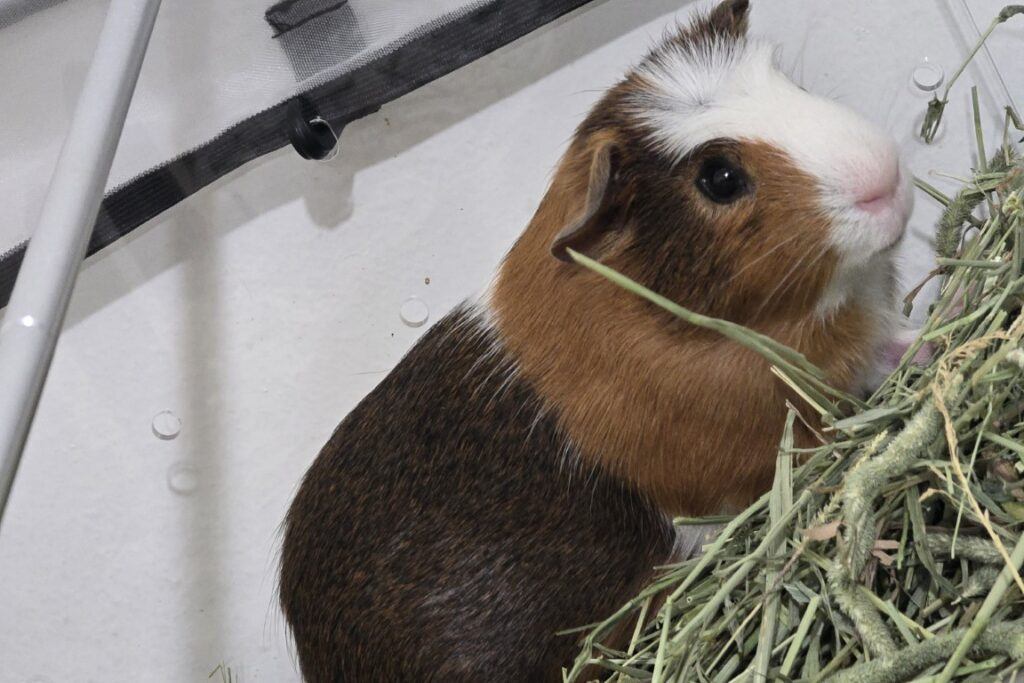
Our experience: Loose hay used to end up everywhere in our cage. Switching to hay bags kept it cleaner, and a bag of hay now lasts us almost twice as long. Bonus: the boys love hiding in them.
Step Snapshot
- How often: daily
- Time: about 2 minutes
- You’ll need: a shallow veggie dish, fresh hay
- Skip it and: wilted veggies smell and attract flies, and soiled hay goes uneaten
Common Mistakes
- ❌ Scattering veggies on the bedding
- ❌ Letting the hay run out
- ❌ Piling fresh hay on top of soiled hay
Guinea Pig Haven Tip
Serve veggies in a shallow dish instead of on the bedding. It makes leftovers easy to spot and remove.
Step 5: Wash and Refill Water and Bowls
Empty, rinse and refill water bottles or bowls every day, and wash food bowls daily. Check bottle nozzles are flowing, since a full-looking bottle can still be blocked.
How often should I clean my guinea pig’s water bottle?
Rinse and refill it daily, and give it a proper scrub with a bottle brush at least weekly. Check the nozzle every day by tapping it to make sure water flows.
Water bottles collect slime and algae over time, especially near the spout. A daily rinse and a weekly scrub keep them fresh. Ceramic food bowls can be washed with hot water and a little mild soap, then rinsed thoroughly.
If you use a water bowl, check it more than once a day; guinea pigs kick bedding, hay and droppings into bowls quickly.
Step Snapshot
- How often: rinse and refill daily, scrub weekly
- Time: about 3 minutes
- You’ll need: bottle brush, mild soap, a spare bottle
- Skip it and: slime builds up, and a blocked nozzle can leave your guinea pigs without water
Common Mistakes
- ❌ Assuming a full bottle means it’s working
- ❌ Topping up without rinsing
- ❌ Leaving soap residue in bottles or bowls
Guinea Pig Haven Tip
Keep a second water bottle. Swapping in a clean one while you wash the other means your guinea pigs never go without.
Step 6: Move Your Guinea Pigs Somewhere Safe
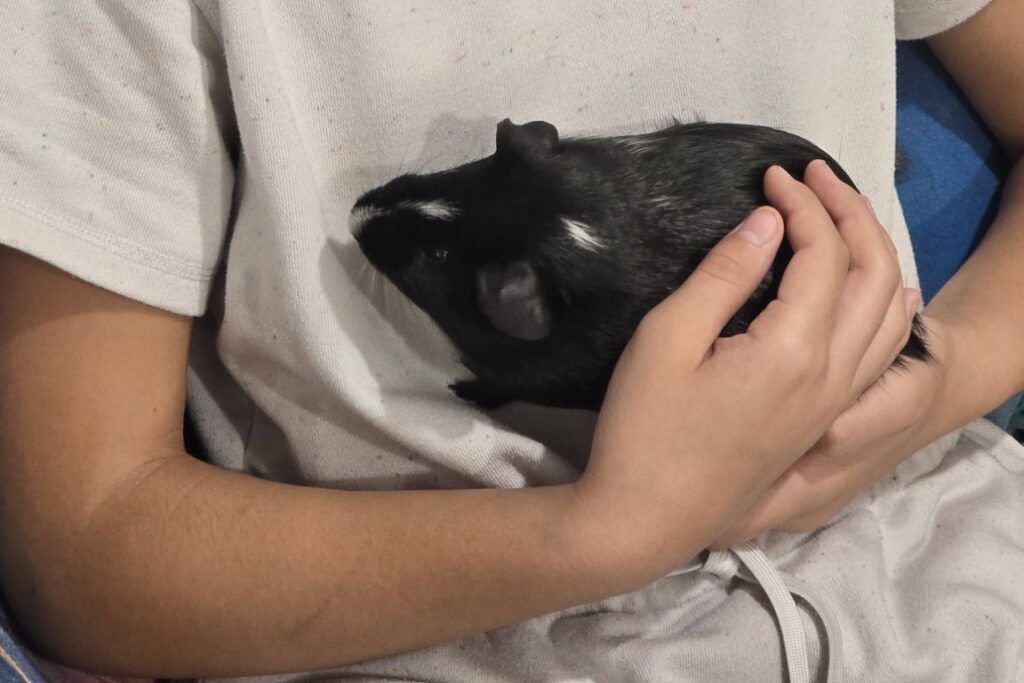
Before a deep clean, move your guinea pigs to a secure carrier or guinea-pig-proofed playpen with hay, water and a hide. Keep them together and away from cleaning products and other pets.
Where do I put my guinea pigs while cleaning the cage?
Use a secure carrier, a playpen on a washable floor, or a large box with a hide, hay and water. Keep companions together so they stay calm, and keep them away from cleaning sprays and other pets.
A deep clean takes longer than a spot clean, so your guinea pigs need somewhere comfortable to wait. A temporary space with hay, a hide and water turns cleaning time into a mini break for them.
Keep bonded guinea pigs together during cleaning. They’re social animals and usually feel calmer with their companion close by.
Our experience: While we swap bedding, Pumpkin and Spice wait safely in a pet carrier or sometimes my daughter holds them. It keeps them contained, calm, and out of the way of everything we’re doing.
Step Snapshot
- How often: every deep clean, usually weekly
- Time: about 2 minutes to set up
- You’ll need: a carrier or playpen, hay, water, a hide
- Skip it and: your guinea pigs get stressed, and they’re close to cleaning sprays
Common Mistakes
- ❌ Separating a bonded pair
- ❌ Leaving them near where you’re spraying cleaners
- ❌ Leaving them unsupervised near other pets
Guinea Pig Haven Tip
Turn cleaning day into floor time. A short playpen session with tunnels gives them exercise while you work.
Step 7: Strip All Bedding and Liners
Remove every piece of bedding, liner, blanket and hay from the cage, along with hides, bowls and accessories. Starting with an empty cage lets you clean every corner and inspect the base properly.
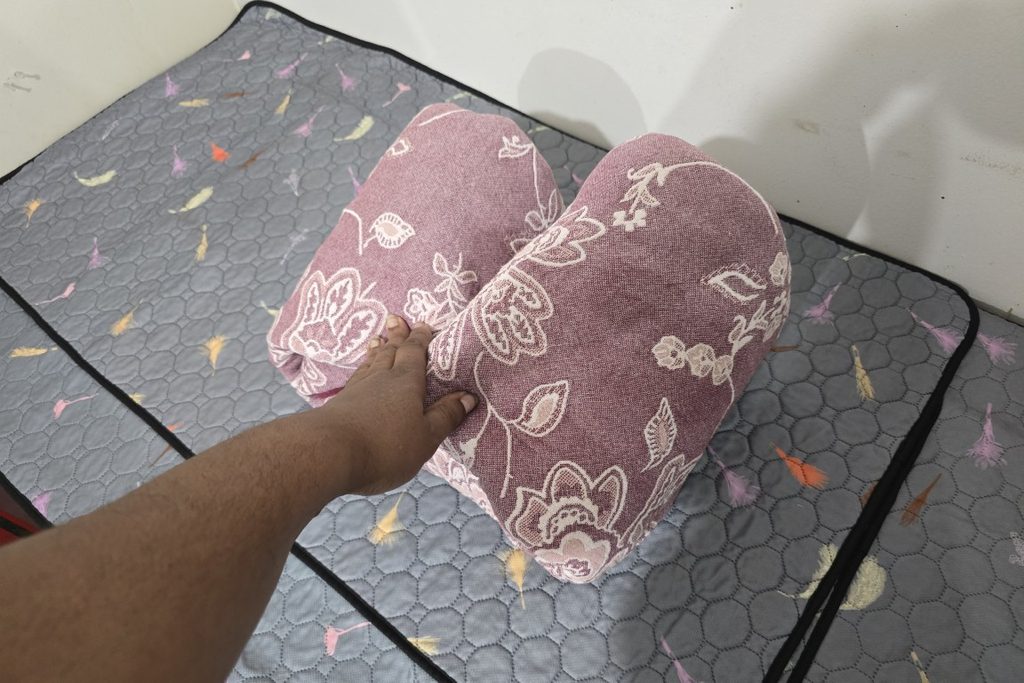
How do you deep clean a guinea pig cage?
Empty the cage completely, remove all bedding and accessories, wash the base and walls with a mild cleaner, rinse and dry, clean the accessories, then add fresh bedding and rebuild the layout.
Shake loose droppings and hay off liners and blankets into the trash before they go in the wash; this keeps hay out of your washing machine. Bag paper bedding and other disposable bedding for the trash or compost.
With everything out, you’ll see what daily spot cleaning misses: damp patches under the bedding, urine stains on the base, and debris in corners.
Step Snapshot
- How often: weekly
- Time: 5–10 minutes
- You’ll need: trash bag, laundry basket
- Skip it and: hidden damp spots and stains keep building under the bedding
Common Mistakes
- ❌ Replacing only the top layer
- ❌ Putting hay-covered liners straight into the washer
- ❌ Forgetting the hide and kitchen areas
Guinea Pig Haven Tip
Take a quick photo of your layout before you strip the cage. It makes putting everything back much faster.
Step 8: Wash the Cage Base, Corners and Joints
Wipe or wash the cage base and walls with diluted white vinegar or mild, unscented soap and water. Pay attention to corners and panel joints, where urine collects, then rinse and dry completely.
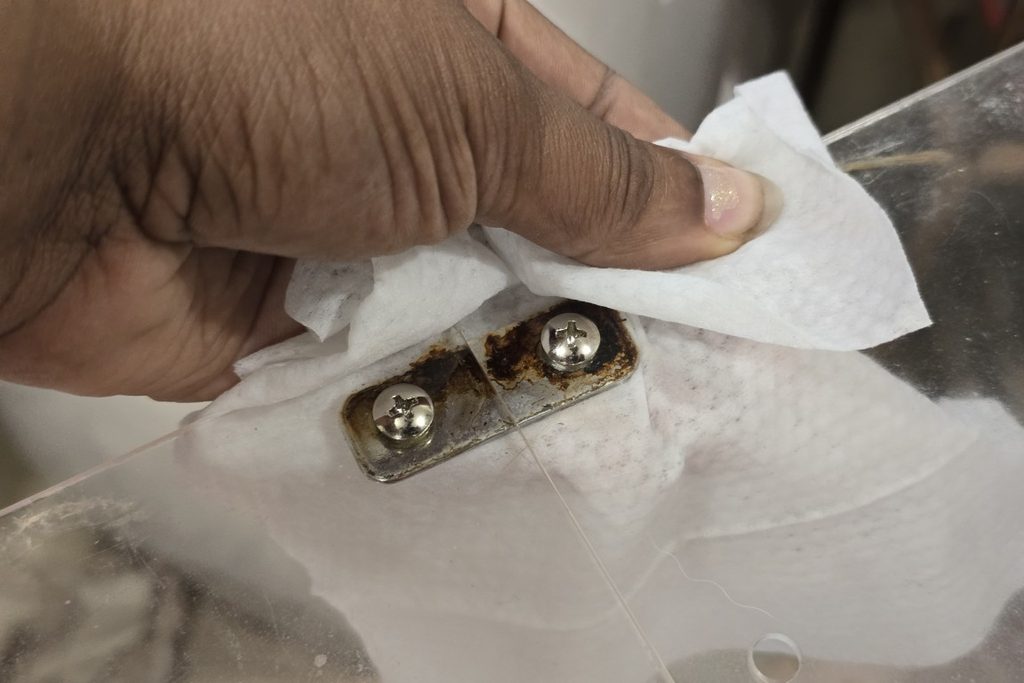
What can I use to clean a guinea pig cage safely?
Many keepers use a mix of white vinegar and water, which cuts through urine residue, or mild unscented soap and hot water. Avoid strong chemicals and scented cleaners, and rinse and dry the cage completely before your guinea pigs go back in.
Humane World for Animals says a guinea pig enclosure should be easy to clean and disinfect. For most weekly cleans, a mild solution is all you need. Spray the base and walls, wipe them down, and use a soft brush on stubborn spots.
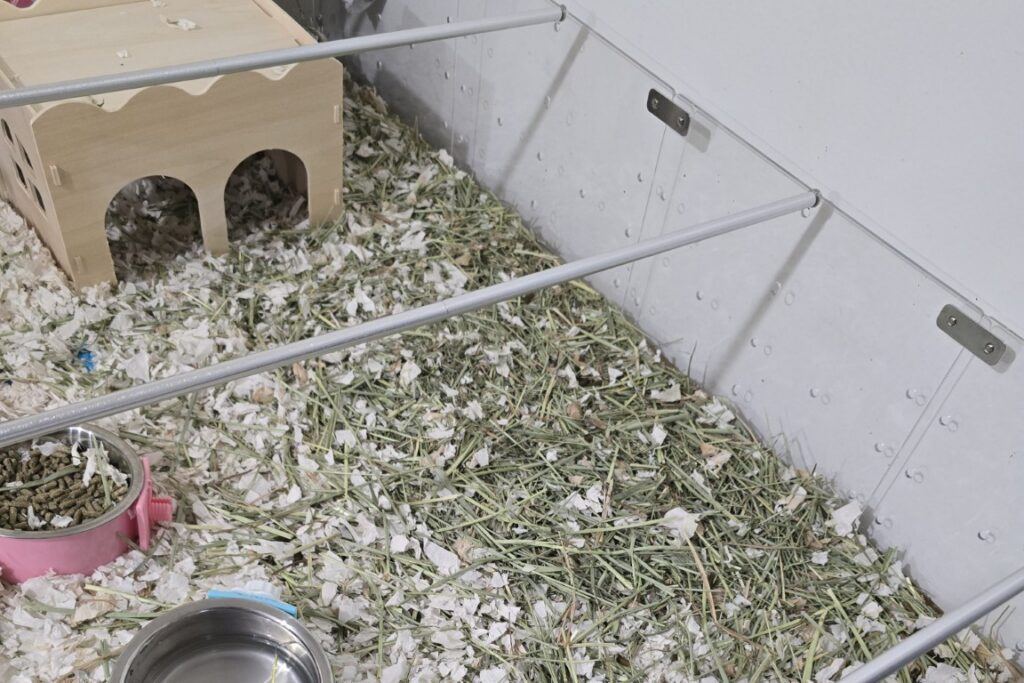
Guinea pig urine leaves a whitish, crusty residue over time, often called urine scale. Vinegar helps loosen it: let it sit on the spot for a few minutes before scrubbing.
Our experience: On our cage, the panel hinges collect pee, so we clean them along with everything else. Our cage also isn’t fixed to a base and can shift a little, so we check it’s sitting flat and secure after cleaning.
Step Snapshot
- How often: weekly; scrub urine scale every 1–2 weeks
- Time: 10–15 minutes, plus drying time
- You’ll need: vinegar spray, mild soap, a soft brush, cloths
- Skip it and: urine scale builds up, and odor comes back fast
Common Mistakes
- ❌ Using strong or scented cleaners
- ❌ Skipping the rinse
- ❌ Putting bedding back on a damp base
Guinea Pig Haven Tip
Let the base air-dry while you clean the accessories. Fresh bedding on a damp base defeats the purpose.
Step 9: Clean Hides, Hay Bags and Accessories
Wash hides, bowls, hay bags and toys during the weekly clean, and inspect each one for chew damage. Replace anything cracked, frayed or heavily chewed.
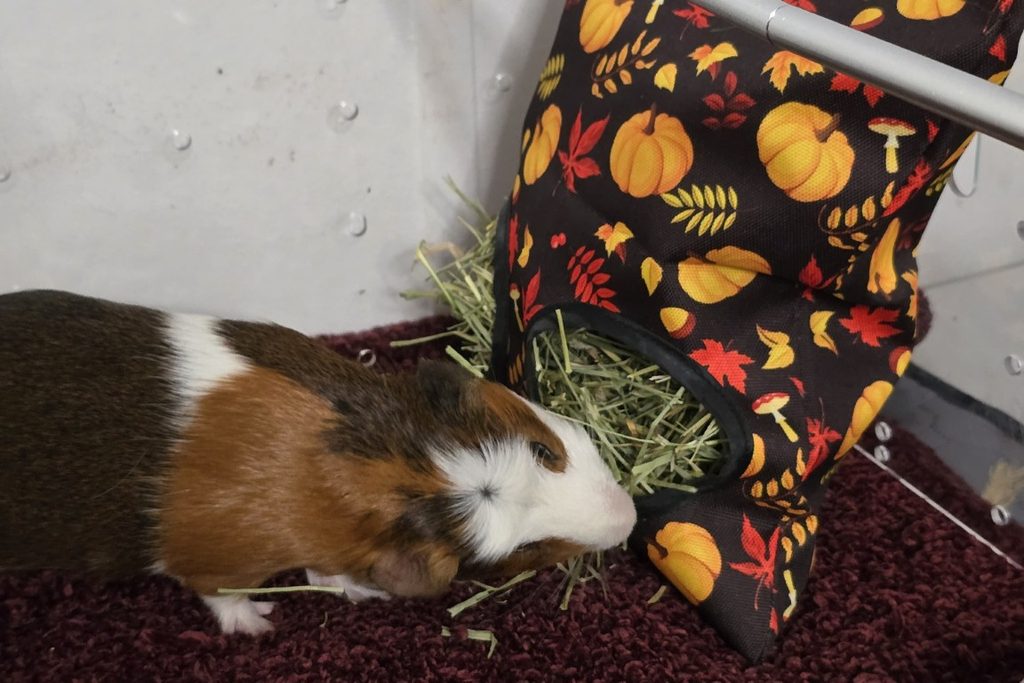
How do I clean guinea pig hides and toys?
Wipe plastic and ceramic items with mild soap or diluted vinegar, then rinse and dry. Fabric hides and hay bags can go in the wash. Wooden hides can be brushed off and wiped, but dry them fully. Replace cardboard when it’s soiled.
Cleaning day doubles as a safety check. Guinea pigs chew constantly, and something that was safe last week can develop sharp edges, loose threads or exposed padding.
As you clean each item, look for:
- Frayed fabric, loose threads or exposed stuffing
- Cracks or sharp edges on plastic or ceramic
- Heavily chewed wood or cardboard
- Damaged seams on hay bags or fabric hides
Step Snapshot
- How often: weekly
- Time: about 10 minutes
- You’ll need: mild soap, a towel for drying, a spare hide
- Skip it and: soiled hides start to smell, and chew damage goes unnoticed
Common Mistakes
- ❌ Trying to wash soiled cardboard instead of replacing it
- ❌ Putting wooden hides back before they’re fully dry
- ❌ Skipping the chew-damage check
Guinea Pig Haven Tip
Keep a spare hide or two. Swapping in a clean one while the other dries means your guinea pigs always have somewhere to hide.
Step 10: Wash Fabric Bedding and Reset the Cage
Wash liners and blankets in hot water with unscented detergent and no fabric softener, then rebuild the cage with fresh bedding and the same familiar layout.
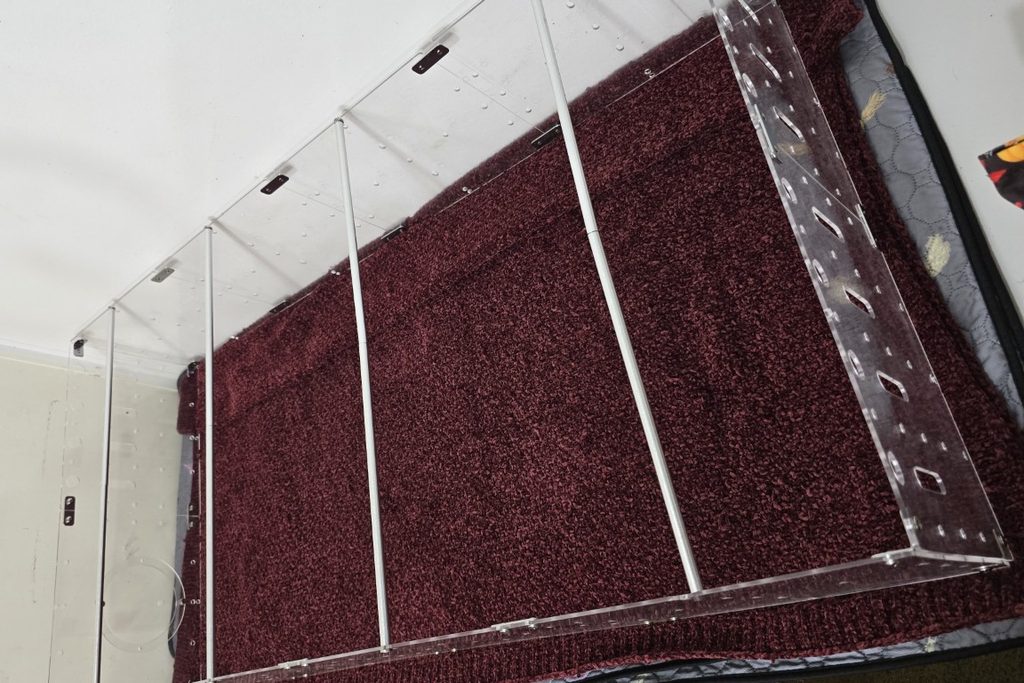
How do you wash guinea pig fleece liners?
Shake off droppings and hay, then wash in a hot cycle with unscented detergent. Skip fabric softener, which can stop fleece from wicking. Many keepers add a little white vinegar to the rinse to help with odor.
Washing fabric bedding at home is easy once you have a routine. Shaking liners out first protects your machine, and running an empty rinse cycle afterward clears out any leftover hay.
When you rebuild, put things back where your guinea pigs expect them. A familiar layout helps them settle quickly. Add fresh hay, refill water, and return hides to their usual spots.
Our experience: We wash our liners and blankets at home, and our laundry doesn’t smell like guinea pig. We swap one blanket a day plus liners and alternate washes, so there’s always a clean set ready. One thing we learned: our liners shrank in the wash, so we bought more and layer them to fit.
Step Snapshot
- How often: weekly, or whenever liners are soaked
- Time: one wash cycle, plus about 10 minutes to reset
- You’ll need: unscented detergent, a spare set of liners
- Skip it and: liners hold odor and stop wicking well
Common Mistakes
- ❌ Using fabric softener on fleece
- ❌ Washing liners without shaking out hay first
- ❌ Rearranging the whole layout every clean
Guinea Pig Haven Tip
Own at least two full sets of liners. One goes in the cage while the other is in the wash or drying.
Guinea Pig Cage Cleaning Checklist
Use a daily checklist for quick spot cleans and a weekly checklist for deep cleans. Ticking them off keeps the routine consistent, even when someone else in the family is helping.
What should a guinea pig cage cleaning checklist include?
A daily list should cover droppings, wet bedding, old food, hay and water. A weekly list should cover moving your guinea pigs safely, changing all bedding, washing the cage and accessories, checking for chew damage and resetting the layout.
Daily checklist (5–10 minutes)
- Remove droppings from the hay area, hides, corners and walls
- Swap out wet bedding and soiled hay
- Clear leftover veggies
- Top up fresh hay
- Rinse and refill water, and check the nozzle flows
- Wash food bowls
- Quick look for anything newly chewed
Weekly checklist (30–60 minutes)
- Move your guinea pigs to a carrier or playpen with hay, water and a hide
- Strip all bedding, liners and accessories
- Shake out liners and start the wash
- Wash the cage base, walls, corners and panel joints
- Scrub any urine scale
- Rinse and let the base dry completely
- Wash hides, bowls, hay bags and toys
- Check every item for chew damage and replace anything worn
- Scrub the water bottle with a bottle brush
- Add fresh bedding and rebuild the familiar layout
Guinea Pig Haven Tip
Screenshot this checklist or print it and tape it inside the cabinet where you keep your cleaning kit.
Guinea Pig Cage Odor Control Tips
A guinea pig cage smells when urine sits too long. Daily spot cleaning, absorbent bedding where your guinea pigs pee most, good ventilation and enough floor space keep odor down. Air fresheners only cover it up.
Why does my guinea pig cage smell so fast?
Usually because urine is soaking into bedding faster than it’s being removed. Common causes are skipped spot cleans, bedding that isn’t absorbent enough, a crowded cage, or wet spots under hides and the hay area.
The smell itself is a signal: it comes from ammonia building up as urine breaks down, and ammonia is a respiratory irritant for small animals. Fix the source rather than masking it.
What actually helps:
- Target the wet zones. Most urine ends up near the hay, in hides and in corners. Add extra absorbency there.
- Create a kitchen area. Guinea pigs eat and pee in the same spot, so a hay area that’s easy to lift out and clean saves time.
- Spot clean twice a day if you have several guinea pigs or a smaller cage.
- Give them enough space. Humane World for Animals notes larger enclosures are easier to keep clean because waste doesn’t build up as quickly.
- Keep the room ventilated and avoid damp, humid spots, which encourage mold in hay and bedding.
- Skip air fresheners, candles and scented sprays near the cage; they can irritate sensitive airways.
Highlights
- Smell means urine is building up somewhere.
- Extra absorbency in wet zones makes the biggest difference.
- Fix odor at the source; don’t cover it up.
Guinea Pig Haven Tip
If the cage smells within a day or two of a deep clean, check under hides and the hay area first. That’s where hidden wet spots usually are.
Safe Cleaners vs. What to Avoid
Mild, unscented cleaners like diluted white vinegar or gentle soap and water are the safest choices. Avoid strong chemicals, ammonia-based products, pine-scented or phenol cleaners, essential oils and scented sprays.
Is vinegar safe for cleaning a guinea pig cage?
Diluted white vinegar is widely used by guinea pig keepers and rescues to clean cages and loosen urine scale. Rinse surfaces afterward and let them dry fully before putting bedding and guinea pigs back.
Guinea pigs have sensitive respiratory systems, so what you clean with matters as much as how often you clean. Whatever you use, rinse well and let the cage dry fully before your guinea pigs return.
| Use | Why | Avoid | Why |
|---|---|---|---|
| Diluted white vinegar | Cuts through urine residue and scale | Ammonia-based cleaners | Ammonia is a respiratory irritant, and the smell mimics urine |
| Mild unscented dish soap and hot water | Gentle everyday cleaning | Pine-scented or phenol cleaners | Aromatic compounds can be harmful to small animals |
| Hot water and a scrub brush | Lifts stuck-on debris | Scented sprays, air fresheners, essential oils | Strong fragrances can irritate airways |
| Unscented laundry detergent | Washing liners and blankets | Fabric softener | Coats fleece and stops it wicking |
If your vet ever recommends disinfecting after an illness, follow the product label carefully, rinse thoroughly and let everything dry completely.
Highlights
- Keep cleaners mild and unscented.
- Always rinse and dry before your guinea pigs go back in.
- Skip fabric softener on fleece.
Guinea Pig Haven Tip
Mix your vinegar spray fresh every week or two, and keep it with your cleaning kit so you’re never tempted to grab a stronger household spray.
Our Cleaning Routine With Two Boys
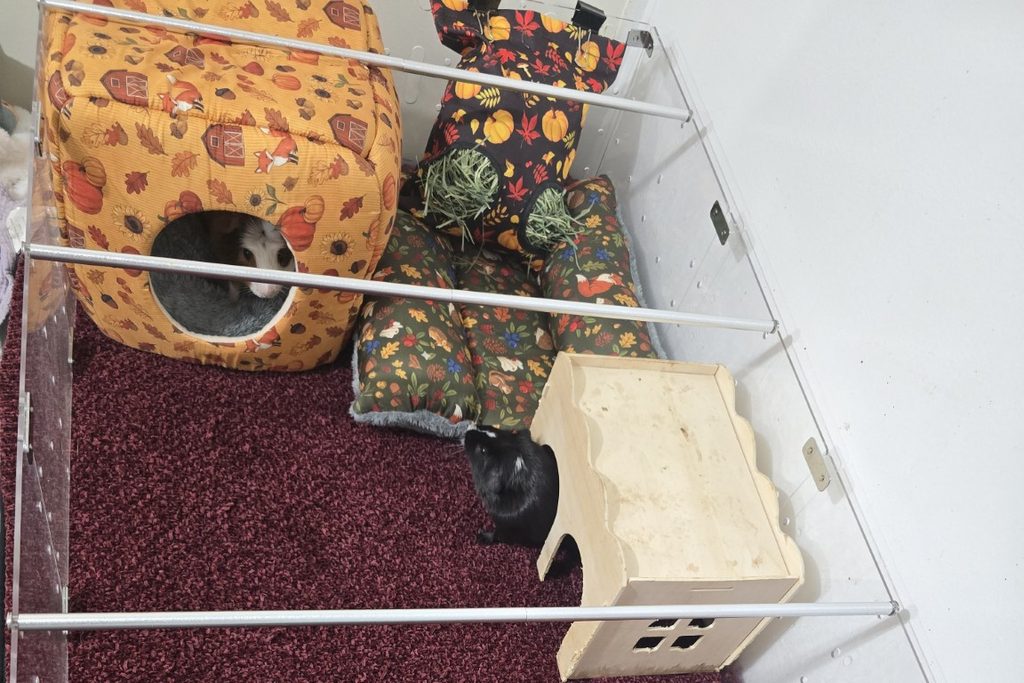
Our routine is built around washable liners and blankets: daily spot cleaning, one blanket swapped every day, liners rotated and washed at home, and the boys waiting safely in a carrier during bigger cleans.
How long does it take to clean a guinea pig cage?
In our experience, a daily spot clean takes about 5–10 minutes, and a full bedding swap takes longer depending on how much laundry and scrubbing is involved. Having everything within reach makes the biggest difference.
This is our firsthand experience with Pumpkin and Spice, separate from the general guidance above:
- Paper bedding era: we were changing all the bedding about every five days. It kept odor reasonably under control, but it was expensive and harder to keep clean than we expected.
- Now on liners and blankets: we spot clean daily, swap one blanket a day plus liners, and alternate washes so there’s always a clean set.
- Carrier during swaps: the boys wait safely in a pet carrier while we change their bedding.
- Home laundry works: we wash everything at home, and our laundry doesn’t smell like guinea pig.
- Hinge check: our cage’s panel hinges collect pee, so they get wiped every clean.
- Hay bags help: keeping hay in bags cut down on mess, and a bag now lasts almost twice as long.
We’ll keep sharing what changes as we expand the boys’ space, including whether a bigger setup makes cleaning easier. Follow along in Our Guinea Pig Journey.
Highlights
- Reusable bedding changed our routine the most.
- Rotating sets means no waiting on laundry.
- Small habits, like hinge checks and hay bags, save time.
Guinea Pig Haven Tip
Build your routine around your bedding. The right cleaning schedule for paper bedding is very different from the one for liners, so adjust as you switch.
Signs Your Cage Needs Cleaning More Often
A strong ammonia smell, damp bedding, urine-stained fur, sore feet or more sneezing all suggest the cage needs more frequent cleaning. Breathing problems or sore, swollen feet should be checked by a vet.
What happens if you don’t clean a guinea pig cage enough?
Urine builds up and breaks down into ammonia, a respiratory irritant, and damp, dirty bedding can lead to sore feet, skin irritation and urine-stained fur. Regular spot cleaning and weekly deep cleans prevent most of these problems.
Watch for these signs:
- A sharp ammonia smell soon after cleaning
- Damp bedding that doesn’t dry between spot cleans
- Yellow staining or damp fur on bellies, feet or rear ends
- Red, swollen or scabbed feet
- More sneezing, crusty eyes or noisy breathing
- Mold on hay or bedding
If you notice breathing changes, crusty eyes or nose, sore or swollen feet, or a guinea pig who stops eating, contact an exotic-pet or guinea-pig-savvy vet promptly. These signs can have several causes, so a vet should examine your guinea pig rather than treating at home.
Highlights
- Smell and dampness are the earliest warnings.
- Check feet and fur during regular handling.
- Breathing changes and sore feet need a vet.
Guinea Pig Haven Tip
If odor comes back quickly even with daily spot cleaning, the fix may be more space or more absorbent bedding rather than more scrubbing.
Guinea Pig Cage Cleaning FAQs: Your Questions Answered
Still have questions about guinea pig cage cleaning? These are the ones new owners ask most.
Can I clean the cage with my guinea pigs inside?
You can spot clean droppings and wet patches with your guinea pigs inside, as long as you move calmly. For a deep clean with sprays and full bedding changes, move them to a safe carrier or playpen first.
Does cleaning stress guinea pigs?
It can if it’s frequent, loud or chaotic. The RSPCA advises cleaning often enough to stay hygienic, but not so often that guinea pigs are constantly disturbed. Calm daily spot cleans and a familiar layout after deep cleans help.
How do I remove urine scale from a guinea pig cage?
Spray undiluted or lightly diluted white vinegar on the crusty white residue, let it sit for several minutes, then scrub with a brush. Rinse well and dry the area before adding bedding.
Can I use bleach to clean a guinea pig cage?
For routine cleaning, mild options like diluted vinegar or unscented soap and water are enough. If your vet recommends disinfecting after illness, follow the product label exactly, rinse thoroughly and let everything dry completely.
How often should I wash guinea pig fleece liners?
Most owners wash liners about once a week during the deep clean, and sooner if they’re soaked or smell. Having two sets means one can go in the cage while the other is washing.
Why does my guinea pig cage still smell after cleaning?
Common causes are hidden wet spots under hides or the hay area, urine scale in corners, bedding that isn’t absorbent enough, or a cage that’s too small for the number of guinea pigs.
A Cleaner Cage, Happier Guinea Pigs
Guinea pig cage cleaning gets easier once it’s a routine: a few minutes of spot cleaning every day and one thorough clean each week. Keep cleaners mild and unscented, focus on wet zones, and use cleaning time to check for chew damage.
The right bedding makes cleaning much easier. Compare your options in Guinea Pig Bedding: 10 Best and Worst Options Compared, see how cleaning fits into the whole setup in Guinea Pig Cage Setup: 7 Essential Steps That Work, and check your space with Guinea Pig Cage Size: 10 Safe Rules for Happy Pigs. New to guinea pigs? Start with The Complete Guinea Pig Care Guide for Beginners.